


Investment & Financial Planning
FCNR Deposit Interest Rates in 2026FCNR Deposit Interest Rates in 2026
Written by Vipul Jain

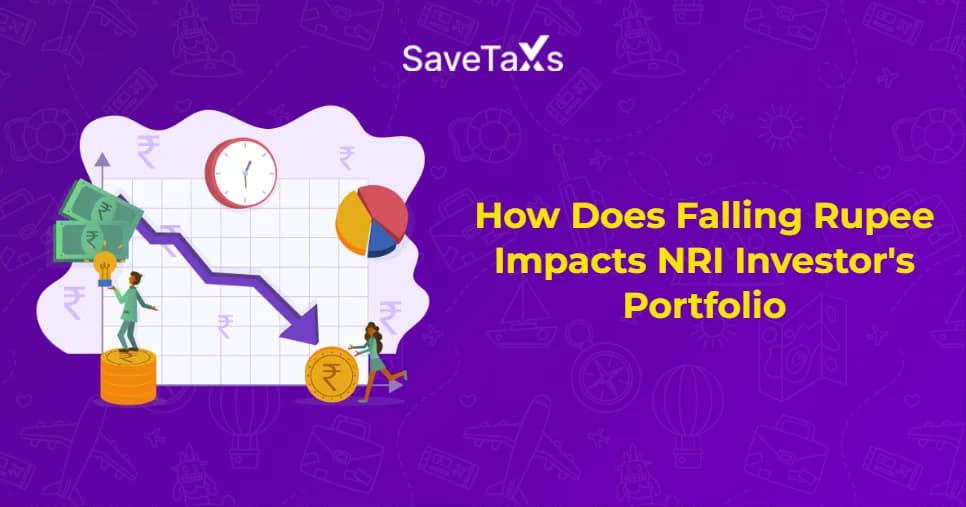
To say the least, compared with the major currencies over this period, the rupee has underperformed. There was some relief after the Reserve Bank of India stepped in to impose a limit on banks' FX net open positions, which forced lenders to sell dollars in the local market.
The rupee continues to trade above 92, down over 3% so far this year against the dollar. Over the past year, it has fallen by more than 7%, which is a clear signal that the Indian currency is losing value.
For NRIs, this slide in the currency has a blunt impact on their portfolio returns, especially when equity markets are unstable and global uncertainty is at an all-time high.
A weakening or falling rupee creates a double-edged situation for NRIs.
The Upside: It makes investing in India cheaper in dollar terms. Bonds, stocks, and real estate all become comparatively affordable.
The Downside: This situation creates a repatriation risk. When NRIs convert their Indian investment returns back to dollars, losses can wipe out gains.
Even if there are decent gains in the Indian market, those returns can significantly shrink in dollar terms if the rupee keeps falling. According to Dr. Ravi Singhal, Chief Research Officer at Master Capital Service, "This risk remains one of the major drivers behind FII selling in Indian markets through this period, given that prolonged depreciation can substantially affect returns at the point of repatriation."
The foreign investor looks beyond the earnings; they closely analyze the currency stability. A weaker rupee lowers the dollar-adjusted return, making the Indian economy less competitive compared to other markets during stressful periods.
Savetaxs expert guidance helps you in filing your ITR in India hassle-free.
A lot of NRIs put their money into Indian debt instruments, typically drawn by relatively higher and safer yields than those in developed markets. However, this option isn't risk-free.
According to Dr. Sign, "During a stress period, as the current war scenario, a steep rupee depreciation can sharply erode those returns, reinforcing that the debt also carries risk, which is often understood by the investors."
N. ArunaGiri, CEO of TrustLine Holdings, believes that not everyone sees this as a bad time and that there is a real opportunity here on the two fronts, which are the Indian rupee and the equity markets.
"For NRI investors, the current phase presents an interesting opportunity to look at Indian equities. The potential upside is not limited to the equity alone, but extends to the currency as well. In our view, both have seen an element of overstretched selling in the recent phase."
The Indian stock market has remained lower so far in 2026. The Sensex benchmark is down by 9% year to date, and the Nifty 50 is also down by 8%, with both indices providing no meaningful returns to their investors over the past two years.
On the currency front, the rupee has definitely seen some recovery after the regulatory action; it continues to remain undervalued on a REER (Real Effective Exchange Rate) basis, said the expert. As the rupee stays below its long-term equilibrium range, ArunaGiri sees this as a sign that the rupee has a chance to recover once the macro conditions get better, especially when the West Asia geopolitical tensions ease.
This same theory applies to equities. As ArunaGiri put it, "Any construction resolution or escalation in the West Asia conflict is likely to ease selling pressure and trigger a reversal in market sentiment as evidenced by the sharp bounce following the recent ceasefire announcement."
Our NRI investment experts provide expert consultation on NRI investment in India.
In a nutshell, for NRIs, the current environment and market conditions are a mix of opportunity and risk. The currency's deteriorating condition weakens returns on repatriation, and debt investments carry more risk than most realize. However, for those with a medium- to long-term view, both Indian equities and the two may be approaching a turning point, specifically if geopolitical conditions improve.
As an NRI, if you are seeking professional guidance for making investments in India as an NRI, Savetaxs is the name to trust. Even in such a volatile market, our experts provide end-to-end consultation on managing your cross-border financial portfolio, ensuring regulatory compliance, and providing operational support in equities, mutual funds, and real estate.
Connect with us as we serve our clients 24/7 across all time zones.
This article is for general informational purposes only and does not constitute tax, legal, financial, or investment advice. Laws, regulations, rates, and procedures may change over time and may vary based on individual circumstances.
While SaveTaxs makes reasonable efforts to keep the information accurate and up to date, readers should verify applicable rules with official authorities or consult a qualified professional before making decisions based on this information.
Vipul Jain is the Co-Founder of SaveTaxs and a tax expert with experience in Indian and NRI taxation. He advises individuals, NRIs, and businesses on tax filing, tax planning, capital gains, DTAA, and compliance matters. He focuses on making complex tax concepts simple and helping taxpayers make informed, compliant decisions. See Full Bio
Want to read more? Explore Blogs
_1781845771869.webp&w=828&q=75)
_1778936280179.webp&w=828&q=75)
_1778936089630.webp&w=828&q=75)