NRI Income Tax Compliance
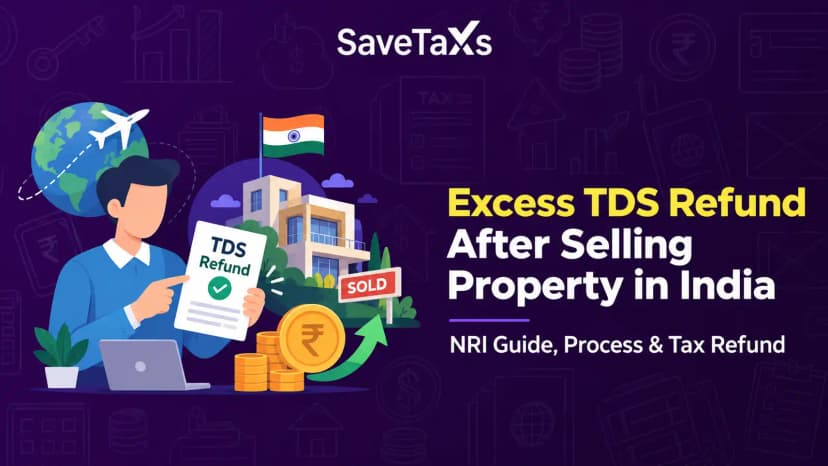
How to Claim Excess TDS Refund After Selling Property in India as an NRIHow to Claim Excess TDS Refund After Selling Property in India as an NRI
Written by Shubham Jain

_1784883440506.webp&w=3840&q=75)
Under the Income Tax Act, 1961, there are several limits on cash transactions and other financial dealings. These rules aim to restrict tax evasion and financial crime and also improve transparency, accountability, and tax compliance.
If you violate these thresholds, you may face penalties, tax benefit loss, and even scrutiny by the Income Tax Department. You must stay aware of these limits when accepting cash, making donations, taking money, or buying property to stay compliant and prevent potential income tax notices. Keep reading further to know the seven income tax limits and their implications to ensure adherence.
Here are the important income tax limits on business expenses, cash loans, cash withdrawals, high-value transactions, and more, along with their implications:
Under Section 269ST of the Income Tax Act, you cannot accept ₹2 lakh or more in cash from a single person in a day, for a single transaction, or for one specific event or occasion. Failing to follow this limit may attract a penalty equal to the amount received.
You cannot accept or repay loans or deposits of ₹20,000 or more in cash as per Section 269SS and 269T. Use any banking channel to conduct such transactions to stay compliant.
Under Section 80G, donations above ₹2,000 in cash do not qualify for tax deductions. You must make the donations through bank or digital payment methods to claim the deductions.
For cash withdrawals exceeding the prescribed limits. banks may deduct Tax Deducted at Source (TDS) under Section 194N, especially for certain non-filers of income tax returns. This restriction aims to prevent large cash transactions.
According to Section 40A(3), businesses are not allowed to claim a tax deduction for cash payments above ₹10,000 made to a single person in a day, except in certain situations.
You must report property purchases or sales worth ₹30 lakh or more, or a reduced threshold where notified to the Income Tax Department.
Additionally, Section 269SS prohibits cash payments or advances of ₹20,000 or more in property transactions.
Banks and specified financial institutions must report certain high-value transactions to the Income Tax Department as per Section 285BA, read with Rule 114E of the Income Tax Rules. These transactions must be reported using the statement of financial transactions (SFT).
The department uses these reports to keep track of financial activity, enhance compliance, and detect tax evasion. Further, taxpayers must ensure to report such transactions in the ITR to avoid income tax notices or scrutiny.
Savetaxs helps NRIs file ITRs easily with accuracy and claim DTAA benefits
To ensure tax compliance, it's important to file your ITR accurately and on time. Following the prescribed transaction limit, maintaining proper documentation, and using banking or digital payment methods wherever possible can help you avoid getting an income tax notice, attracting penalties or scrutiny, or facing scrutiny by the Income Tax Department.
Furthermore, if you are confused about the ITR filing process, contact an expert at Savetaxs. Our experts can help you complete the ITR filing process on time, while also ensuring 100% accuracy and compliance. We can guide you throughout the process to avoid potential income tax notices, penalties, or scrutiny by the department.
This article is for general informational purposes only and does not constitute tax, legal, financial, or investment advice. Laws, regulations, rates, and procedures may change over time and may vary based on individual circumstances.
While SaveTaxs makes reasonable efforts to keep the information accurate and up to date, readers should verify applicable rules with official authorities or consult a qualified professional before making decisions based on this information.
Vipul Jain is the Co-Founder of SaveTaxs and a tax expert with experience in Indian and NRI taxation. He advises individuals, NRIs, and businesses on tax filing, tax planning, capital gains, DTAA, and compliance matters. He focuses on making complex tax concepts simple and helping taxpayers make informed, compliant decisions. See Full Bio
Want to read more? Explore Blogs