NRI Income Tax Compliance
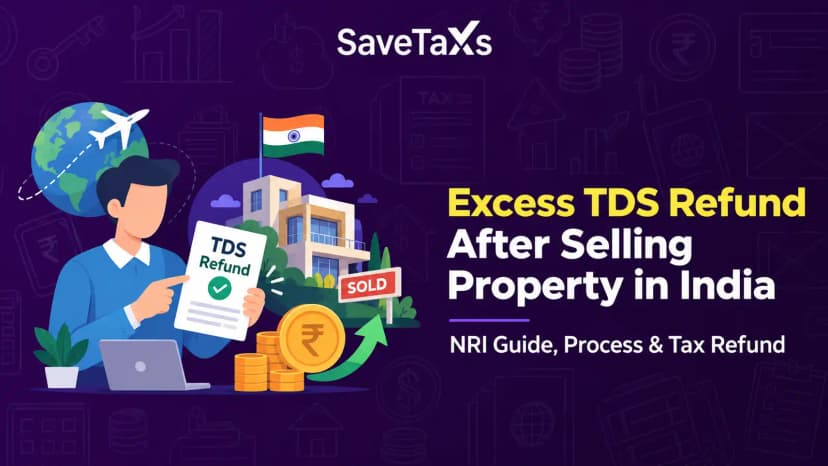
How to Claim Excess TDS Refund After Selling Property in India as an NRIHow to Claim Excess TDS Refund After Selling Property in India as an NRI
Written by Shubham Jain
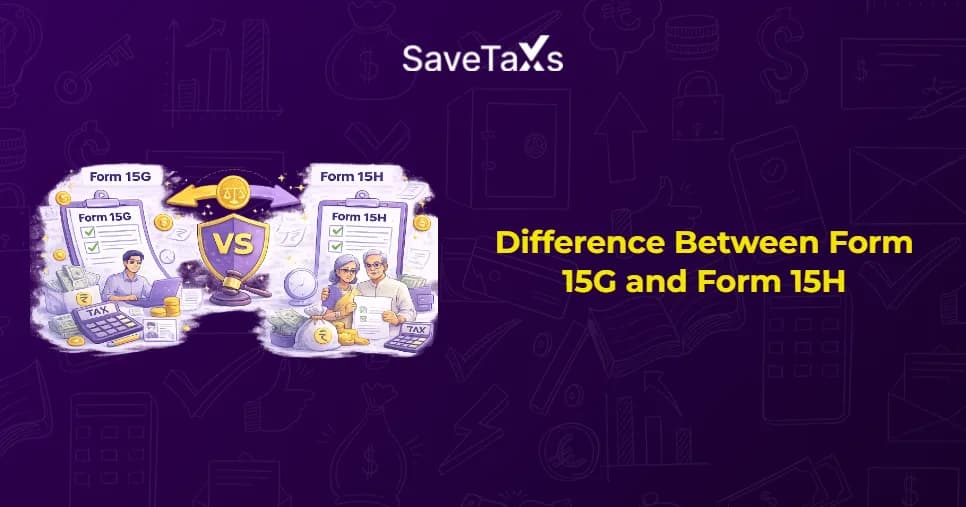
Even if your total yearly income is not taxable, banks will still deduct TDS (Tax Deducted at Source) from your interest earnings. This will reduce the actual amount deposited into your bank account. However, the Income Tax Department allows eligible taxpayers to avoid unnecessary TDS deductions by submitting self-declaration forms to banks and other institutions.
Two such self-declaration forms are Form 15G and Form 15H. These forms help taxpayers to recieve their interest income without TDS being deducted on it. Keep reading further to know more about the differences between Form 15G vs 15H. We will also understand the eligibility requirements, the steps to download and submit them, and much more.
Form 15G is a self-declaration form used by Hindu Undivided Families (HUFs) and resident individuals below 60 years. A taxpayer submits this form to declare that their income does not exceed the taxable limit and they do not owe any tax for the financial year.
The main aim of this form is to avoid TDS deduction on interest income when the taxpayer does not have any tax liability. You may be eligible to file Form 15G if:
Form 15H serves the same purpose as Form 15G, but the only difference is that it is designed for senior citizens aged 60 or above. It allows them to recieve interest income without TDS being deducted.
After retirement, senior citizens often significantly rely on fixed deposit income. So, when their total tax liability is zero, they can use Form 15H to ensure that unnecessary TDS is not deducted. You may be eligible to file Form 15H if:
Don't wait till the last minute to file your returns; file today with full confidence by contacting Savetaxs.
Both Form 15G and 15H are designed to avoid unnecessary TDS deductions. However, the main difference between these forms is the age of the taxpayer. Based on the age, the taxpayer can decide which form to use.
To download Forms 15G and 15H, you can visit your bank's online portal, the EPFO platform, or the Income Tax Department's e-filing portal. These forms can be submitted to various deductors, like:
Consider the following points before submitting Form 15G or Form 15H:
If you fail to submit Form 15G and 15H and the bank deducts TDS, you can claim the deducted amount as a refund while filing your ITR. Here is what you need to do:
The proposed Income-tax Bill, 2025 introduces Form 121 as a single self-declaration form to replace Forms 15G and 15H once the new legislation comes into force. Until then, Forms 15G and 15H continue under the existing law.
Forms 15G and 15H will continue to apply until the proposed law becomes effective. Once the new legislation is notified and comes into force, the prescribed replacement form will apply in accordance with the notified provisions.
Contact Savetaxs and let our experts handle everything from the start to the end.
Form 15G and Form 15H are simple tools that help eligible taxpayers protect their interest income from unnecessary TDS deductions. Submitting the right form at the start of each financial year can make a real difference regardless of whether you are below 60 or a senior citizen.
Wth Form 121 replacing both Forms from FY 2026-27, you must stay updated about all the information. Moreover, if you need guidance with ITR filing, TDS deduction, repatriation, or more, connect with an expert at Savetaxs. Our experts are available 24/7 to help you stay compliant at every step of the way.
This article is for general informational purposes only and does not constitute tax, legal, financial, or investment advice. Laws, regulations, rates, and procedures may change over time and may vary based on individual circumstances.
While SaveTaxs makes reasonable efforts to keep the information accurate and up to date, readers should verify applicable rules with official authorities or consult a qualified professional before making decisions based on this information.
Shubham Jain is the Founder of SaveTaxs and has extensive experience in Indian and NRI taxation. He advises individuals, NRIs, and businesses on tax filing, tax planning, capital gains, DTAA benefits, fund repatriation, and compliance matters. He regularly writes about taxation and related financial topics. His focus is on making complex tax concepts easy to understand. Through his articles, he helps taxpayers stay informed, avoid common mistakes, and stay compliant with Indian tax laws. See Full Bio
Want to read more? Explore Blogs