NRI Income Tax Compliance
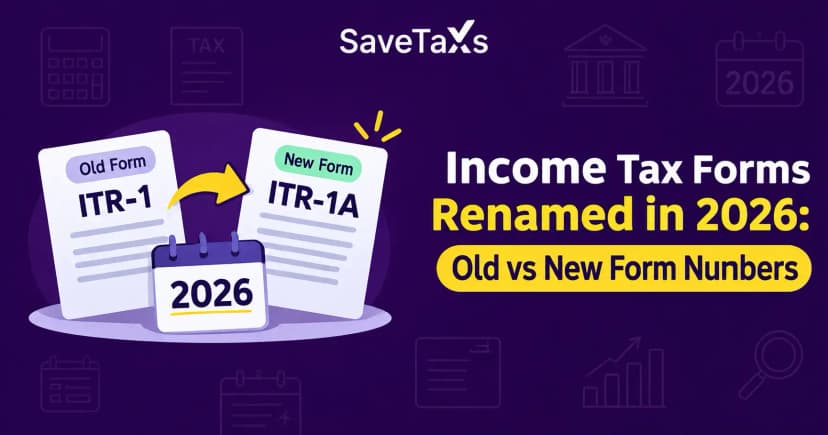
Income Tax Forms Renamed in 2026: Old vs New Form NumbersIncome Tax Forms Renamed in 2026: Old vs New Form Numbers
Written by Vipul Jain

_1777553927863.webp&w=3840&q=75)
NRIs (Non-Resident Indians) with no Indian income are generally exempt from filing ITR in India. However, there are additional situations where filing an ITR becomes mandatory. Their obligation to file lies on the total income generated in India during a financial year. They must file if their overall income in India exceeds Rs. 2.5 lakhs in a financial year (old regime). Alternatively, filing is also required when their total income in India exceeds Rs. 3 lakhs in a financial year (new regime).
Filing an ITR even with zero income can offer several benefits to NRIs. It includes claiming refunds for the excess deducted TDS, carrying forward capital losses, and as proof of financial status while applying for a visa or loans. ITR filing also becomes mandatory for NRIs when their savings account amount exceeds Rs. 50 lakh in deposits and several other scenarios. In this blog, we will cover when ITR filing becomes mandatory for NRIs, even with zero income.
The requirement for filing ITR for NRIs is not mandated only based on their non-residential status. However, liability for NRI taxation relies mainly on their total income generated in India during a specific financial year. The Income Tax Act 1961 specifies the income threshold that requires mandatory income tax filing for NRIs. Let's understand the current scenario:
Under these two situations, filing an ITR becomes mandatory for NRIs. However, certain sources of income are exempt for NRIs from filing ITR. Let's understand the exempt income for NRIs.
The requirement for NRIs to file an ITR relies mainly on their income generated in India. Hence, NRIs who have no income sourced from within India are generally exempt from filing ITR. It means sources of income like:
NRIs earning from these sources are exempt from filing an ITR. Now, let's look at the benefits of voluntary ITR Filing even with no income.
File with confidence with professional support from Savetaxs
NRIs who have no income in India are generally exempt from submitting an ITR. However, there are some situations where filing an ITR can offer several benefits:
If an NRI incurs capital losses from stock market investments or the sale of assets in India, filing an ITR can help. It will allow them to carry forward such losses and offset them against future capital gains. It means they can potentially reduce their tax liability.
NRIs might face TDS deduction on certain payments received in India even if there is no taxable income. It includes interest earned on bank deposits or rental income. They can claim a refund for the excess TDS deducted by filing an ITR.
Certain financial institutions, foreign authorities, or scholarship programs might need an ITR as evidence of financial status. Filing an ITR will reflect compliance with tax and can expedite the application process.
NRIs choosing to file ITR online can avail of all these benefits. Moving forward, let's know the mandatory ITR filing situations for NRIs below the income threshold.
Although NRIs with no Indian income are exempt from mandatory ITR filing, there are some situations when an NRI must file an ITR. As mandated by Section 139 (1) and Rule 12 AB of the Income Tax Act 1961, this rule applies even when the NRI is below the income threshold. The situation includes certain financial activities or expenses made within India. The table below lists the additional situations when ITR Filing for NRIs becomes mandatory even when below the income threshold:
|
High Value Deposits |
|
|---|---|
|
Tax Deductions |
|
|
Travel Expenditure |
|
NRIs are generally not required to file an ITR in India if they have no taxable income. However, certain high-value transactions and scenarios require reporting, even if they are not linked to income. Filing ITR even when not mandatory can help them with claiming a refund for excess TDS, improve their compliance history, and help with future transactions. If you are still unsure about their obligations, connect with an expert at Savetaxs.
We are a team of experts who can consult with you when you need to file an ITR. Our team can help you choose the correct ITR form and ensure you follow the correct NRI ITR Filing procedures. We will ensure you file everything on time to avoid the late filing fee & penalty. Contact us right away to avoid any tax-related issues and file NRI ITR with confidence.
This article is for general informational purposes only and does not constitute tax, legal, financial, or investment advice. Laws, regulations, rates, and procedures may change over time and may vary based on individual circumstances.
While SaveTaxs makes reasonable efforts to keep the information accurate and up to date, readers should verify applicable rules with official authorities or consult a qualified professional before making decisions based on this information.
Vipul Jain is the Co-Founder of SaveTaxs and a tax expert with experience in Indian and NRI taxation. He advises individuals, NRIs, and businesses on tax filing, tax planning, capital gains, DTAA, and compliance matters. He focuses on making complex tax concepts simple and helping taxpayers make informed, compliant decisions. See Full Bio
Want to read more? Explore Blogs