NRI Income Tax Compliance
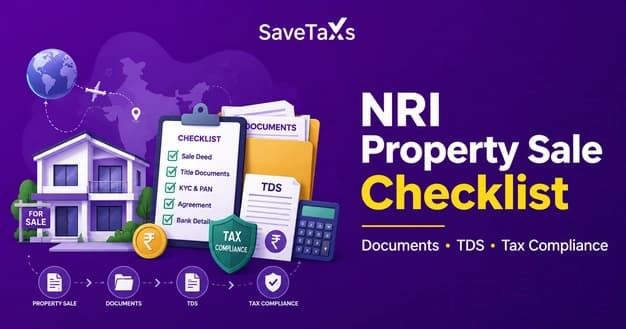
NRI Property Sale Checklist: Documents, TDS & Tax ComplianceNRI Property Sale Checklist: Documents, TDS & Tax Compliance
Written by Shubham Jain

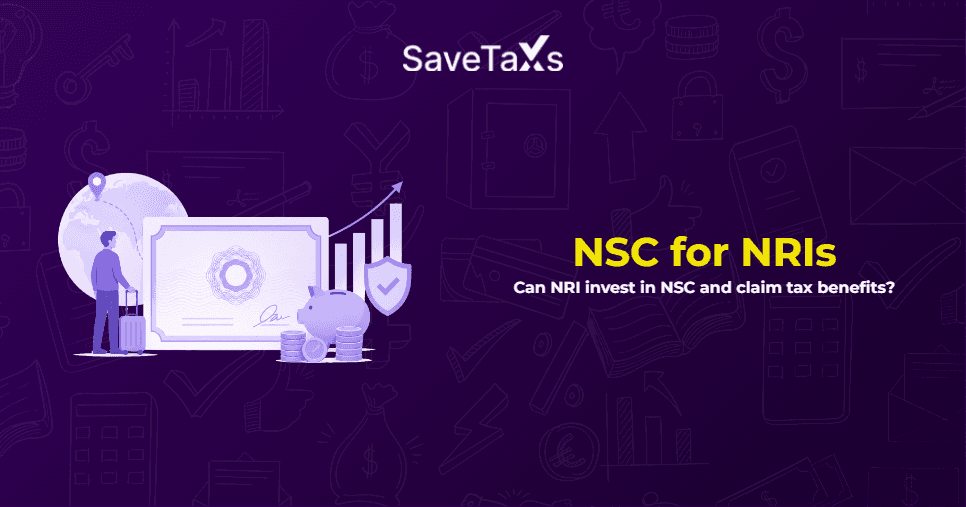
The National Savings Certificate (NSC) is a fixed-income investment scheme offered by the Indian Government. It has a fixed 5-year maturity period, and there is no facility for extension after that. Also, interest on NSC is compounded annually and paid with the principal amount at maturity.
It's a widely popular small-savings and tax-saving investment in India, but NRIs face different rules for this. After you become an NRI, you are generally not allowed to make a fresh NSC investment. However, if you purchased an NRI while you were a resident Indian and later became an NRI, you may continue to hold it until maturity.
In this blog, we have covered what NSC for NRIs means, what happens to existing NSCs after becoming an NRI, how interest and maturity work, and whether NSC investments qualify for tax benefits under Section 80C.
No, NRIs are not allowed to open a new NSC account or purchase a fresh certificate. Although an NRI can invest in several Indian financial assets, including mutual funds and real estate, some schemes are specifically designed for resident Indians. One such scheme is the National Savings Certificate, which is available mainly to resident Indians; hence, NRIs cannot purchase it.
But what if you purchased an NSC while you were a resident Indian but later became an NRI? In this case, you may hold the certificate until it matures. The Government of India reviews and announces interest rates for small savings schemes every quarter. So, as of now, for the July-September 2026 quarter, the NSC offers an interest rate of 7.7% per annum.
NSC interest keeps compounding every year, but that doesn't mean you get the payout every year. Instead, you will receive the accumulated interest along with the principal at maturity.
Further, let's look at some of the key features of an NSC for NRIs.
File your US taxes with utmost precision, accuracy, and confidence with Savetaxs.
The most important and beneficial feature of the NSC is the absence of a maximum investment limit. You can start investing in an NSC with a minimum of ₹1,000, and additional investments are allowed in multiples of ₹100. This feature allows eligible investors to invest in the scheme in line with their capacity and financial goals.
Additionally, taxpayers who opt for the old tax regime may also qualify to claim a deduction on NSC investments under Section 80C. However, this is subject to the overall deduction limit set out in the section. With no maximum investment limit and permitted deductions, NSC remains a popular tax-saving option among eligible resident investors.
After exploring the key features of NSC, one common question arises: "Can I withdraw NSC before maturity?" Well, you cannot, as these are designed to be held until maturity. However, there may be situations in which premature encashment is allowed. Let's see what these situations are.
If you became an NRI after purchasing an NSC, the investment can generally continue until maturity on a non-repatriation basis. However, becoming an NRI does not automatically make the interest tax-free.
NSC interest accrues annually. The interest for the first four years is deemed to be reinvested in the certificate and is generally taxable as income from other sources. The reinvested interest may qualify for the applicable tax deduction, subject to the overall limit and other conditions. The final year's interest is not treated as reinvested in the same way.
For taxpayers using the old tax regime, the applicable deduction for eligible NSC investment and reinvested interest is subject to the prescribed aggregate limit. Under the tax-law framework applicable from April 1, 2026, the corresponding specified-savings deduction is provided under Section 123 of the Income-tax Act, 2025 and Schedule XV.
Generally, no. An NSC cannot be voluntarily encashed before its five-year maturity. Premature closure is permitted only in specified circumstances, such as the death of the account holder, forfeiture by a qualifying pledgee who is a Gazetted Officer, or a court order.
The amount payable depends on how long the NSC has been held. If it is prematurely closed before one year, only the principal is payable. If it is closed after one year but before three years under a permitted circumstance, interest is calculated at the applicable Post Office Savings Account rate for the relevant complete months. Different prescribed amounts apply when premature closure occurs after three years. Let's understand this in detail.
No, an NSC does not offer an extension facility, unlike other post office savings products such as the public provident fund (PPF) and the senior citizen savings scheme (SCSS). Hence, you cannot extend an NSC for another term under the existing certificate after it reaches maturity.
Count on Savetaxs and get reliable US tax help from the experts.
NSCs can be a very useful tax-planning option for eligible resident investors, but for NRIs, eligibility rules may differ. Once you become an NRI, you cannot purchase a fresh NSC investment. However, if you became an NRI after purchasing an NSC, you can continue to hold it until maturity, subject to the applicable rules.
Moreover, the tax benefit may also vary based on your tax status and the tax regime you opt for. For example, you will get a deduction under Section 80C only if you opt for the old tax regime and comply with the applicable limits and conditions. If you are an NRI with financial interests in both India and another country, careful tax planning is important.
To ensure you plan smart, reach out to an expert at Savetaxs. We have an entire team of experts who can help you optimize, plan, and report your NSC investments. Our team can help you determine your correct residential status to understand whether you can open a new NSC. Reach out to us today, as we are actively working 24/7 across all time zones.
Note: This guide is for information purposes only. The views expressed in this guide are personal and do not constitute the views of Savetaxs. Savetaxs or the author will not be responsible for any direct or indirect loss incurred by the reader for taking any decision based on the information or the contents. It is advisable to consult either a CA, CS, CPA or a professional tax expert from the Savetaxs team, as they are familiar with the current regulations and help you make accurate decisions and maintain accuracy throughout the whole process.
Shubham Jain is the Founder of SaveTaxs and has extensive experience in Indian and NRI taxation. He advises individuals, NRIs, and businesses on tax filing, tax planning, capital gains, DTAA benefits, fund repatriation, and compliance matters. He regularly writes about taxation and related financial topics. His focus is on making complex tax concepts easy to understand. Through his articles, he helps taxpayers stay informed, avoid common mistakes, and stay compliant with Indian tax laws. See Full Bio
Want to read more? Explore Blogs