UAE NRI Taxation
How UAE NRIs Can Build a Retirement Corpus for IndiaHow UAE NRIs Can Build a Retirement Corpus for India
Written by Shubham Jain
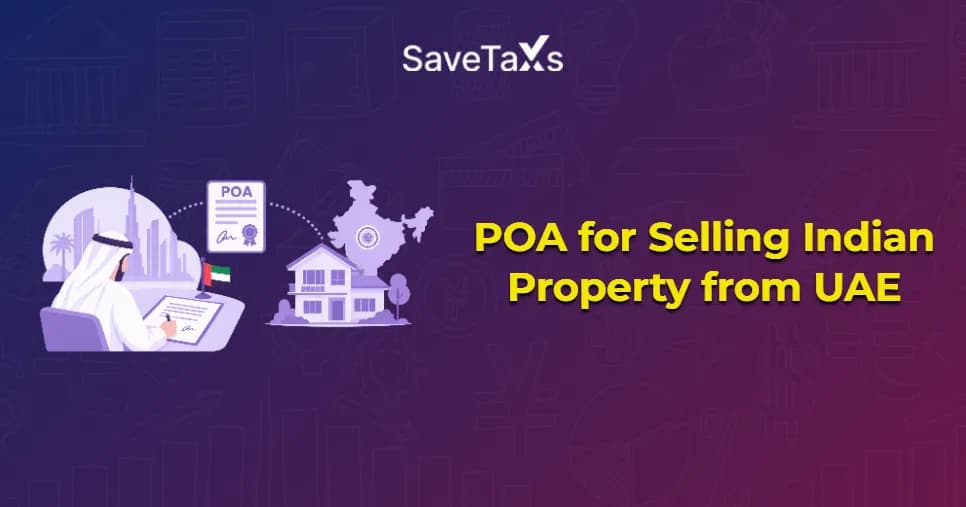
Managing property in India from the UAE can be overwhelming, and selling a home, land, or an apartment from the UAE adds logistical stress. Also, you can't fly down every time for signatures, verification, or registration. This is why a power of attorney for selling a property in India from Dubai can be useful.
In this blog, we will cover the key concepts of a power of attorney for property in India from Dubai.
As a UAE-based NRI, there are instances when you cannot come down to India to conduct the property selling process. In such cases, a property sale POA is a useful document in which an authorized representative acts on your behalf and takes over the selling process as instructed in the agreement.
The attorney may be needed to:
Before you prepare the POA, identify exactly what you require the representative to do. Those are the exact steps the documents must authorize.
Henceforth, rather than granting a general power of attorney, draft a special power of attorney for the authorized representative in the case of selling property.
Savetaxs helps NRIs file their ITR in India under expert guidance and complete compliance.
The following table shows the difference between the general and the special power of attorney.
| Point | Special Power Of Attorney | General Power Of Attorney |
|---|---|---|
| Scope | Limited to identified acts | Covers a broader range of affairs. |
| Property | Generally identified for one property | Covers broader properties or assets. |
| Duration | Often ends after the stated responsibilities are completed or on a specified date. | It often continues until it is revoked or terminated. |
| Risk | Lower if drafted precisely. | Generally higher because of the broader authority |
| Suitability For Sale | Generally more appropriate. | Appropriate only where the wide authority is genuinely required. |
The following documents are required to draft and attest an NRI power of attorney to sell property in India.
The Indian Embassy/Consulate in the UAE provides attestation services for Power of Attorney documents, and current requirements should be checked before attending. As of July 22, 2026, Indian consular, passport, visa, and attestation services in the UAE have been outsourced to Indian Consular Application Centers (ICACs). Appointments and current service requirements should be checked through the official Indian mission service information.
After UAE attestation, the POA agreement is sent to India, where it must comply with the applicable stamping, adjudication, and registration requirements under the relevant state laws. Here, adjudication means the Indian authorities will assess the stamp duty payable on a document executed outside India, where applicable. The Registration Act, 1908 also recognizes an agent presenting a document for registration when duly authorized by a qualifying power of attorney.
After the POA agreement is received in India, the authorized representative must:
The POA stamping duty depends on:
Savetax helps NRIs sell their property in India from the UAE while handling the entire process, from documents to execution and capital gains taxes.
For NRIs, a POA is a powerful and legal agreement used to sell Indian property from the UAE. However, while drafting the agreement, build practical safeguards into the documents and transactions. To keep everything compliant:
Use a property-specific POA. Include the property address, survey, or unit number. Along with all of this, set clear limits on the tasks and duties the representative can perform.
Do not miss out on this one. Set a consideration date under which the POA may expire. That could be:
Ensure direct payments are made to your own accounts, or wherever appropriate. It is recommended to not allow the representative to accept cash.
State whether or not POA can appoint another person in a case. If no substitution is required in the case, prohibit it in the agreement.
Although the POA manages everything, still monitor the transaction as needed. Ask for copies of:
The POA can end under many circumstances, such as expiry, completion of the authorized work, revocation, or death of the principal or attorney, depending on the applicable law and circumstances.
As an NRI seller from the UAE, if you are revoking the POA from your end, execute a revocation document. In the document, you shall notify:
Jatin is an NRI based out of Abu Dhabi and wants to sell his apartment in Bengaluru. He granted his brother the POA and the authority to act on his behalf. Jatin and his brother both followed the required attestation and procedures, and the sale deed was duly executed.
The POA was specific and limited to the apartment and the transaction.
Through the POA, Jatin's brother was liable to negotiate above the approved minimum price, sign the Agreement to Sell, execute the sale deed, and appear before the Sub-Registrar.
However, the agreement does not authorize him to receive any sale proceeds in his personal bank account. The buyer transferred the sale proceeds directly to Jatin's account after complying with the applicable TDS requirements for a payment to a non-resident seller. By the time Jatin received the copies of the sale deed, payment records, and the registration receipts.
The POA arrangements let Jatin complete the entire sale process accurately, with all formalities in place.
When a POA is properly drafted, authenticated, and executed, it can allow a UAE-based NRI to complete property sale formalities in India without traveling. However, the POA must be made mindfully; it must identify the property's state, the representative's powers, and meet applicable attestation, stamping, registration, and other Indian state requirements.
As an NRI living in the UAE planning to sell a property in India and thinking of having a POA professionally drafted, Savetaxs can help UAE-based NRIs coordinate the tax and compliance side of an India property sale. Further, our experts will help you with accurately drafting the POA and beyond.
Connect with us as we serve our clients 24/7 across all time zones.
This article is for general informational purposes only and does not constitute tax, legal, financial, or investment advice. Laws, regulations, rates, and procedures may change over time and may vary based on individual circumstances.
While SaveTaxs makes reasonable efforts to keep the information accurate and up to date, readers should verify applicable rules with official authorities or consult a qualified professional before making decisions based on this information.
Shubham Jain is the Founder of SaveTaxs and has extensive experience in Indian and NRI taxation. He advises individuals, NRIs, and businesses on tax filing, tax planning, capital gains, DTAA benefits, fund repatriation, and compliance matters. He regularly writes about taxation and related financial topics. His focus is on making complex tax concepts easy to understand. Through his articles, he helps taxpayers stay informed, avoid common mistakes, and stay compliant with Indian tax laws. See Full Bio

Want to read more? Explore Blogs