
SFOP Services for Eligible US Taxpayers Living Abroad
Get help assessing your foreign residency and filing history, preparing applicable US tax returns and FBARs, and reviewing the documentation needed for an SFOP submission.
For US citizens and green-card holders living outside the United States with unfiled returns or unreported foreign income.
- Residency test, year by year
- 3 returns, delinquent or amended
- 6 covered years of FBARs
- Form 14653 certification
Living abroad, filing in one country, owed in two
- 01
A US citizen abroad with missed foreign reporting
Filing in India every year and nothing in the US, because no one said citizens file on worldwide income.
- 02
A green-card holder who relocated
The card stayed, the filing stopped, and Indian deposits and rent were never reported in the US.
- 03
Overdue US returns
Some years filed, some not, and no FBARs at all.
- 04
Returns filed, the foreign side omitted
A preparer who never asked about Indian accounts, so the FBARs, Form 8938 and the interest are missing.
Common scenarios, not eligibility categories: the residency test and the other IRS conditions still have to be met, year by year.
Living abroad is not the test. This is.
The IRS applies its own definitions to each of the three covered years. Meeting the test is necessary, not sufficient: the other conditions still apply. IRS non-residency requirement
Are you a US citizen or a lawful permanent resident (green-card holder)?
In at least one of the three most recent tax years: did you have no US abode, and were you physically outside the United States for at least 330 full days in that year?
You meet the SFOP non-residency test for that year. Non-willful conduct, no open examination and a valid SSN still apply.
You fail the test. If a return was filed for all three covered years, SDOP may be the relevant route.
In at least one of those three years, did you not meet the substantial presence test under section 7701(b)(3)?
You meet the SFOP non-residency test for that year, subject to the other conditions.
You fail the test. SDOP may be the relevant route if its own conditions are met.
- Joint returns
- On a joint return both spouses must meet the test. If one fails it, the joint submission is assessed under SDOP.
- What “abode” means
- “Abode” follows section 911(d)(3) and Publication 54: your economic, family and personal ties, not where your mail goes. A passport, a visa or a foreign address does not decide it.
Organise the facts before you talk to us
Seven questions, no identifiers. The result is what a professional would review first, residency included.
Your answers stay in your browser. Nothing is stored or sent unless you choose to include a summary with the case-review form.
SFOP or SDOP?
Fail the test in all three years and the domestic procedures, with the 5% penalty, may be the route instead.
| Attribute | SDOP | SFOPThis page |
|---|---|---|
| Who it is for | Fails the non-residency test (lives in the US) | Meets the non-residency test (lives abroad) |
| Tax returns | 3 covered years, amended only | 3 covered years, delinquent or amended |
| FBARs | 6 covered years | 6 covered years |
| Certification | Form 14654 | Form 14653 |
| Offshore penalty | 5% of the IRS penalty base | None, if eligible and compliant |
| Tax and interest | Payable | Payable |
Catching up: three returns, six FBARs
Years you never filed get original returns; years you did get amendments. The FBAR window is twice as long and runs whether or not a return exists.
The three most recent tax years whose due date (including extensions) has passed are filed as delinquent Form 1040s, or amended on Form 1040-X where a return exists. The six most recent FBAR years are filed electronically with FinCEN, whether or not a return was filed for the year.
What SFOP changes, and what it does not
SFOP changes what the IRS charges for the years you submit; it does not wipe the years away. For most eligible clients, catching up costs the tax that was always due, plus interest, plus professional fees.
- TaxPayable in fullThe federal tax on the three returns, after foreign tax credit and the foreign earned income exclusion where you qualify.
- InterestPayable in fullStatutory interest on that tax, from each original due date to the date of payment.
- PenaltiesNot assessed, if eligible and compliantFailure-to-file, failure-to-pay, accuracy-related, information-return and FBAR penalties for the years submitted. There is no miscellaneous offshore penalty under SFOP.
- Returns can still be selected for audit. The relief on the amounts you reported survives an audit unless the original non-compliance was fraudulent or an FBAR violation was willful.
- Penalties already assessed are not abated, and a new deficiency found later can be penalised like any other.
- The IRS does not acknowledge receipt and does not sign a closing agreement.
Residency first, then the whole package
No return is prepared for a procedure you cannot use. Once the residency position is settled, the package follows the IRS requirements for the foreign procedures.
- 01
Residency and filing-history assessment
US abode, day counts and the substantial presence test for each covered year; which years need original returns and which need amendments.
- 02
Delinquent or amended US returns
Form 1040 or Form 1040-X for each of the three covered years, with foreign tax credit and the foreign earned income exclusion where you qualify.
- 03
FBAR preparation
FinCEN Form 114 for each of the six covered years, prepared for e-filing with the streamlined reason code.
- 04
Information returns
Form 8938 where the thresholds apply. Funds, companies, pensions and trusts are scoped separately.
- 05
Form 14653 support
The narrative statement of facts drafted from your account of events, reviewed before you sign.
- 06
Review, quality control and sign-off
Second-preparer check, then a submission checklist for the paper filing and the FBAR e-filing.
Scoped after review
Added when your assets or family situation call for it. Not included: representation in an IRS examination, years outside the covered periods, and Indian tax filings, which are a separate Savetaxs service.
- Form 8621 for foreign mutual funds and other PFICsOne computation per fund, per year
- Forms 5471, 5472 or 8865 for companies and partnershipsEntity financials and ownership history
- Forms 3520 and 3520-A for gifts, inheritances and trustsDepends on amounts and the arrangement
- Treaty positions on foreign pensionsCountry-specific analysis
- ITIN application for a spouse or dependantFiled with the submission where needed
Want the scope confirmed for your situation?
Where you live, what has been filed and what you hold abroad is enough for us to list the forms involved and send a written estimate.
Six stages, residency first
You approve every figure and the Form 14653 narrative before you sign, and nothing is sent until you do.
- 1
Initial inquiry
Where you live, your US status, what has and has not been filed. No identifiers.
- 2
Residency and filing-history review
The test is worked through for each covered year before any return is prepared.
- 3
Document gathering
A checklist built around your assets; statements and passport copies shared through your client dashboard.
- 4
Return, FBAR and information-return preparation
Three returns, six FBARs and any Forms 8938, 8621, 5471 or 3520, with credit for Indian tax paid.
- 5
Certification and quality review
The Form 14653 narrative drafted from your account, then the whole package checked by a second preparer.
- 6
Sign-off and submission
You approve every figure, sign the originals, file on paper to the IRS and e-file the FBARs with FinCEN.
What to gather
Travel and residency records come first for SFOP, because they decide the procedure.
No Social Security numbers, ITINs, passport or account numbers through the web form. Statements are shared through your Savetaxs client dashboard once the scope is agreed.
- Residency and travelPassport stamps or travel history for three years · Where you lived each year
- US filing historyAny US returns filed in the last three years · IRS or FinCEN letters
- Foreign income and taxSalary slips or Form 16, rent, interest, gains · Indian returns, Form 26AS or AIS
- Accounts and assetsStatements for the six FBAR years · Year-end balances and values, each year
Ready to start with an outline?
Tell us where you live, your US status and what has been filed. We reply by email with next steps.
How the estimate is built, and who reviews your case
Savetaxs does not publish a flat price for streamlined work: the gap between a three-account case and a multi-entity case is too wide to be honest about in one number. You get a written estimate before anything starts.
- Delinquent versus amended
- A return built from scratch is more work than an amendment.
- Foreign entities
- Companies, partnerships and trusts bring their own forms, each quoted separately.
- Investment reporting
- Mutual funds and other PFICs need Form 8621 per fund, per year.
- Income sources
- Salary, rent and business income across two tax systems add review time.
- Residency complexity
- A position that changes by year needs more day-count and abode work.
- Country of residence and the years you have lived there
- US tax status: citizen, green-card holder or other
- Which of the last three years have a filed US return
- Whether pensions, companies, trusts, gifts or inheritances are involved
IRS amounts (tax and interest) are separate from our fee and are paid to the IRS.
SFOP packages are prepared by Savetaxs’ tax team and checked under its CA + CPA review process before you sign. Where your income and assets are in India, a chartered accountant reconciles the Indian returns, Form 26AS and tax paid so the foreign tax credit is claimed correctly.
 CPA
Hatim Dudhiyawala
US Certified Public Accountant · Delhi NCR CA
Anoop Ranta
Chartered Accountant · Delhi NCR CA
Vaibhav Jain
Chartered Accountant · Jaipur
A network of chartered accountants and US CPAs, not an in-house team. Rating from Savetaxs internal records. Client reviews · Expert directory
Insights on SFOP & Offshore Compliance
Guides on SFOP eligibility, filing steps and penalties for U.S. taxpayers living abroad.

Before you start an SFOP submission
The questions that come up in SFOP case reviews, answered from the IRS guidance.
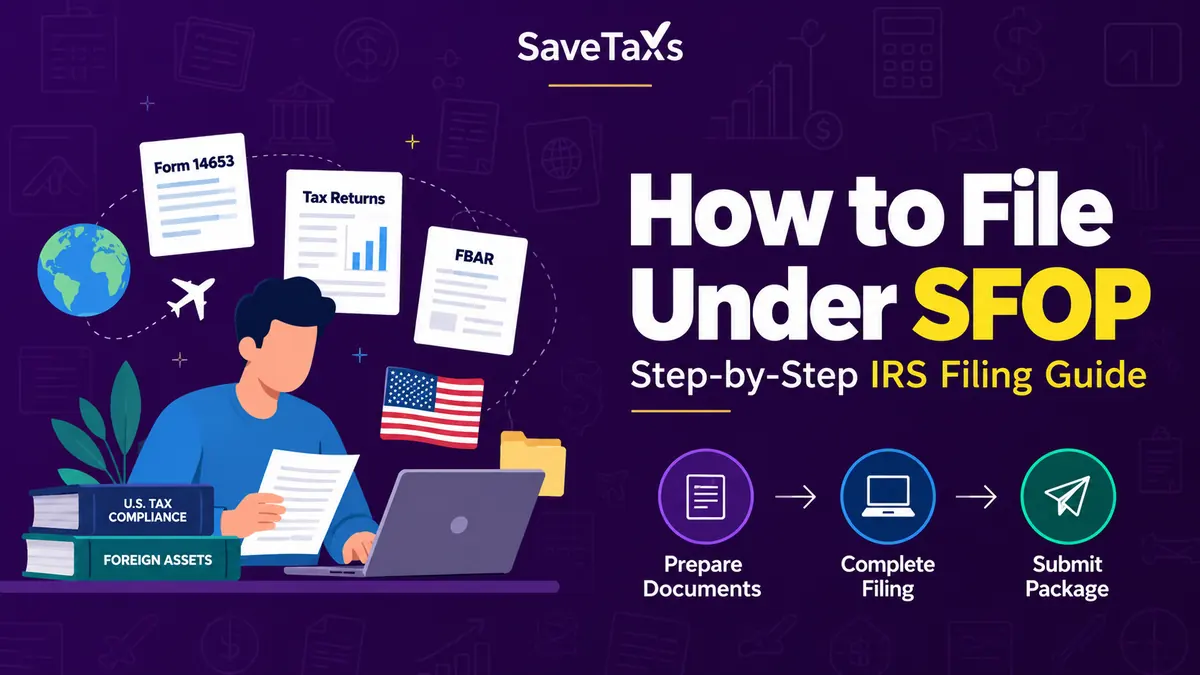
Streamlined Foreign Offshore Procedures (SFOP) are an IRS compliance program for eligible U.S. taxpayers residing outside the United States who have failed to report foreign income, financial assets or required information returns due to non-willful conduct. The program allows eligible taxpayers to correct certain past filing deficiencies by submitting required tax returns, FBARs and a non-willfulness certification.
SFOP is generally available to eligible individual U.S. taxpayers and estates of individual U.S. taxpayers who meet the IRS non-residency requirement and whose offshore reporting failures resulted from non-willful conduct.
For U.S. citizens and lawful permanent residents, the test generally requires no U.S. abode and at least 330 full days physically outside the United States during at least one of the relevant three tax years. Different rules apply to individuals who are not U.S. citizens or lawful permanent residents. Both spouses must meet the applicable non-residency requirement when submitting a joint return.
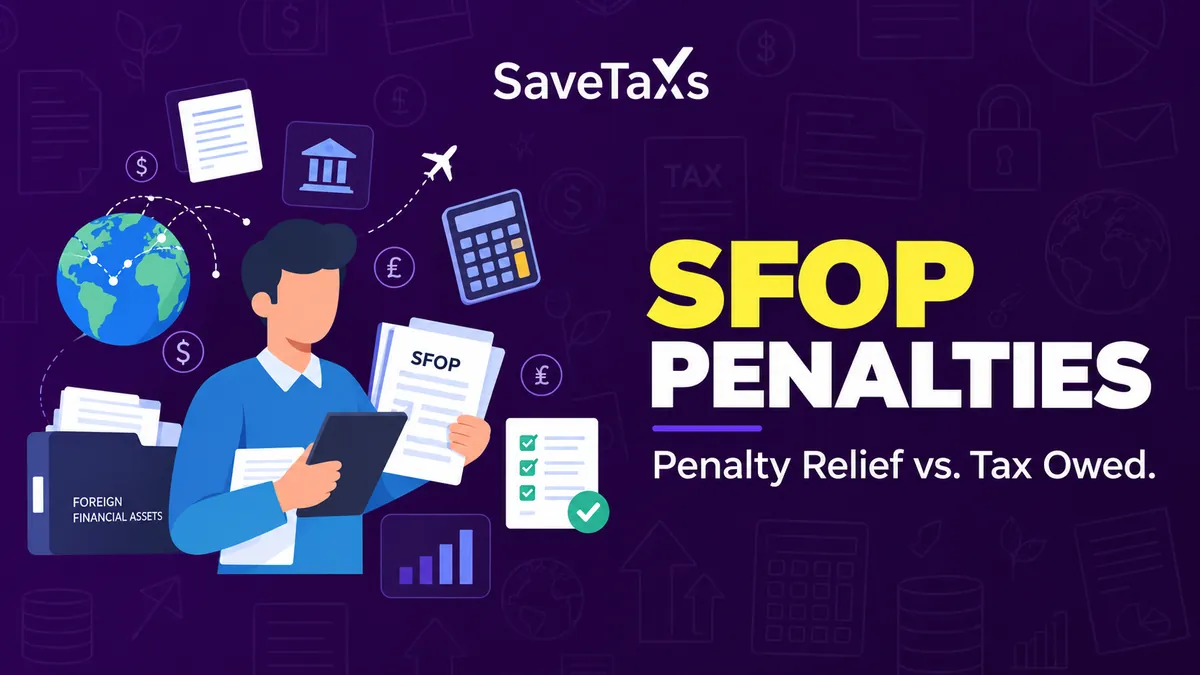
No. Unlike the Streamlined Domestic Offshore Procedures (SDOP), SFOP does not impose the 5% miscellaneous offshore penalty. Eligible taxpayers who properly comply with the SFOP requirements are generally not subject to the specified failure-to-file, failure-to-pay, accuracy-related, information return and FBAR penalties covered by the program. Applicable unpaid taxes and interest must still be paid.
Form 14653 is the certification form used by eligible taxpayers residing outside the United States to certify their eligibility for SFOP and explain why their previous tax and foreign asset reporting failures were non-willful. It must include a truthful explanation of the relevant facts and circumstances and be properly completed and signed.
Potentially, yes. Unlike SDOP, SFOP can accommodate eligible taxpayers who have never filed required original U.S. tax returns. They generally need to submit the required delinquent original returns for the three covered tax years, along with applicable information returns, FBARs and Form 14653. All eligibility requirements must still be satisfied.
Generally, taxpayers are not eligible for streamlined procedures if the IRS has initiated a civil examination of their returns for any taxable year or if they are under criminal investigation by IRS Criminal Investigation. If you have received an IRS notice, have an ongoing examination or are unsure about your status, seek a professional review before making a submission.