NRI Income Tax Compliance
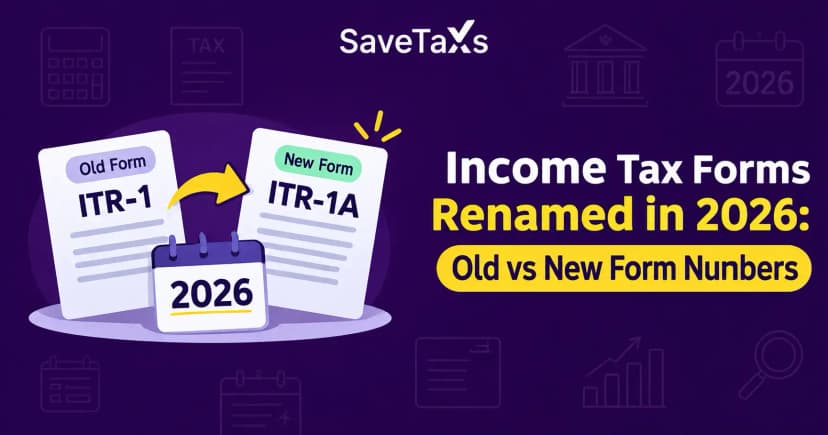
Income Tax Forms Renamed in 2026: Old vs New Form NumbersIncome Tax Forms Renamed in 2026: Old vs New Form Numbers
Written by Vipul Jain

_1778561485008.webp&w=3840&q=75)
Waiting for an income tax refund after filing your Income Tax Return (ITR) can be frustrating, especially when the expected amount has not reached your bank account. However, a delayed refund does not always mean there is a problem with your return.
The delay may be related to incomplete verification, return processing, a discrepancy in your tax details, an outstanding tax demand, or a failed bank payment. The next right step depends on the status displayed by the Income Tax Department.
This guide explains the common reasons for an income tax refund delay, how to identify the issue and what you can do to resolve it.
The Income Tax Department’s general guidance indicates that a refund usually takes around four to five weeks after e-verification to be credited. This is not a guaranteed deadline for every taxpayer.
Processing can take longer if the return requires additional checks, the department identifies a discrepancy or the bank cannot accept the payment.
If your refund has not arrived within the expected period, check the status of your filed return and look for any intimation or communication from the department. Avoid filing another return or submitting a refund-reissue request without identifying the actual issue.
The following are common reasons your refund may remain pending or fail to reach your bank account.
Filing a return and verifying it are separate steps. If the required verification is incomplete, refund processing may not begin.
What to do: Log in to the e-filing portal and check whether your return has been successfully e-verified. If verification is pending, follow the available verification procedure and applicable time limit.
The department may still be processing your return. A refund claim shown in your filed ITR is not the same as a refund approved after processing.
What to do: Review the return status and check your registered email for an intimation or request for further action. If the return remains under processing and no action is requested, continue monitoring the portal.
The refund amount may differ from the amount claimed in your return if the department identifies differences in reported income, tax deducted at source (TDS), advance tax, self-assessment tax or other tax information.
What to do: Review the processing intimation and compare the figures with your return and supporting tax records. If you identify an error, determine the correction procedure applicable to your case rather than filing another return automatically.
The department may adjust a refund against an outstanding demand, subject to the applicable procedure. In that situation, you may receive only part of the expected refund or no refund if the entire amount is adjusted.
What to do: Check the adjustment intimation and review the outstanding-demand details on the portal. If you disagree with the demand, submit a response through the applicable process and provide the required explanation or supporting information.
A refund may fail even after it has been processed for payment. The Income Tax Department identifies issues such as an unvalidated bank account, a mismatch between the account holder’s name and PAN details, an invalid IFSC code or a closed account as possible causes.
What to do: Check the bank account selected for the refund and its validation status. Correct any inaccurate details and follow the official refund-reissue procedure if the payment has failed and the option is available.
Savetaxs helps NRIs understand refund delays, resolve ITR-related queries, and navigate income tax refund issues with expert assistance.
To see where your return stands, log in to the e-filing portal and open e-File → Income Tax Returns → View Filed Returns. For the full walkthrough and what each status means, read our guide on how to track your income tax refund after filing your ITR
| Situation | Recommended next step |
|---|---|
| Return verification is pending | Complete the required verification within the applicable time limit. |
| Return is under processing | Check for departmental communications and monitor the status. |
| Refund amount differs from your claim | Review the processing intimation and compare the tax figures. |
| Refund is adjusted against a demand | Review the demand and submit a response if you disagree. |
| Refund payment has failed | Correct the underlying issue and request reissue if the portal permits it. |
| Refund is marked as issued but not received | Check the payment details and bank statement, then contact the bank or department if necessary. |
Important: Do not treat every delayed refund as a failed payment. A refund that is still being processed needs a different response from one that has already failed.
Consider contacting the department through its official support or grievance channels when:
Keep your ITR acknowledgement number, Assessment Year, processing intimation and relevant payment details available. These records can help you explain the issue clearly.
You can find support options on the official Income Tax Department portal.
NRIs who file Indian income tax returns should follow the same basic process: verify the return, review the status and identify the reason for the delay before taking action.
For example, an NRI living in the United States may claim a refund of excess TDS deducted from rental income earned in India. If the return has been processed but the refund has not reached the selected bank account, the taxpayer should check whether the payment was issued, adjusted or failed.
NRIs should also confirm that their registered contact details are accessible and that the bank account selected for the refund meets the department’s current eligibility and validation requirements. Do not assume that every NRO or NRE account is automatically eligible for refund credit.
For NRI-specific status-checking steps, read our guide on how NRIs can check their income tax refund status online.
You cannot control the department’s processing time, but you can reduce avoidable errors by following these practices:
These checks can help prevent common filing and payment issues, although they cannot guarantee faster processing.
Savetaxs helps NRIs understand refund status, resolve refund delays, and navigate ITR-related queries with expert assistance.
An income tax refund delay can arise at different stages, from return verification and processing to demand adjustment or bank-payment failure. The most effective first step is to check the status of your return and identify the specific reason before taking action.
If your return is under processing, monitor it and review departmental communications. If the refund has been adjusted, examine the demand. If payment has failed, follow the official reissue procedure.
For a broader explanation of refund eligibility, calculation and claiming, read our income tax refund guide.
This article is for general informational purposes only and does not constitute tax, legal, financial, or investment advice. Laws, regulations, rates, and procedures may change over time and may vary based on individual circumstances.
While SaveTaxs makes reasonable efforts to keep the information accurate and up to date, readers should verify applicable rules with official authorities or consult a qualified professional before making decisions based on this information.
Vipul Jain is the Co-Founder of SaveTaxs and a tax expert with experience in Indian and NRI taxation. He advises individuals, NRIs, and businesses on tax filing, tax planning, capital gains, DTAA, and compliance matters. He focuses on making complex tax concepts simple and helping taxpayers make informed, compliant decisions. See Full Bio
Want to read more? Explore Blogs