US Tax Filing and Compliance
IRS Streamlined Domestic Offshore Procedures (SDOP): Complete 2026 GuideIRS Streamlined Domestic Offshore Procedures (SDOP): Complete 2026 Guide
Written by Hatim Dudhiyawala

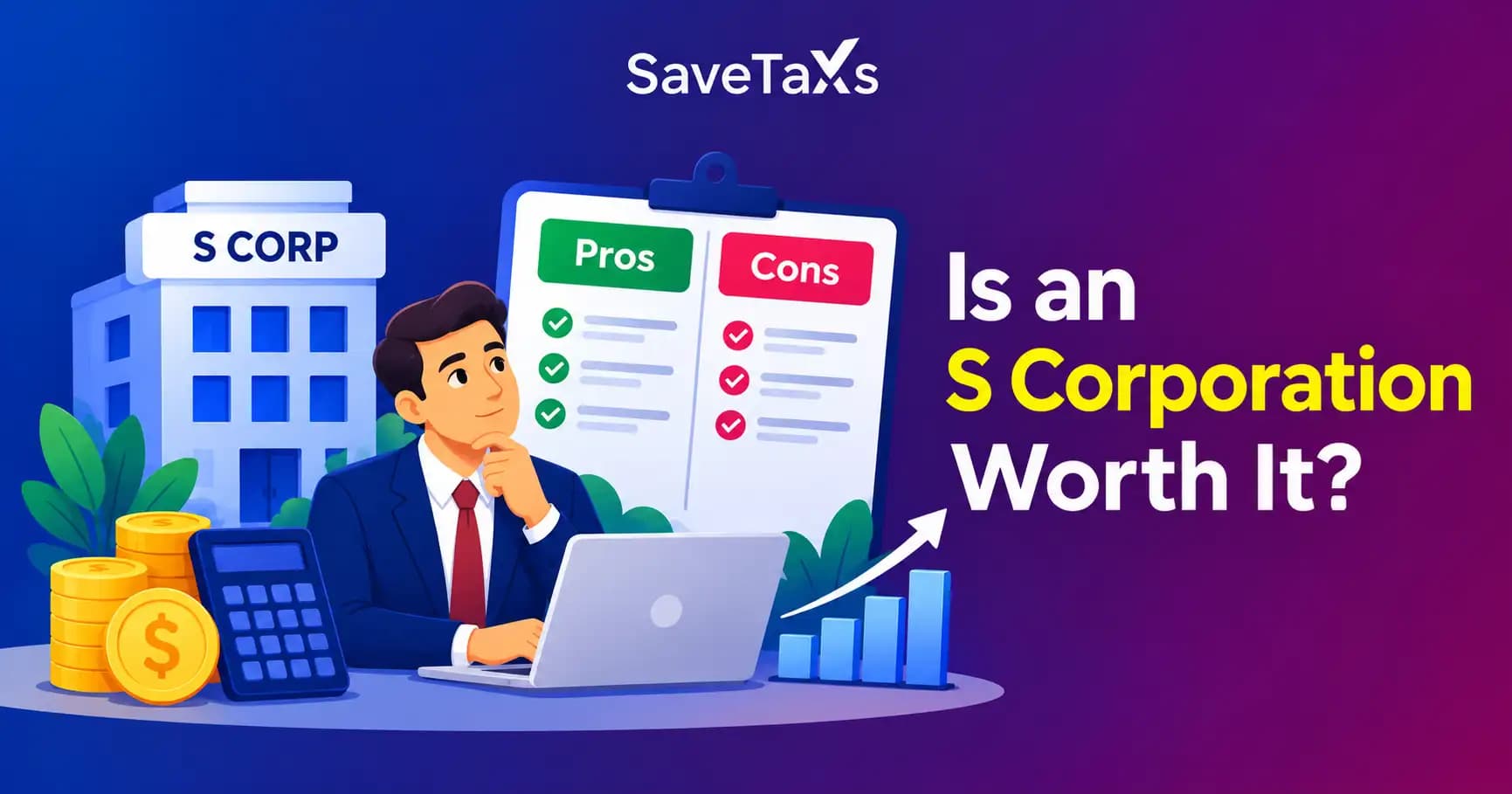
Choosing S corporation taxation can affect your business taxes, payroll responsibilities, and annual compliance costs. For some profitable small businesses, the election may offer meaningful tax-planning opportunities. For others, additional expenses and administrative requirements may outweigh the potential benefit.
The right decision depends on your business income, the work you perform, your state tax obligations, and your plans for growth. Rather than relying on a fixed profit threshold or a general tax-saving estimate, evaluate the likely costs and benefits using your own financial information.
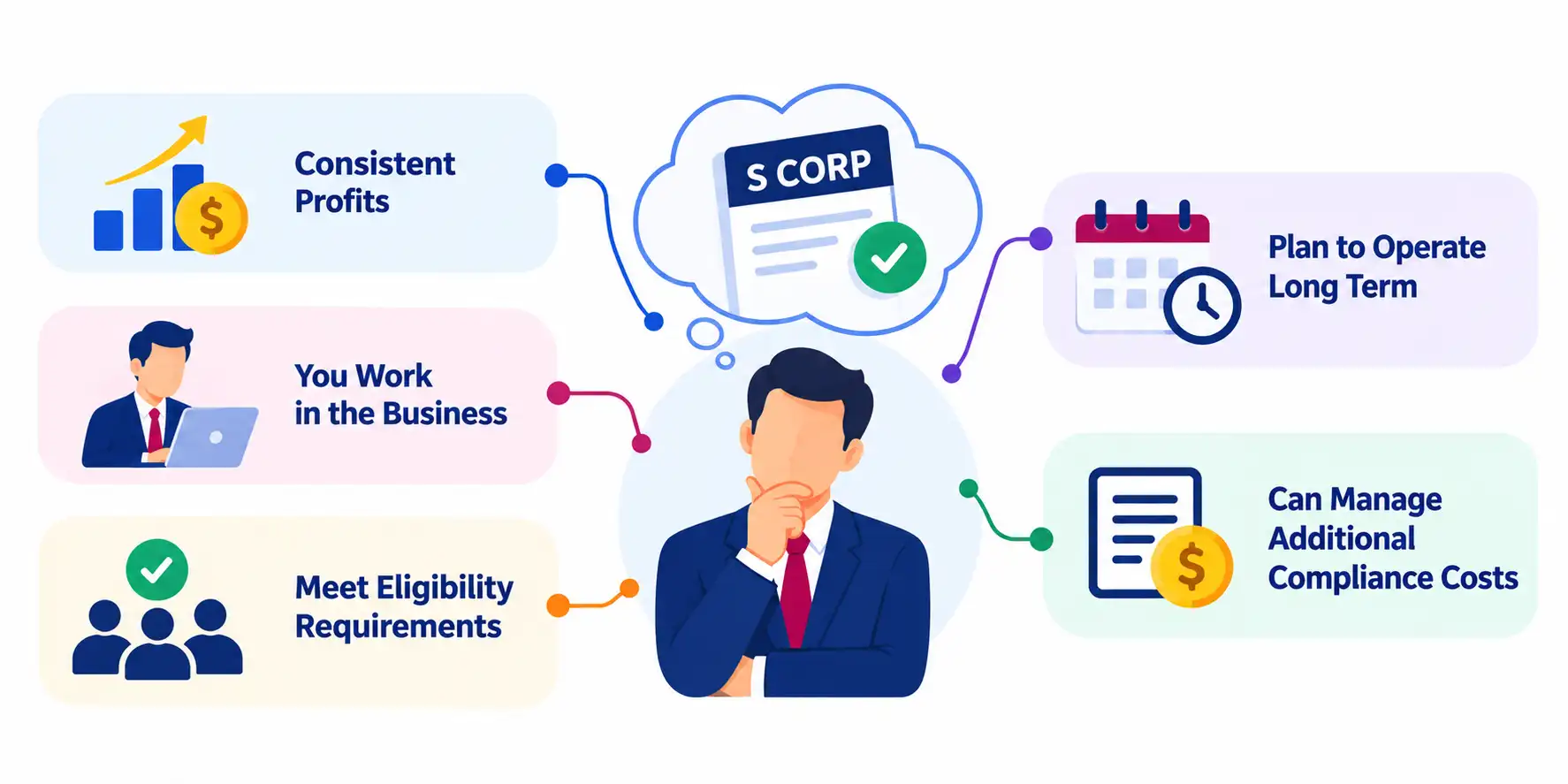
S corporation taxation may be worth evaluating when your business generates consistent profits, you qualify under the federal rules, and you can manage the additional compliance requirements.
It may be particularly relevant if:
These factors do not guarantee that an S Corp election will save money. They indicate when a detailed comparison may be worthwhile.
Get expert help with S Corp tax returns and compliance.
An S corporation generally passes its income, deductions, and other applicable tax items through to shareholders for federal income-tax purposes. A shareholder who works in the business generally must receive reasonable compensation for services, with applicable payroll taxes.
The potential benefit often depends on the interaction between owner compensation, employment taxes, business profit, and the costs of maintaining S corporation status.
To evaluate your situation, compare the projected tax outcome under your current structure with the outcome under S corporation taxation.
Include:
Do not assume that all business profit can be treated as distributions or that S corporation income is automatically tax-free. The result depends on the facts and applicable tax rules.
For a detailed explanation of owner compensation, see S Corporation Reasonable Compensation: IRS Rules for Owner-Employees.
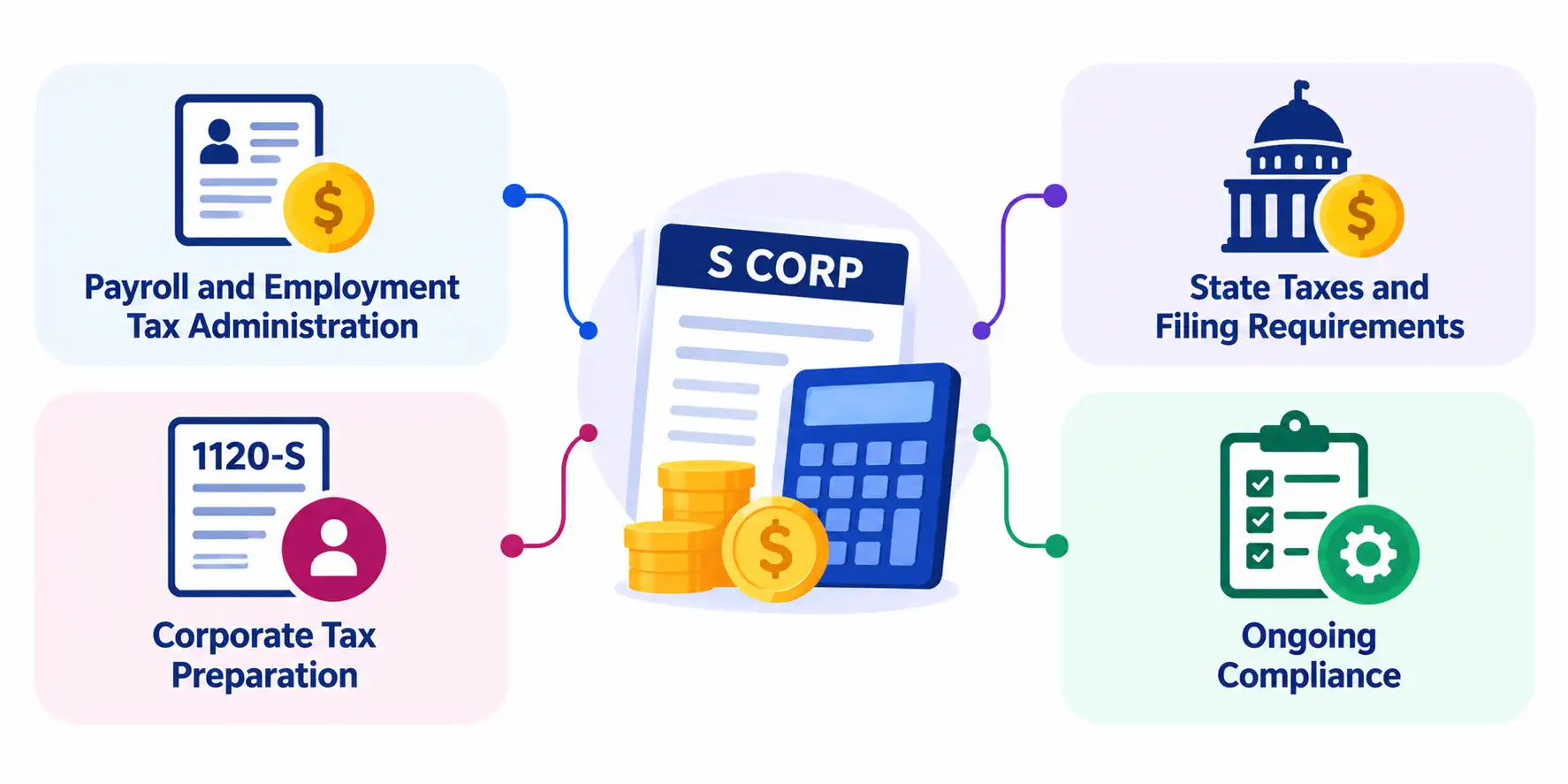
The tax election can introduce recurring expenses that a business should include in its decision.
A working shareholder generally needs appropriate payroll processing and reasonable compensation. This can involve payroll software or service fees, employment-tax deposits, wage reporting, and recordkeeping.
An S corporation generally files Form 1120-S and provides applicable Schedule K-1 forms to shareholders. Professional preparation and bookkeeping fees can increase the annual cost of operating the business.
State treatment varies. Depending on where the business operates, it may owe state income taxes, franchise taxes, minimum taxes, annual fees, or other charges.
A business operating in multiple states may need to consider additional filing requirements.
The business must maintain its eligibility, keep appropriate records, and report income and payments correctly. Errors can create additional professional fees, amended filings, interest, or penalties.
The practical test: Compare the estimated annual tax benefit with all additional costs—not just the federal tax calculation.
S corporation taxation may be less attractive in several situations.
These are decision factors, not automatic reasons to reject S corporation taxation. The right answer depends on the business's financial projections and circumstances.
Before electing S corporation status, work through the following checklist:
If the projected benefit remains meaningful after all additional costs, the election may warrant further consideration. If the result is marginal, compare the value of potential savings with the administrative burden and risks.
Get guidance on S Corp taxation, costs, and business compliance.
S corporation taxation can be useful for some businesses, but the decision should be based on projected tax outcomes, compliance costs, and long-term goals rather than a general promise of savings.
For help evaluating S Corp tax filing and compliance requirements, connect with SaveTaxs. Our team of professional CPAs, Enrolled Agents, and tax experts helps business owners understand their tax obligations and make informed decisions.
This article is for general informational purposes only and does not constitute tax, legal, financial, or investment advice. Laws, regulations, rates, and procedures may change over time and may vary based on individual circumstances.
While SaveTaxs makes reasonable efforts to keep the information accurate and up to date, readers should verify applicable rules with official authorities or consult a qualified professional before making decisions based on this information.
Shubham Jain is the Founder of SaveTaxs and has extensive experience in Indian and NRI taxation. He advises individuals, NRIs, and businesses on tax filing, tax planning, capital gains, DTAA benefits, fund repatriation, and compliance matters. He regularly writes about taxation and related financial topics. His focus is on making complex tax concepts easy to understand. Through his articles, he helps taxpayers stay informed, avoid common mistakes, and stay compliant with Indian tax laws. See Full Bio

Want to read more? Explore Blogs