
NRI Income Tax Compliance
How Much Gold Is Allowed From Dubai to India? Guide To 2026 LimitsHow Much Gold Is Allowed From Dubai to India? Guide To 2026 Limits
Written by Shubham Jain
People are now filing their Income Tax Returns (ITR) at a faster rate. For AY (Assessment Year) 2026-27, almost 1.7 crore taxpayers have already filed their ITRs to cover income from FY 2025-26, according to the Income Tax Department. Also, nearly 10 lakh returns were filed only on Friday.
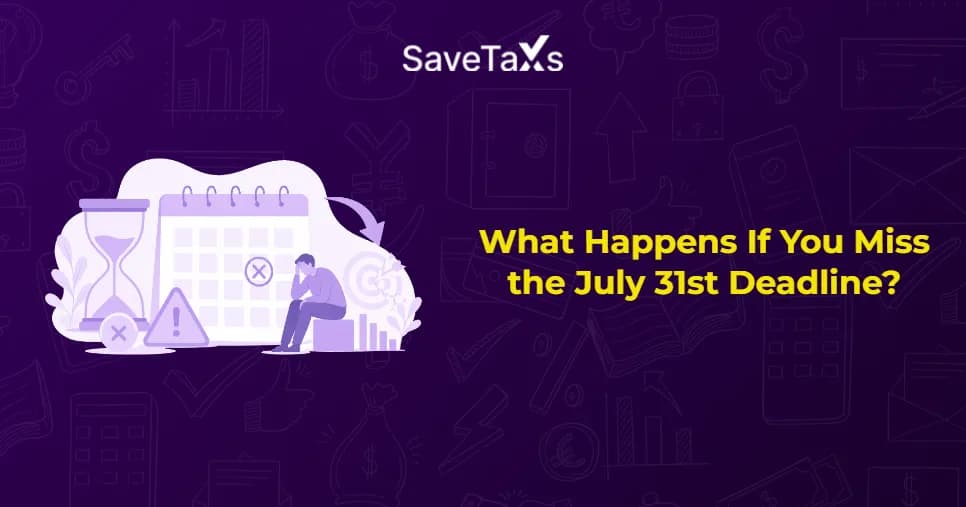
Moreover, even the Income Tax Department has asked people to file their returns on time by passing a message through the social media platform X. However, the main question here is what the deadline is and what happens if you miss the deadline. In this blog, we will discuss the correct ITR form to use for ITR filing 2026, the filing deadline, and the consequences of missing the deadline.
For income earned in the financial year 2025-26, the deadline to file ITR-1 (Sahaj) and ITR-2 is the 31st of July 2026. Ensure you file your return by this deadline if your accounts do not require an audit.
ITR-1, also known as the 'Sahaj' form, is designed mainly for individuals who:
ITR-2 is for NRI taxpayers and Hindu Undivided Families (HUFs) who:
You may face several consequences if you fail to file by the 31st July deadline, such as:
In short, you must not wait until the last moment to file your ITR. As the deadline approaches, the traffic on the portal increases significantly, which can lead to technical glitches. So, you must gather the required documents and file your ITR as soon as possible without waiting for the deadline to approach.
This will help you avoid late filing fees, interest, and other issues. Moreover, to ensure you file your ITR with confidence and on time, contact an expert at Savetaxs. We have an entire team of experts familiar with the ITR filing process who can help you file your ITR accurately. Our team will ensure you file your ITR without any errors and before the deadline so that you face no issues. Connect with us right away and file your ITR with confidence.
This article is for general informational purposes only and does not constitute tax, legal, financial, or investment advice. Laws, regulations, rates, and procedures may change over time and may vary based on individual circumstances.
While SaveTaxs makes reasonable efforts to keep the information accurate and up to date, readers should verify applicable rules with official authorities or consult a qualified professional before making decisions based on this information.
Shubham Jain is the Founder of SaveTaxs and has extensive experience in Indian and NRI taxation. He advises individuals, NRIs, and businesses on tax filing, tax planning, capital gains, DTAA benefits, fund repatriation, and compliance matters. He regularly writes about taxation and related financial topics. His focus is on making complex tax concepts easy to understand. Through his articles, he helps taxpayers stay informed, avoid common mistakes, and stay compliant with Indian tax laws. See Full Bio
Want to read more? Explore Blogs