NRI Income Tax Compliance
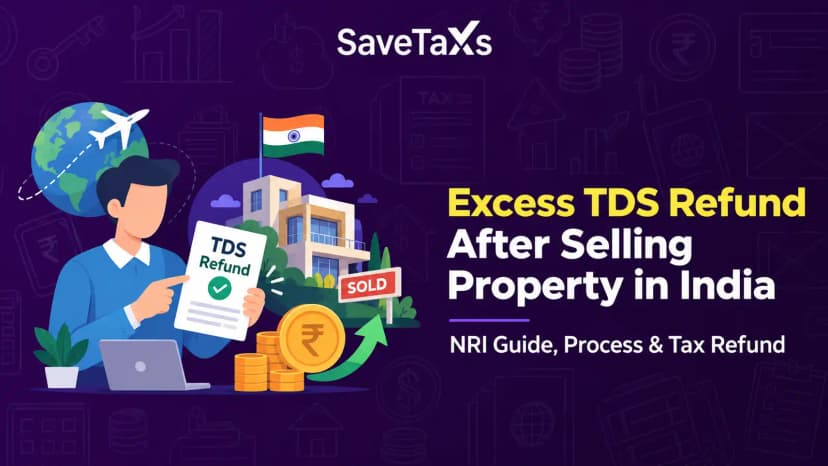
How to Claim Excess TDS Refund After Selling Property in India as an NRIHow to Claim Excess TDS Refund After Selling Property in India as an NRI
Written by Shubham Jain
_1782911003992.webp&w=3840&q=75)
Under the Union Budget 2026-27, an important procedural change has been proposed. This change directly impacts Non-Resident Indians (NRIs) selling immovable property in India. Although the change mainly simplifies the compliance burden for resident buyers, it also has a beneficial and meaningful impact on NRI sellers. Keep reading further to know what changed in TDS compliance for property sales.
As per the Income Tax Act, when an NRI sells an immovable property in India, the resident buyer needs to deduct TDS (Tax Deducted at Source) before paying to the seller. Generally, the TDS is deducted at higher rates, based on whether the gain is short-term or long-term, unlike transactions that involve resident sellers.
Even for a one-time property purchase, the resident buyer was mandatorily required to do the following compliance requirements until now:
This additional compliance often leads to transaction delays, follow-ups, and even practical issues that NRIs often experience during property sales. However, under the Union Budget 2026-27, a new change has been proposed by the Finance Minister. We will learn what this new change is.
In the Union Budget 2026-26, the Finance Minister proposed that resident buyers purchasing property from non-residents can now use their PAN to deduct TDS, removing the need to obtain a TAN. Under this framework, it was stated that:
This change will come into effect from the 1st of October, 2026. Now, we will understand how this change impacts NRI sellers.
For resident buyers, the TDS obligations continue to remain, but this change offers several indirect benefits to the NRI seller. Here are some of the benefits:
These changes might seem very small, but they can be very meaningful for NRIs. However, there are some points that NRIs must keep in mind and some requirements that they must continue. Let's discuss what these are.
As an NRI seller, you must note the following points:
Moreover, an NRI must also continue to:
From ITR filing to DTAA benefits and FEMA compliance, we handle every aspect of your Indian tax obligation.
In short, resident buyers can now use their PAN to deduct and deposit TDS while buying property from non-residents. It eliminated the need to obtain a TAN and offered some meaningful benefits to NRIs. It reduced non-compliance risk for buyers as the PAN registration process is simpler than the TAN registration process. Additionally, it also encouraged buyers to transact more with NRI sellers.
Moreover, if you need help with obtaining a PAN, contact an expert at Savetaxs. We have a team of experts offering a fully digital, end-to-end managed service for NRI PAN applications. Our experts review and organize your documents to avoid any rejections and ensure an error-free application with no third-party involvement. Contact us right away and get your PAN card delivered at your doorstep, regardless of which country you reside in.
This article is for general informational purposes only and does not constitute tax, legal, financial, or investment advice. Laws, regulations, rates, and procedures may change over time and may vary based on individual circumstances.
While SaveTaxs makes reasonable efforts to keep the information accurate and up to date, readers should verify applicable rules with official authorities or consult a qualified professional before making decisions based on this information.
Shubham Jain is the Founder of SaveTaxs and has extensive experience in Indian and NRI taxation. He advises individuals, NRIs, and businesses on tax filing, tax planning, capital gains, DTAA benefits, fund repatriation, and compliance matters. He regularly writes about taxation and related financial topics. His focus is on making complex tax concepts easy to understand. Through his articles, he helps taxpayers stay informed, avoid common mistakes, and stay compliant with Indian tax laws. See Full Bio
Want to read more? Explore Blogs