Bookkeeping
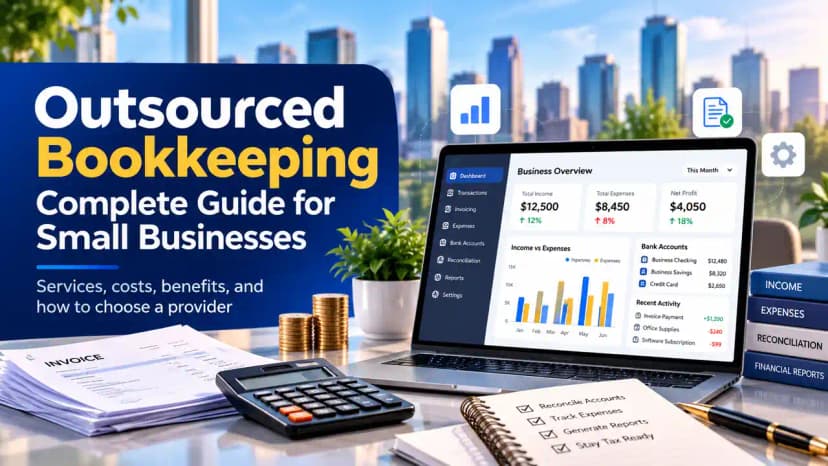
Outsourced Bookkeeping: The Complete Guide to Services, Costs, Benefits & Choosing a ProviderOutsourced Bookkeeping: The Complete Guide to Services, Costs, Benefits & Choosing a Provider
Written by Hatim Dudhiyawala


Do you need a bookkeeper for your small business? If your books are always behind, bank accounts do not reconcile, or you struggle to understand your business's profitability, professional bookkeeping may be worth considering. A bookkeeper helps maintain accurate financial records, track transactions, and prepare useful financial reports.
Savetaxs helps U.S. small-business owners explore outsourced bookkeeping services to organize financial records and establish a consistent monthly bookkeeping process. Here are nine signs you may need a bookkeeper, when to consider outsourcing, and how to choose the right bookkeeping support for your business.
If you spend hours categorizing transactions, organizing receipts, updating spreadsheets, and reviewing expenses, bookkeeping may be taking time away from running your business.
For small-business owners, the challenge is balancing routine financial administration with sales, customer service, and business growth.
When to hire a bookkeeper: Consider professional bookkeeping services if managing your books regularly interferes with your core business activities.
How Savetaxs can help: Explore outsourced bookkeeping to reduce routine administrative work and establish a more manageable financial-recordkeeping process.
Are you still recording last month's transactions when the current month is almost over? Delayed bookkeeping can leave you making business decisions using outdated financial information.
Unprocessed transactions can also make it harder to identify errors, monitor expenses, and prepare financial reports.
When to hire a bookkeeper: If you repeatedly postpone bookkeeping or struggle to close your books each month, consider moving to a regular monthly process.
How Savetaxs can help: Catch-up bookkeeping may help bring overdue financial records up to date before you establish ongoing monthly bookkeeping services.
Bank reconciliation involves comparing your accounting records with bank statements to identify differences. Your recorded balances may not match immediately because of legitimate timing differences, but unexplained discrepancies require investigation.
Missing transactions, duplicate entries, and incorrect expense categorization can affect the accuracy of your books.
When to hire a bookkeeper: Consider professional bookkeeping support if you cannot explain differences between your accounting software and financial statements.
How Savetaxs can help: Discuss regular bank and credit card reconciliation to help identify discrepancies and maintain more reliable financial records.
A positive bank balance does not necessarily mean your business is profitable. Outstanding invoices, unpaid bills, loan obligations, and other expenses affect your financial position.
Accurate small-business bookkeeping helps you understand your income and expenses instead of relying on your bank balance alone.
Ask yourself:
How much revenue did my business generate this month?
Which business expenses increased?
How much money do customers still owe?
What bills and financial obligations are coming due?
Can my business afford an upcoming expense?
When to hire a bookkeeper: If you cannot answer these questions confidently, you may need more consistent bookkeeping and financial reporting.
How Savetaxs can help: Explore bookkeeping support that helps organize transactions and prepare agreed financial reports for reviewing business performance.
As a small business grows, its financial activity often becomes more complicated. You may be managing multiple bank accounts, business credit cards, payment processors, contractors, or employees.
More transactions mean more work to categorize expenses, record income, reconcile accounts, and maintain supporting documents.
When to hire a bookkeeper: Consider outsourcing bookkeeping when your current process can no longer keep up with your transaction volume or reporting requirements.
How Savetaxs can help: Discuss small-business bookkeeping services based on your transaction volume, accounting setup, and financial-recordkeeping needs.
Missing receipts, incomplete invoices, and unclear transaction descriptions can make business expenses difficult to verify. Disorganized records can also complicate tax preparation and responses to questions about financial transactions.
The IRS provides guidance on recordkeeping requirements for businesses.
When to hire a bookkeeper: Consider professional bookkeeping support if you regularly search for receipts at month-end or struggle to connect transactions with supporting documents.
How Savetaxs can help: Establish a more consistent process for organizing financial records and identifying missing information.
Repeated mistakes can affect the reliability of your financial statements. Common problems include duplicate transactions, incorrect expense categories, missing income entries, and unreconciled accounts.
For example, recording a personal expense as a business expense can distort your reported business costs and require corrections.
When to hire a bookkeeper: If errors continue despite your efforts to maintain accurate records, professional bookkeeping may help improve consistency.
How Savetaxs can help: Explore bookkeeping support focused on consistent transaction recording, account reconciliation, and organized financial records. Accurate source documents and your review remain important.
If tax season means searching for receipts, reconstructing months of transactions, and correcting incomplete records, your bookkeeping process may need improvement.
Well-maintained financial records can make year-end reviews and coordination with your tax preparer more efficient. Bookkeeping does not replace tax preparation or professional tax advice.
When to hire a bookkeeper: Consider outsourcing bookkeeping if your tax preparer repeatedly requests missing information or must resolve a large backlog before preparing your return.
How Savetaxs can help: Discuss maintaining organized financial records throughout the year to make year-end bookkeeping and coordination with your tax professional more manageable.
Business owners need reliable financial information to monitor performance, evaluate expenses, and plan for upcoming obligations.
If your financial reports are delayed, incomplete, or difficult to understand, you may struggle to identify changes in revenue, manage expenses, or plan cash requirements.
When to hire a bookkeeper: Consider monthly bookkeeping services if you need consistent financial reporting but lack the time or process to maintain your records yourself.
How Savetaxs can help: Discuss a reporting schedule and financial reports that match your business requirements.
Outsourced bookkeeping services can help small-business owners manage recurring financial tasks without handling every transaction themselves.
Depending on your requirements and the agreed service scope, bookkeeping support may include:
Monthly bookkeeping: Recording and categorizing business transactions.
Bank and credit card reconciliation: Comparing accounting records with financial statements.
Accounts receivable tracking: Monitoring outstanding customer invoices and payments.
Accounts payable tracking: Organizing vendor bills and payment obligations.
Financial reporting: Preparing agreed reports to review business performance.
Catch-up bookkeeping: Addressing historical backlogs and incomplete financial records.
Year-end bookkeeping support: Organizing records for year-end review and coordination with your tax preparer.
Not every business needs every service. Your transaction volume, existing accounting system, and reporting requirements should determine the scope of your bookkeeping arrangement.
Explore Savetaxs Bookkeeping Services to discuss your small business's bookkeeping needs.
Choosing a bookkeeping provider is about more than recording transactions. You need a process that keeps your financial records organized and helps you access useful information when you need it.
Savetaxs is an option for U.S. small-business owners exploring outsourced bookkeeping support.
A consistent monthly bookkeeping process
Agree on document requirements, reporting deliverables, and monthly deadlines rather than leaving bookkeeping until the end of the quarter or tax season.
Organized financial records
Maintain a consistent process for recording transactions and organizing supporting documentation.
Bank and credit card reconciliation
Identify unexplained differences between accounting records and bank or credit card statements.
Financial reporting for better visibility
Use agreed financial reports to review business revenue, expenses, and performance.
Catch-up bookkeeping for overdue records
If your books are behind, discuss the work required to address historical records before beginning recurring monthly bookkeeping.
Less time spent on financial administration
Reduce the time spent managing routine bookkeeping tasks so you can focus on customers, operations, and business growth.
Confirm the available services, monthly deliverables, and expected turnaround with Savetaxs before engagement. Timelines depend on transaction volume, record quality, complexity, and the agreed scope.
A defined workflow helps you understand what information is needed, what work will be completed, and when you can expect your agreed reports.
Step 1: Share your financial records
Provide the required bank statements, credit card statements, invoices, receipts, and accounting-system access where applicable.
Step 2: Record and categorize transactions
Business income and expenses are recorded and categorized according to the agreed bookkeeping process.
Step 3: Reconcile your accounts
Compare accounting records with financial statements, investigate discrepancies, and flag missing information.
Step 4: Review your financial reports
Review the agreed reports and clarify unusual transactions or outstanding questions.
Step 5: Maintain the monthly schedule
Follow an agreed calendar for document submission, bookkeeping completion, and reporting. The actual turnaround depends on your records, transaction volume, and service scope.
Not every small business needs to outsource bookkeeping immediately. The right choice depends on your transaction volume, available time, recordkeeping process, and reporting needs.
| Your situation | What to consider |
|---|---|
| You have few, straightforward transactions | DIY bookkeeping may be sufficient. |
| Your records are accurate and consistently updated | Continue your current process if it meets your needs. |
| Your books are consistently behind | Consider catch-up bookkeeping and recurring support. |
| You cannot explain account discrepancies | Explore professional reconciliation support. |
| You need regular financial reports | Consider monthly bookkeeping services with defined deliverables. |
| Bookkeeping takes time away from running your business | Compare outsourcing costs with the time and effort required to manage the books yourself. |
When evaluating outsourced bookkeeping services, consider the scope of work, communication process, reporting deliverables, and agreed monthly deadlines—not just the price.
For more guidance, read Bookkeeping 101 and Outsource Business Bookkeeping.
You need financial records that are organized, current, and useful—not a recurring backlog that grows until tax season.
If bookkeeping is taking too much time, your accounts are difficult to reconcile, or you need a more consistent monthly process, Savetaxs can help you explore bookkeeping support suited to your business requirements.
Ready to discuss your bookkeeping needs?
Visit Savetaxs Bookkeeping Services to learn more and discuss the right level of support for your business.
This article is for general informational purposes only and does not constitute tax, legal, financial, or investment advice. Laws, regulations, rates, and procedures may change over time and may vary based on individual circumstances.
While SaveTaxs makes reasonable efforts to keep the information accurate and up to date, readers should verify applicable rules with official authorities or consult a qualified professional before making decisions based on this information.
Hatim Dudhiyawala is a Certified Public Accountant (CPA) with SaveTaxs and specializes in Indian and NRI taxation. He advises individuals, NRIs, and businesses on income tax filing, capital gains taxation, DTAA benefits, fund repatriation, and tax compliance. With experience in cross-border tax matters, Hatim helps taxpayers understand complex regulations and make informed decisions. Through his articles, he shares practical insights to help readers stay compliant and manage their tax obligations with confidence. See Full Bio
Want to read more? Explore Blogs