NRI Income Tax Compliance
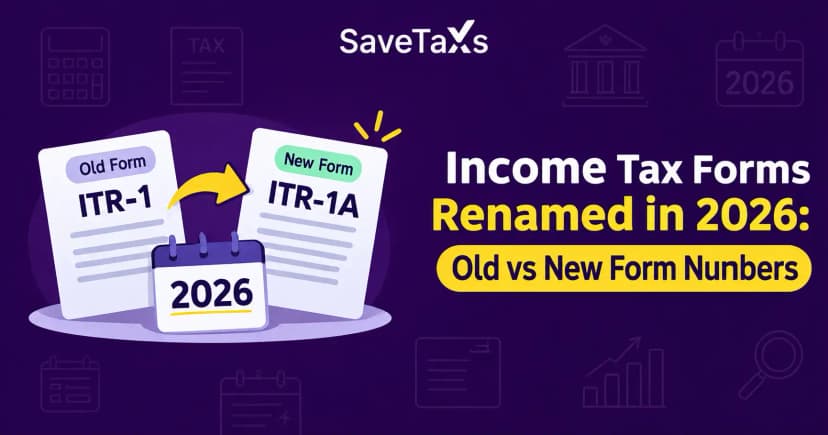
Income Tax Forms Renamed in 2026: Old vs New Form NumbersIncome Tax Forms Renamed in 2026: Old vs New Form Numbers
Written by Vipul Jain


An income tax audit requires businesses and professionals to maintain accurate financial records and provide supporting documents to a Chartered Accountant (CA). These records help verify turnover, expenses, deductions, tax payments and other disclosures required under the applicable income-tax law.
The documents required depend on the nature of the business or profession, accounting practices, GST and TDS obligations, and whether the taxpayer follows a presumptive taxation scheme.
This guide covers the essential documents required for an income tax audit in India, turnover thresholds, applicable forms, deadlines and practical preparation steps.
An income tax audit is an examination of a taxpayer’s books of account and prescribed financial information by an eligible accountant to verify compliance with applicable income-tax provisions.
For FY 2025–26, tax audits are governed by Section 44AB of the Income-tax Act, 1961. For Tax Year 2026–27, the corresponding provision is Section 63 of the Income-tax Act, 2025. The applicable forms and rules depend on the reporting period.
A tax audit is different from filing an income tax return. When an audit is required, the taxpayer must arrange the applicable audit report and file the income tax return separately.
For more details, read our guide to Section 44AB tax audit applicability and turnover limits.
Use the following checklist to prepare your records for the CA. Not every document applies to every taxpayer; the final requirements depend on the business, transactions and applicable law.
These documents establish the taxpayer’s identity, business structure and tax registrations.
PAN details of the proprietor, firm or company, as applicable.
Aadhaar details, where applicable.
GST registration certificate, if registered.
TAN details, where applicable.
Business registration documents, partnership deed or incorporation documents.
Previous year’s income tax return and audit report, if applicable.
Previous year’s audited financial statements, where available.
Details of business activities, branches and principal places of business.
Details of partners, directors or proprietors.
Records of changes in business structure or ownership during the year.
Accounting records help the auditor verify business transactions and reported financial results.
Prepare the following, as applicable:
Cash book, bank book and general ledger.
Journal entries and supporting vouchers.
Sales, purchase, debtor and creditor ledgers.
Trial balance.
Profit and loss account and balance sheet.
Fixed asset register and inventory records.
Opening and closing stock details, where relevant.
Bank reconciliation statements.
Details of loans, advances and outstanding balances.
If you use Tally or other accounting software, provide the required reports or an accessible export of the accounting data. Ensure that the books reconcile with bank statements, invoices and relevant tax returns.
These records help establish turnover and verify reported business or professional income.
Sales invoices and bills.
Service invoices and fee receipts.
Sales and purchase registers.
Credit notes, debit notes and sales-return details.
Records of cash sales and receipts.
Online sales and payment-gateway statements.
E-commerce marketplace settlement reports, where applicable.
Customer contracts and work orders, where relevant.
Details of discounts, cancelled invoices and customer advances.
Reconciliation of turnover with GST returns, where applicable.
For e-commerce businesses, retain marketplace settlement statements and fee details so gross sales can be reconciled with the amounts received in the bank account.
Expenses should be supported by records showing their amount, nature and business purpose.
Keep the relevant documents for:
Purchase invoices and supplier bills.
Expense vouchers and receipts.
Rent and lease agreements.
Electricity, internet and telephone bills.
Employee salary and payroll expenses.
Professional fees and consultancy bills.
Travel and conveyance expenses.
Advertising and marketing invoices.
Repairs, maintenance and insurance.
Loan statements and interest certificates.
Business-related reimbursements.
Supporting evidence for significant or unusual expenses.
Keep personal and business expenses separate. If an expense has both personal and business use, maintain a reasonable basis for determining the business portion.
Bank records help verify receipts, payments, borrowings and balances.
Prepare:
Statements for all business bank accounts.
Statements for other accounts used for business transactions, where relevant.
Details and explanations of significant cash deposits or withdrawals.
Loan sanction letters and repayment schedules.
Interest certificates from lenders.
Details of unsecured loans and borrowings.
Records of loans given and advances made.
Confirmations of significant loan balances, where required.
Fixed-deposit details and payment-gateway statements, where relevant.
Be ready to explain material differences between bank statements and accounting records, as well as significant or unusual transactions.
These records help the auditor reconcile tax compliance with the books of account.
GST documents, where applicable:
GST registration details.
GSTR-1 and GSTR-3B returns.
Annual GST returns and reconciliation records, where applicable.
Input tax credit records.
Details of GST paid, payable or refunded.
Reconciliation of GST turnover with the books.
TDS and TCS documents, where applicable:
TDS and TCS returns.
Tax-payment challans.
TDS certificates received or issued.
Details of tax deducted or collected but not deposited, if any.
Reconciliation of TDS/TCS balances with the books.
The applicable annual tax statement and AIS, where relevant.
Which annual tax statement should you check?
According to the Income Tax Department, Form 26AS applies through AY 2026–27 under the Income-tax Act, 1961. Form 168 applies from Tax Year 2026–27 under the Income-tax Act, 2025. AIS is a separate information statement.
Use the statement applicable to the reporting period and reconcile relevant tax-credit information with your books and tax records.
Official reference: Income Tax Department — Form 26AS and Form 168.
Also provide advance-tax and self-assessment-tax challans, together with details of relevant outstanding tax demands or refunds.
These documents support the values reported in the financial statements and the depreciation claimed for tax purposes.
Fixed asset register.
Purchase invoices for machinery, computers, vehicles and other assets.
Sale or disposal documents for assets.
Depreciation calculations and schedules.
Details of additions and deletions during the year.
Details of outstanding creditors and debtors.
Records of capital introduced or withdrawn.
Supporting documents for significant investments.
Details of provisions and outstanding liabilities.
The CA may request additional evidence for asset transactions, depreciation claims or balances that cannot be reconciled.
Businesses with employees should prepare relevant payroll and statutory records, where applicable.
Employee-wise salary registers.
Salary payment records.
Employment agreements, where relevant.
Form 16 and other TDS certificates, where applicable.
Employer contributions to provident fund and other employee benefit schemes.
Records of statutory contributions and payments.
Reimbursement records.
Details of bonuses, incentives and other employee benefits.
The exact requirements depend on the organisation’s workforce and applicable tax and labour laws.
Provide evidence supporting deductions, exemptions and adjustments included in the income-tax computation.
Depending on the taxpayer’s circumstances, this may include:
Supporting documents for eligible deductions and payments.
Details of brought-forward losses and unabsorbed depreciation.
Records of disallowable expenditure and tax adjustments.
Details of related-party transactions, where applicable.
Documents for donations or other eligible payments, where claimed.
Details of capital gains or other non-routine transactions, where relevant.
Previous assessment orders, notices and responses affecting the current year.
The auditor will determine which records and disclosures are relevant to the taxpayer’s circumstances.
Under Section 44AB of the Income-tax Act, 1961, the general thresholds for FY 2025–26 are:
| Taxpayer category | General threshold |
|---|---|
| Business | Sales, turnover or gross receipts exceeding ₹1 crore |
| Business meeting the prescribed low-cash conditions | Threshold may increase to ₹10 crore if cash receipts and cash payments each do not exceed 5% of the respective totals |
| Profession | Gross receipts exceeding ₹50 lakh |
These are general thresholds, not a complete test for every taxpayer. Presumptive taxation provisions and other statutory conditions can also trigger an audit obligation.
For Tax Year 2026–27, Section 63 of the Income-tax Act, 2025 provides the corresponding audit framework. The Income Tax Department’s official Form 26 FAQs explain the applicable thresholds and additional circumstances in which an audit may be required.
Presumptive taxation can simplify income computation for eligible businesses and professionals, but it does not remove every record-keeping or audit obligation.
Depending on the taxpayer’s circumstances, prepare:
Sales and receipt records.
Bank statements and cash transaction details.
Purchase and significant expense records.
Turnover calculations and the basis used to determine presumptive income.
Details of income declared in the return.
Relevant records may include:
Professional invoices and fee receipts.
Bank statements.
Details of gross professional receipts.
Records supporting the income declared under the scheme.
Details of lower income declared and the applicable tax treatment, where relevant.
Under Section 44ADA of the Income-tax Act, 1961, the general gross-receipts limit is ₹50 lakh. It may increase to ₹75 lakh when the prescribed cash-receipt condition is satisfied. Eligibility and audit requirements must be assessed against all applicable statutory conditions.
Keep vehicle ownership or lease records, details of goods carriages operated, freight receipts and records used to calculate presumptive income.
Important: Declaring income below the prescribed presumptive amount or opting out of a presumptive scheme can trigger additional conditions. Audit liability should be assessed against the relevant provision, not turnover alone.
For additional guidance, consult the Income Tax Department’s ITR-4 FAQs.
The applicable forms depend on the reporting period.
| Reporting period | Applicable audit forms |
|---|---|
| FY 2025–26 / AY 2026–27 | Form 3CA with Form 3CD, where accounts are audited under another law; or Form 3CB with Form 3CD, as applicable |
| Tax Year 2026–27 | Form 26 under the Income-tax Rules, 2026 |
For FY 2025–26, the audit report remains under the Income-tax Act, 1961, even if filing takes place after 1 April 2026. For Tax Year 2026–27, Form 26 consolidates the functions of the earlier Forms 3CA, 3CB and 3CD.
Official reference: Income Tax Department — Form 26 FAQs.
For a detailed explanation of the earlier audit forms and the transition to Form 26, read our guide to tax audit Forms 3CA, 3CB, 3CD and 3CE.
The deadline depends on the reporting period and taxpayer category.
The general due date for furnishing the tax audit report was 30 September 2026.
CBDT Circular No. 07/2026, dated 28 September 2026, extended the audit-report deadline to 21 October 2026 for the specified category of taxpayers covered by the circular. The corresponding income-tax return deadline for that category was extended to 21 November 2026.
The extension does not automatically apply to every taxpayer. Confirm whether your case falls within the circular’s scope before relying on the revised deadline.
Official reference: CBDT announcement on the AY 2026–27 deadline extension.
The Income Tax Department’s transition guidance lists 30 September 2027 as the due date for furnishing the tax audit report under the new framework. Check for subsequent statutory changes or extensions before filing.
Official reference: Income Tax Department — FAQs on transition between the two Acts.
Use this checklist before sharing your documents with the CA:
Organise records: Keep invoices, bank statements, tax returns and accounting reports in clearly labelled folders.
Reconcile financial information: Match turnover, bank balances, GST returns and TDS/TCS records with the books, where applicable.
Identify missing evidence: Obtain duplicate invoices, loan confirmations and other supporting records where necessary.
Explain unusual transactions: Prepare details of significant cash movements, related-party transactions, asset sales and unusual expenses.
Confirm forms and deadlines: Ask your CA to verify audit applicability, the reporting period and the deadline for your category.
Track submission: Confirm that the report has been submitted and complete any applicable taxpayer acceptance or approval steps.
Complete, consistent and well-supported records can reduce follow-up requests and help prevent avoidable filing errors.
Preparing for a tax audit involves more than collecting invoices. Your records should be complete, reconciled and supported by documents relevant to your business or profession.
If you need help organising tax records, identifying missing documentation or understanding your tax-compliance requirements, contact Savetaxs to discuss your situation with a tax professional.
This article is for general informational purposes only and does not constitute tax, legal, financial, or investment advice. Laws, regulations, rates, and procedures may change over time and may vary based on individual circumstances.
While SaveTaxs makes reasonable efforts to keep the information accurate and up to date, readers should verify applicable rules with official authorities or consult a qualified professional before making decisions based on this information.
Vipul Jain is the Co-Founder of SaveTaxs and a tax expert with experience in Indian and NRI taxation. He advises individuals, NRIs, and businesses on tax filing, tax planning, capital gains, DTAA, and compliance matters. He focuses on making complex tax concepts simple and helping taxpayers make informed, compliant decisions. See Full Bio
Want to read more? Explore Blogs