NRI Income Tax Compliance
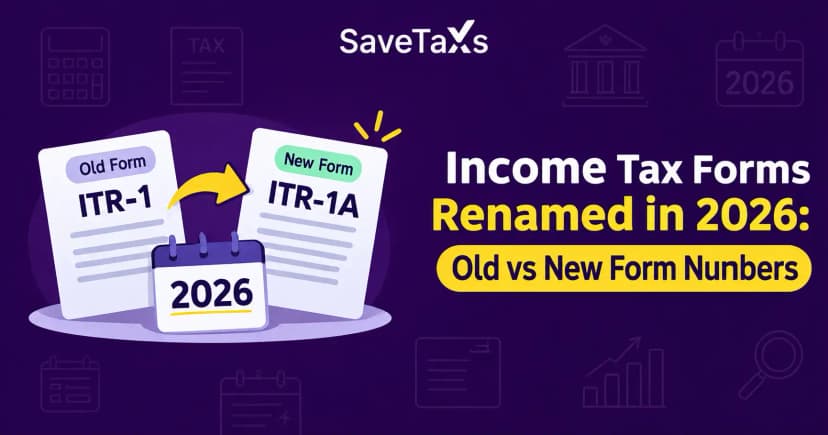
Income Tax Forms Renamed in 2026: Old vs New Form NumbersIncome Tax Forms Renamed in 2026: Old vs New Form Numbers
Written by Vipul Jain


If you are a Non-Resident Indian (NRI) filing an income tax return in India, collecting the right documents helps you report income accurately, verify tax deducted at source (TDS) and support eligible claims. The documents you need depend on your income sources, financial transactions, applicable return form and tax situation.
Most NRIs should begin with their PAN details, relevant bank statements, income records, Form 26AS and Annual Information Statement (AIS). Additional documents may be needed if you earn rent, sell property, trade investments, operate a business or claim foreign tax credit.
Not every NRI needs every document on this list. Use the checklist below to identify which records apply to your circumstances and the relevant financial year.
| Document | When you may need it |
|---|---|
| PAN details | For tax identification and return preparation |
| Passport and travel records | To support residential-status analysis where relevant |
| Indian bank statements | To identify income and reconcile transactions |
| Bank interest certificates and deposit records | If you earn interest on accounts or deposits |
| Form 26AS | To verify TDS, tax collected and other available tax-credit information |
| Annual Information Statement (AIS) | To review financial transactions and tax-related information reported to the department |
| Taxpayer Information Summary (TIS) | To review the summary of information available through AIS |
| Form 16 | If you have relevant salary income |
| Form 16A or other applicable TDS certificates | If tax is deducted from relevant non-salary income |
| Rental-income records | If you earn rent from Indian property |
| Property purchase and sale documents | If you sell property or need to calculate capital gains |
| Broker and mutual-fund statements | If you sell shares, securities or mutual-fund units |
| Business books and expense records | If you have business or professional income |
| Foreign income and tax-payment records | If relevant to a foreign tax credit or another cross-border claim |
These are primarily records to prepare and retain, not documents that must automatically be uploaded with every income tax return. Routine supporting documents are generally not attached to an Indian ITR, although you should keep evidence available for verification or a future tax inquiry.
The Income Tax Department's ITR-2 guidance identifies common preparation records, including Form 16, Form 16A, Form 26AS, AIS, bank statements, interest records and property-income information. The precise requirements depend on the return being filed.
Your identity records help establish your tax identification details, while travel and residence evidence may help determine your Indian tax residency.
Your Permanent Account Number (PAN) is a key tax identification record for Indian income tax filing. Keep your PAN details available and check that your personal information matches the records used to prepare your return.
If your name or other details differ across your PAN, bank or investment records, resolve discrepancies where necessary before filing.
Your passport and travel history can help establish how many days you spent in India during the relevant period.
However, holding a foreign passport, visa or Overseas Citizen of India (OCI) card does not automatically determine your Indian tax residency. Residential status must be assessed under the applicable Indian income tax rules and your individual circumstances.
Keep these records if they are relevant to your circumstances or needed to substantiate a particular claim. A foreign residence permit or tax-residency certificate may also be useful for certain cross-border matters.
These documents are not automatically required as attachments to every Indian income tax return.
Do not assume that every NRI must link Aadhaar with PAN. The Income Tax Department identifies non-residents under the Income-tax Act, 1961, among the categories exempt from mandatory Aadhaar–PAN linkage, subject to the applicable rules and subsequent notifications.
Check the department's official PAN–Aadhaar linkage guidance if you are unsure whether a requirement applies to you.
Bank and tax records help you identify income, verify tax deducted and reconcile the information used in your return.
Collect relevant statements for the financial year from accounts that generate income or contain transactions relevant to your return. Depending on your circumstances, these may include:
NRE and NRO accounts.
FCNR deposits.
Other relevant Indian bank accounts.
Fixed deposits and recurring deposits.
Annual interest certificates and deposit records.
Pay particular attention to interest income. The tax treatment can differ according to the account type, residential status and applicable provisions. Do not assume that all interest earned by an NRI is taxable or exempt.
These records serve related but distinct purposes.
Form 26AS: Helps verify TDS, tax collected and relevant tax-credit information.
Annual Information Statement (AIS): Provides a broader view of information reported to the tax department, including specified financial transactions and tax-related details.
Taxpayer Information Summary (TIS): Provides a summary of information available through AIS.
You can access the relevant statements through the Income Tax e-Filing portal.
The department explains that Form 26AS and AIS contain tax-related information, while AIS also includes specified financial transaction information and other reported details.
Do not treat these statements as complete substitutes for your original records. Compare the reported information with your bank statements, interest certificates, investment reports and other supporting documents. Investigate material discrepancies rather than automatically assuming one record is correct.
Collect applicable TDS certificates from the relevant deductors.
Form 16: Relates to salary income and associated TDS.
Form 16A: Relates to TDS on specified non-salary payments.
Other applicable records: May be relevant to tax deducted on particular transactions.
Form 16 is not a universal requirement for every NRI. If you do not have salary income, other records may be more relevant to your return.
Verify tax credits against the available tax statements and underlying evidence. If a certificate is missing, request it from the deductor and review the available records before deciding how to proceed.
Your income sources determine which additional records you should collect. Use the relevant checklist below rather than assuming that every category applies to you.
If you have salary or pension income relevant to your Indian return, gather:
Form 16, where applicable.
Salary slips or employer income statements.
Pension statements or certificates, where relevant.
Records of TDS and other relevant tax payments.
Supporting evidence for applicable claims or deductions.
If you have no salary income, Form 16 will generally not be relevant to that income source. You may still need documents for other income.
For interest income, collect:
Bank statements.
Annual interest certificates.
Fixed-deposit or deposit-account records.
Applicable TDS certificates.
Form 26AS and AIS for reconciliation.
Review the tax treatment of each account separately, particularly where you hold NRE, NRO or FCNR accounts.
If you receive rent from property in India, gather:
Rent agreement or other rental records.
Details of rent received during the relevant period.
Applicable municipal tax payment records.
Home-loan interest certificates, where relevant.
Applicable TDS certificates or tax-deduction records.
Supporting documents for relevant deductions or other claims.
These records help establish rental income and support the calculation of income from house property under the applicable rules.
Property sales often require more detailed evidence because calculating capital gains may depend on the acquisition cost, eligible improvement costs and relevant transaction expenses.
Keep the following records where applicable:
Original purchase deed or other acquisition documents.
Sale deed and sale consideration details.
Evidence of eligible improvement costs.
Brokerage and other relevant transaction expenses.
Applicable TDS certificates and tax-credit information.
Supporting documents for any exemption or relief claimed.
A sale deed alone may not be sufficient to calculate your capital gain accurately. Acquisition records and evidence of eligible costs may be needed to establish the correct computation.
If you sold investments during the relevant financial year, collect:
Broker statements.
Demat transaction statements.
Mutual-fund transaction or redemption statements.
Capital-gains reports.
Purchase and sale transaction history.
Records of applicable taxes deducted or paid.
Review transaction-level information rather than relying exclusively on a broker's summary. This can help identify missing transactions or discrepancies that need to be resolved.
If you earn business or professional income, you may need:
Books of account, where applicable.
Sales and income records.
Expense invoices and supporting receipts.
Relevant bank statements.
Tax-payment and TDS records.
Other records required for the applicable return and tax treatment.
The applicable return form and supporting documentation depend on the nature of your activity and the relevant filing rules.
If you live abroad, foreign tax records may be relevant in addition to the documents supporting your Indian income.
Documents for an Indian income tax return are not automatically the same as documents required for a foreign tax return or foreign-account reporting obligation.
Depending on your circumstances, you may need to retain:
Foreign income statements.
Foreign tax returns, where relevant to a particular claim.
Evidence of foreign taxes paid or accrued.
Foreign tax assessment or payment records.
Supporting exchange-rate calculations used for a relevant claim.
Tax-residency documentation, where required.
For example, an NRI claiming an applicable foreign tax credit may need evidence of the income involved and the foreign tax paid or accrued. The exact requirements depend on the relevant rules and the nature of the claim.
If you also have U.S. filing obligations, separate U.S. reporting requirements may apply. FBAR and FATCA-related reporting are not interchangeable with the Indian income tax return document checklist.
For a separate overview of U.S. filing considerations, read US Tax Filing for NRIs.
A missing document does not automatically eliminate an income-reporting obligation. Instead of guessing figures, identify the gap and determine how to substantiate the relevant amount.
Follow this process:
Check the official tax portal. Download available Form 26AS, AIS and other relevant tax statements.
Contact the issuing institution. Request the missing interest certificate, TDS certificate, broker statement or employer record.
Review your original records. Bank statements, transaction confirmations and purchase documents may help establish the relevant figures.
Reconcile discrepancies. Investigate differences between your source documents and the information reported to the tax department.
Determine the appropriate treatment. Establish whether alternative evidence is acceptable and whether a correction or other action is necessary.
Seek professional assistance if needed. Missing property records, foreign tax evidence or disputed tax credits may require a detailed review.
For example, if a TDS certificate is unavailable, review the available tax-credit information and payment records, then contact the deductor. Do not assume that the absence of a certificate proves no tax was deducted or that an otherwise reportable income item can be ignored.
Before preparing your return, check for these common problems:
Incomplete statements: Collect records covering the relevant period rather than relying on a partial statement or summary.
Overlooked income: Review interest, rent, investment transactions and other relevant income sources.
Unverified AIS entries: Compare material entries with underlying records and investigate discrepancies.
Missing acquisition-cost evidence: Property-sale calculations may require purchase records and evidence of eligible expenses.
Mixed financial years: Organize documents for the correct financial year and applicable return.
Confusion between jurisdictions: Filing abroad does not automatically resolve Indian tax obligations, and filing in India does not automatically satisfy separate foreign reporting requirements.
A well-organized document folder makes it easier to reconcile information and prepare an accurate return.
Start with your PAN details, relevant bank statements, Form 26AS, AIS and applicable TDS records. Then add the documents required for each income source, such as rental records, property-sale evidence, investment statements or foreign tax documentation.
Review the records together, resolve material discrepancies and retain the supporting evidence used to prepare your return. Confirm any tax-year-specific requirements against the applicable rules and your individual circumstances.
If you have multiple income sources, missing documents or India–U.S. tax considerations, you can explore NRI tax filing assistance in India to determine whether a professional review would be useful.
This article is for general informational purposes only and does not constitute tax, legal, financial, or investment advice. Laws, regulations, rates, and procedures may change over time and may vary based on individual circumstances.
While SaveTaxs makes reasonable efforts to keep the information accurate and up to date, readers should verify applicable rules with official authorities or consult a qualified professional before making decisions based on this information.
Vipul Jain is the Co-Founder of SaveTaxs and a tax expert with experience in Indian and NRI taxation. He advises individuals, NRIs, and businesses on tax filing, tax planning, capital gains, DTAA, and compliance matters. He focuses on making complex tax concepts simple and helping taxpayers make informed, compliant decisions. See Full Bio
Want to read more? Explore Blogs