US Tax Filing and Compliance
S Corporation Salary vs Distributions: How Owners Should Pay ThemselvesS Corporation Salary vs Distributions: How Owners Should Pay Themselves
Written by Shubham Jain

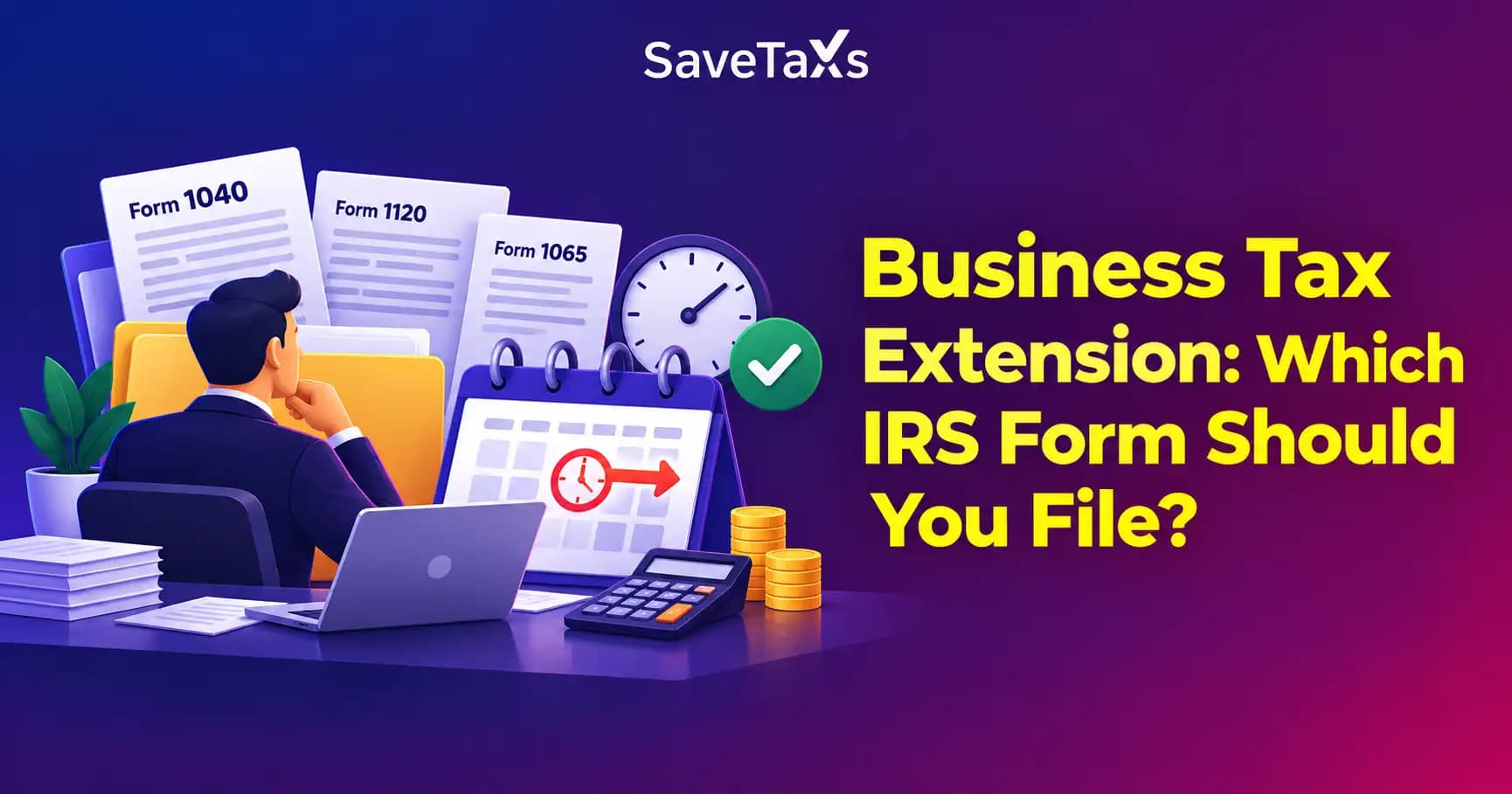
If your business cannot complete its federal tax return by the original due date, you may be able to request additional time to file. However, the correct business tax extension process depends on how your business is classified for federal tax purposes and which return you need to submit.
Many businesses use IRS Form 7004 to request an automatic extension for eligible business returns. A sole proprietor who reports business income on an individual tax return generally follows a different process.
This guide explains which extension form may apply, when to file it, and what business owners should know about tax payments while an extension is in effect.
The correct form depends on the return you need to extend. A business's legal structure alone does not always determine its federal tax filing obligations, particularly when an LLC has elected a different tax classification.
| Business or filing situation | Extension form generally used | Important consideration |
|---|---|---|
| Sole proprietor filing an individual return with Schedule C | Form 4868 | Extends the individual's eligible federal income tax return |
| Single-member LLC treated as a disregarded entity for federal income tax | Form 4868, for the owner's individual return | The LLC generally does not file a separate federal income tax return solely because it is an LLC |
| Partnership filing Form 1065 | Form 7004 | Confirm the applicable return deadline and extension period |
| S corporation filing Form 1120-S | Form 7004 | The extension applies to the eligible corporate return |
| C corporation filing Form 1120 | Form 7004 | The applicable extension and tax-payment rules depend on the corporation's circumstances |
This table covers common situations, not every possible return or exception. Form 7004 applies only to the returns listed in its current instructions. Other returns may require a different extension form or process.
Savetaxs helps you understand your federal tax filing requirements and deadlines.
Form 7004, Application for Automatic Extension of Time To File Certain Business Income Tax, Information, and Other Returns, is used to request an automatic extension for eligible returns.
It commonly applies to partnership and corporate income tax returns, including Forms 1065, 1120-S, and 1120, when the relevant return is eligible.
To request an extension, the business generally must:
The IRS generally grants the maximum extension available when Form 7004 is properly filed. The extension is not a blanket extension for every return the business must file. A separate request is generally required for each eligible return.
For the full list of eligible returns, exceptions, and filing instructions, consult the official IRS Form 7004 instructions.
Generally, Form 7004 must be filed on or before the original due date of the return for which the extension is requested. The deadline depends on the return type, the business's tax year, and any applicable special rules.
For example, calendar-year partnerships and S corporations generally have different original filing deadlines from calendar-year C corporations. Businesses with fiscal years or short tax years may have different dates.
Do not assume every business receives the same extension period. Although the automatic extension is generally six months, exceptions apply to certain returns and circumstances.
Before submitting Form 7004:
You can verify return deadlines using the IRS Tax Calendar and the instructions for the applicable return.
A sole proprietor generally reports business income on Schedule C as part of an individual federal income tax return. If the owner needs more time to file that return, Form 4868 is generally the relevant extension form—not Form 7004.
A single-member LLC treated as a disregarded entity generally follows the same individual-return process for its business income. However, other tax classifications or separate filing obligations can change the applicable requirements.
For help distinguishing the underlying return from the extension process, see the existing Savetaxs Schedule C guide.
No. A filing extension generally gives your business more time to submit an eligible tax return; it does not extend the deadline to pay the tax due.
If your business expects to owe tax, estimate the amount and pay it by the original payment deadline. An unpaid balance may result in interest and penalties, even if the extension request was filed correctly.
For corporations, specific rules can affect late-payment penalties when certain payment conditions are met, but interest can still apply to unpaid tax. The applicable rules depend on the entity and its circumstances.
Keep these obligations separate:
If you need more information about the general extension process and individual filing extensions, read the existing Savetaxs guide, How to File IRS Tax Extension. This article focuses on selecting and using an extension process for business returns.
Choosing an extension form requires understanding your business's federal tax classification, the return you must file, and the applicable deadlines. Filing an extension also does not remove the need to estimate and pay tax on time.
Savetaxs can help U.S. business owners understand their filing obligations, identify relevant extension requirements, and organize their tax compliance tasks. If you are unsure which return your business must file or whether a special rule applies, seek professional guidance before submitting your extension request.
Get guidance from Savetaxs on the right extension process for your business.
The correct business tax extension process depends on the federal return your business must file. Many partnerships and corporations use Form 7004, while sole proprietors filing individual returns generally use Form 4868.
Confirm the eligible form, submit the request by the original return deadline, and remember that an extension to file does not generally extend the time to pay. Always review the latest IRS instructions for your specific return before filing.
This article is for general informational purposes only and does not constitute tax, legal, financial, or investment advice. Laws, regulations, rates, and procedures may change over time and may vary based on individual circumstances.
While SaveTaxs makes reasonable efforts to keep the information accurate and up to date, readers should verify applicable rules with official authorities or consult a qualified professional before making decisions based on this information.
Vipul Jain is the Co-Founder of SaveTaxs and a tax expert with experience in Indian and NRI taxation. He advises individuals, NRIs, and businesses on tax filing, tax planning, capital gains, DTAA, and compliance matters. He focuses on making complex tax concepts simple and helping taxpayers make informed, compliant decisions. See Full Bio

Want to read more? Explore Blogs