US Tax Filing and Compliance
S Corporation Salary vs Distributions: How Owners Should Pay ThemselvesS Corporation Salary vs Distributions: How Owners Should Pay Themselves
Written by Shubham Jain
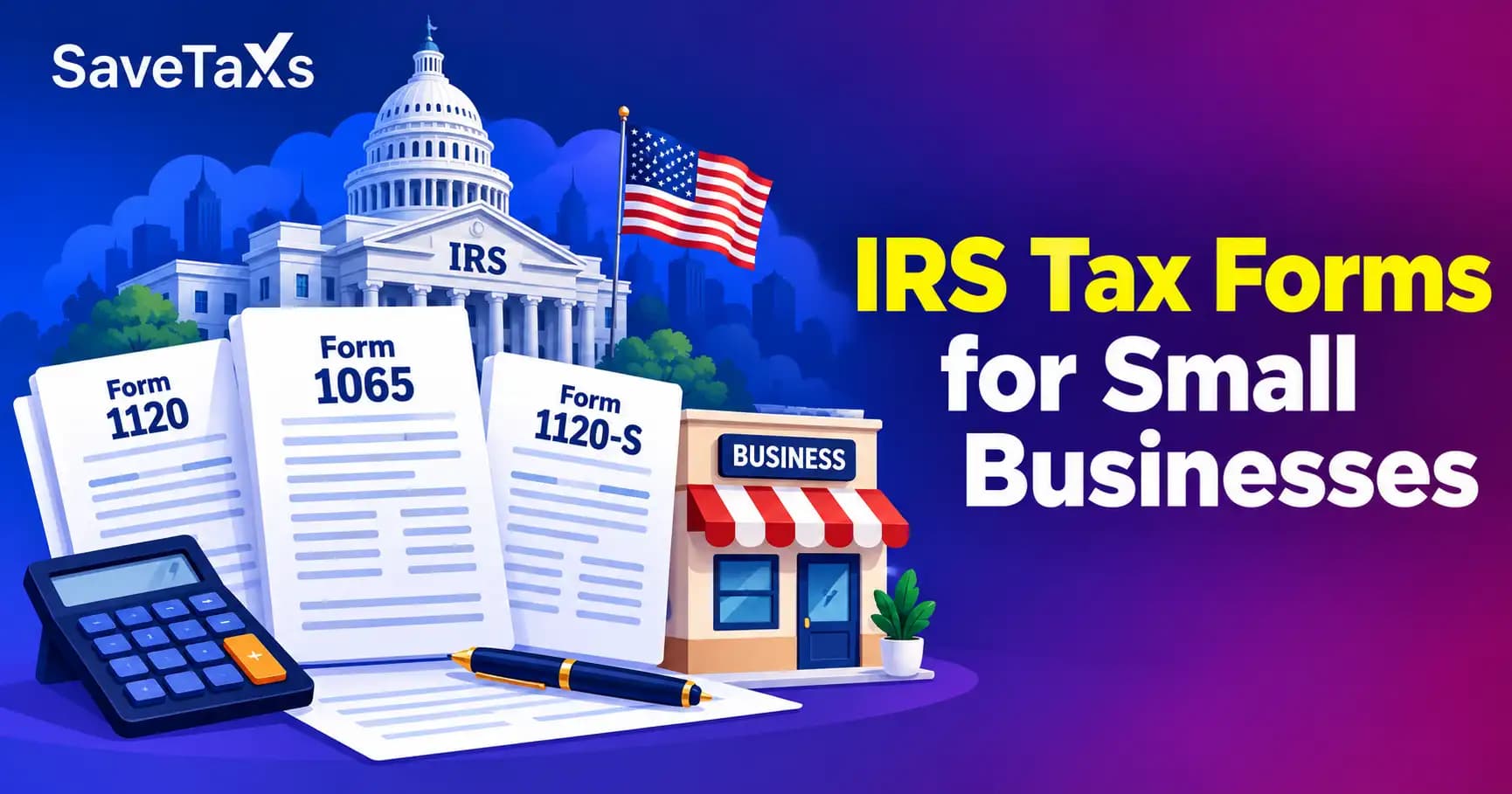
Choosing the right IRS tax forms for small businesses starts with understanding how your business is classified for federal tax purposes. A sole proprietor, a partnership, an LLC, and a corporation may have different income tax returns and reporting obligations.
Your business may also need additional forms for self-employment tax, employees, payments to independent contractors, or a tax election. Not every business must file every form.
This guide helps U.S. small business owners identify the forms that may apply to their business structure and tax obligations. Always check the current IRS form instructions before filing.
The forms you need depend on three factors: your federal tax classification, the type of tax involved, and your business activities.
| Business or tax situation | Common federal form | Purpose |
|---|---|---|
| Sole proprietor | Form 1040 or 1040-SR with Schedule C, when applicable | Reports business profit or loss on the owner's individual return |
| Self-employed individual | Schedule SE, when required | Calculates self-employment tax |
| Partnership | Form 1065, when required | Reports the partnership's income, deductions, and other tax items |
| Partner receiving a share of partnership tax items | Schedule K-1 (Form 1065) | Reports the partner's allocated tax items |
| S corporation | Form 1120-S, when required | Reports the S corporation's income, deductions, and other tax items |
| S corporation shareholder | Schedule K-1 (Form 1120-S) | Reports the shareholder's allocated tax items |
| C corporation | Form 1120, when required | Reports the corporation's income, deductions, and tax liability |
| Employer | Forms 941 or 944, as applicable | Reports federal employment taxes and withholding |
| Employer subject to federal unemployment tax | Form 940, when required | Reports Federal Unemployment Tax Act (FUTA) tax |
| Business making reportable payments to nonemployees | Form 1099-NEC, when required | Reports qualifying nonemployee compensation |
This is a practical reference, not a complete list of every possible filing. Special elections, business activities, ownership arrangements, and other circumstances can create additional requirements.
Savetaxs helps you understand your business tax obligations and filing requirements.
A sole proprietor generally reports business income and deductible expenses on Schedule C (Form 1040) and includes it with their individual federal income tax return. Schedule SE may also be required to calculate self-employment tax.
A sole proprietorship generally does not file a separate federal income tax return solely because it operates a business. However, other obligations may apply depending on the owner's circumstances.
For detailed eligibility rules, expense reporting, and Schedule C filing guidance, read SaveTaxs Schedule C guide.
An LLC is a legal business structure, but its name alone does not determine which federal income tax return it files.
An eligible LLC may use Form 8832 to elect or change its federal tax classification, subject to applicable requirements. An eligible entity may also elect S corporation status using Form 2553 if it meets the relevant eligibility rules.
An LLC may have additional employment tax, excise tax, or information-return obligations. Confirm its federal classification before selecting a return.
A partnership generally files Form 1065 to report its business income, deductions, and other tax items. The partnership usually provides each partner with a Schedule K-1 showing that partner's allocated share.
The partners generally use the information from Schedule K-1 when preparing their own tax returns. The partnership's information return and an individual partner's return serve different purposes.
An eligible business that has made a valid S corporation election generally files Form 1120-S. The corporation also provides Schedule K-1 to its shareholders for their allocated tax items.
S corporation shareholders may have additional individual reporting obligations. Shareholder-employees can also trigger payroll and employment tax requirements. The precise filings depend on the company's circumstances.
A C corporation generally files Form 1120 to report its income, deductions, and federal corporate income tax liability.
A corporation may need separate employment tax returns if it has employees. Its filing responsibilities can also differ from those of an LLC taxed as a disregarded entity or partnership.
An income tax return is not necessarily the only federal form a business must file. The following obligations depend on what the business does.
Businesses with employees may have to withhold, deposit, and report federal employment taxes.
Do not assume that every employer can choose between Forms 941 and 944. The applicable filing method depends on IRS requirements.
A business may need to file Form 1099-NEC for qualifying payments to nonemployees when reporting requirements are met. Other types of payments can require different information returns.
Whether a form is required depends on the payment type, recipient, amount, and applicable reporting rules. Review the current IRS instructions; for payments made after December 31, 2025, the general Form 1099-NEC reporting threshold is $2,000 (previously $600).
Certain businesses file additional forms to elect a federal tax classification or report a specific transaction. For example, an eligible corporation may use Form 2553 to elect S corporation status.
Other requirements can arise from excise taxes, tax credits, retirement plans, or particular business activities. The IRS maintains a forms and publications directory to help business owners locate relevant resources.
Get personalized guidance from Savetaxs to identify the forms your business may need.
Selecting the right forms is an important step in meeting federal tax obligations, but the correct filing depends on your business structure, tax classification, ownership, and activities.
SaveTaxs can help business owners understand which federal tax requirements may apply, identify relevant forms, and organize their filing responsibilities. If you are unsure whether your LLC is treated as a partnership or corporation, or whether your business has separate payroll or information-return obligations, seek guidance before filing.
The right IRS tax forms for small businesses depend on how your business is classified for federal tax purposes and which tax and reporting obligations apply. Start by confirming your classification, then identify the relevant income tax return and any additional employment or information returns.
Use current IRS instructions to confirm filing requirements. For broader guidance on business tax responsibilities, see the existing SaveTaxs U.S. Business Taxes guide.
This article is for general informational purposes only and does not constitute tax, legal, financial, or investment advice. Laws, regulations, rates, and procedures may change over time and may vary based on individual circumstances.
While SaveTaxs makes reasonable efforts to keep the information accurate and up to date, readers should verify applicable rules with official authorities or consult a qualified professional before making decisions based on this information.
Hatim Dudhiyawala is a Certified Public Accountant (CPA) with SaveTaxs and specializes in Indian and NRI taxation. He advises individuals, NRIs, and businesses on income tax filing, capital gains taxation, DTAA benefits, fund repatriation, and tax compliance. With experience in cross-border tax matters, Hatim helps taxpayers understand complex regulations and make informed decisions. Through his articles, he shares practical insights to help readers stay compliant and manage their tax obligations with confidence. See Full Bio

Want to read more? Explore Blogs