
NRI Income Tax Compliance
Repatriable Meaning: Understanding Repatriable Funds and Money TransfersRepatriable Meaning: Understanding Repatriable Funds and Money Transfers
Written by Shubham Jain
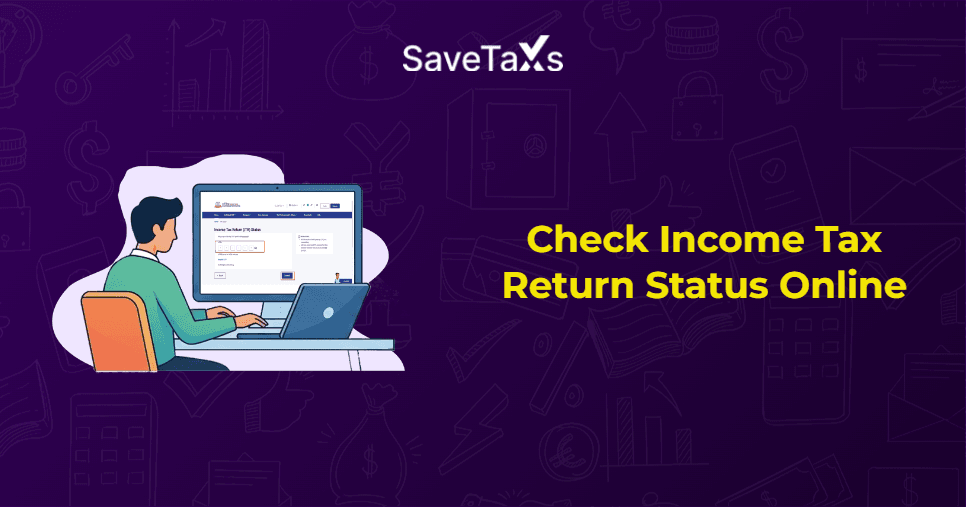
Filing your NRI ITR in India is only half the job. Once your income tax return is submitted, every taxpayer has some common questions, such as " Has my return been processed? Is my refund on the way? and more.
Well, in this guide, we will answer all such questions for you. Here, we will understand how you, as an NRI, can check your ITR status online and what the different statuses shown mean.
The following are the steps to check the ITR status with login credentials and without login credentials.
Step 1: Visit the income tax e-filing portal and scroll down. Click on the income tax return status option.
Step 2: On the screen, enter your acknowledgement number and the valid mobile number. Click on continue.
Step 3: You will receive 6 digital OTPs on the provided mobile number. Enter it and proceed ahead.
Step 4: Upon successful validation, you will be able to view your ITR status.
Step 1: Log in to the e-filing portal using your login credentials.
Step 2: Check e-file > Income Tax Returns > View the filed returns.
Step 3: On the view filed return page, you will be able to view all of the returns filed by you. You will also be able to download the ITR-V acknowledgment, upload the JSON (from the office utility), complete the ITR form in PDF, and view the intimation order using the option on the right-hand side.
Step 4: Check the view details to see the return's life cycle and the action items related to it, for example, a pending return for e-verifications.
The following are the types of ITR status, and here's what they mean:
1: Submitted & pending for e-verification: This type of ITR status, upon display, means you have filed your ITR return successfully, but haven't e-verified it electronically or manually by sending the acknowledgment to the department. As an NRI, you must verify your ITR. Without it, your return is considered invalid.
2: Successfully verified: This type of ITR statement means that you have filed your ITR and got it e-verified successfully, but your ITR hasn't been processed yet. It is in the queue for processing by the income tax department, and there is no action needed from your end at this stage.
3: Processing: When processing is shown as the status, it means that the income tax department has started reviewing your return. This is a great sign: your file is active and under review or assessment by the authorities.
4: Processed: This means that your ITR is completely processed. Now, if you are eligible for a refund, it is either in transit or already credited to your bank account. However, you can check your income tax refund status on the NSDL portal.
5: Defective Return: This status means that your income tax return has been filed with incomplete or incorrect information and has been marked as defective by the Income Tax Department. If your refund is defective, you will be served with a notice of defective return under section 236(9) of the IT Act, 2025 (section 139(9) of the IT Act, 1961).
6: Case Under Scrutiny: This status means your income tax return has been selected for detailed scrutiny. You will receive the notice and must respond with all supporting documents requested by the assessing officer.
7: Intimation Sent Under Section (143[1]): This type of status is one of the most common final status. It means the income tax department has processed your income tax return and sent an intimation to your registered email address.
8: Case transferred to Assessing officer: This means the ITR case has been transferred to the Centralized Processing Center of the Income Tax Department, and the ITR has been transferred to the jurisdictional assessing officer for processing.
Savetaxs helps NRIs file their ITR in India under expert guidance and 100% accuracy.
NRIs generally face a unique set of challenges when it comes to tracking their ITR status in India, primarily because the entire status process is built around an Indian mobile number and physical access.
Mobile OTP Dependency: The status check portal sends the OTP to the registered mobile number. If the NRI's registered number is an Indian number that is no longer active, they cannot receive the OTP. The only solution to this is to update the mobile number either by submitting a wire request to the judiciary assessing officer or via the e-filing portal using net banking login, if the option is available.
Bank Account Pre-Validation for Refunds: NRIs are allowed to receive the tax refunds only in the NRO (non-resident ordinary) accounts. Just ensure that the account is verified on the portal before your refund is credited. A lot of NRIs tend to miss this step and then wonder why their refund isn't processed or is stuck.
Jurisdiction & Assessing Officer Issues: NRIs are generally assessed under the specialized NRI jurisdiction (such as the internal taxation ward). At times, a system mismatch may occur, resulting in the income tax return being assigned to the wrong jurisdiction and causing processing delays. If your return is stuck for a long time, you can check your judicial AO details under the "My Profile" section on the portal.
Double Taxation Concerns: NRIs filing under the Double Taxation Avoidance Agreement (DTAA) benefits at times face scrutiny because such claims require additional verification. Happening such is normal. You can promptly respond to any notices with the foreign tax credit certificates and proof of taxes paid abroad.
Physical verification: NRIs who are unable to e-verify the return can send the physical ITR-V to the CPC Bangalore. However, the international postal delays can cause the document to arrive late or be lost. Henceforth, you have to rely on a reliable courier to retain the tracking receipt in a timely manner.
Get expert guidance on how to start, manage, and grow your dream business in India.
Tracking the status of your income tax return isn't tedious if you know where to check and the right steps to follow. However, for NRIs, a little preparation is required before filing, such as pre-validating your NRE and NRO accounts and ensuring that your Indian mobile number is active to receive the OTPs. It can save you a lot of time and frustration here. But if you even have an ounce of doubt, consult with a tax professional who specializes in NRI taxation and ensure your filing is accurate and that your refund is processed to you without any delays.
When it comes to NRI taxation experts, Savetaxs is the name to trust. We help NRIs with ITR preparation, filing the correct ITR forms, reconciling TDS, ensuring FEMA/RBI compliance, and helping you claim benefits under the DTAA. The experts will keep you updated on your ITR refund processing and ensure your refunds are credited on time.
Connect with us as we serve our clients 24/7 across all time zones.
This article is for general informational purposes only and does not constitute tax, legal, financial, or investment advice. Laws, regulations, rates, and procedures may change over time and may vary based on individual circumstances.
While SaveTaxs makes reasonable efforts to keep the information accurate and up to date, readers should verify applicable rules with official authorities or consult a qualified professional before making decisions based on this information.
Vipul Jain is the Co-Founder of SaveTaxs and a tax expert with experience in Indian and NRI taxation. He advises individuals, NRIs, and businesses on tax filing, tax planning, capital gains, DTAA, and compliance matters. He focuses on making complex tax concepts simple and helping taxpayers make informed, compliant decisions. See Full Bio
Want to read more? Explore Blogs