NRI Income Tax Compliance
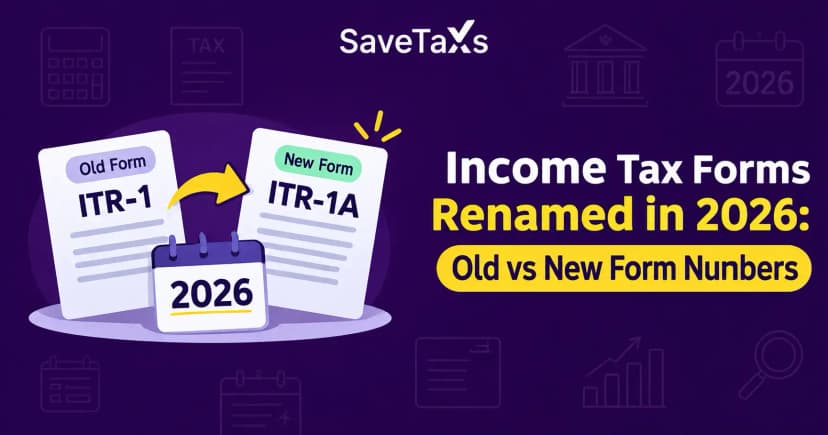
Income Tax Forms Renamed in 2026: Old vs New Form NumbersIncome Tax Forms Renamed in 2026: Old vs New Form Numbers
Written by Vipul Jain

_1777985343016.webp&w=3840&q=75)
As an NRI, if you are unsure about your long-term plans and are not ready to make a financial commitment, renting a property can be a smart choice. You only need to pay for the security deposit, reducing upfront costs. It offers great mobility as you move to a different location easily without being tied to a specific location. Additionally, as a tenant, you will not be responsible for repairs, taxes, or property maintenance. However, it doesn't help you build equity in the property, and you may lack control.
On the other hand, if you are confident about your long-term plans and have the financial means for the same, you can buy a property. It can help create significant wealth over time, and you get complete control over the property. In case you plan to move abroad, you can rent out the property and generate passive income. Furthermore, you need a significant upfront investment to purchase a property, which can be costly. Moving to a different location can be difficult due to a job change or personal circumstances. Keep reading further to know more about renting vs owning property in India as an NRI.
Consider the table below to determine whether you should buy a property or rent one as an NRI:
| Situation | Buy | Situation | Rent |
|---|---|---|---|
| NRI Planning Permanent Return within 3-5 years |
|
Career-Stage NRI on H-1B (uncertain stay) |
|
| UAE NRI with a large corpus seeking Indian investment |
|
NRI Visiting India for family occasionally |
|
| NRIs buying for their aged parents to live |
|
RNOR Period/Returning NRI (1-3 Years) |
|
Based on the situation, you can decide whether you should buy or rent a property in India. To help you make a smart decision, let's discuss the pros and cons of renting vs owning property.
NRIs who are not sure about their long-term plans and don't wish to make a financial commitment can rent a property. It offers more flexibility and avoids the stress of tenant disputes, maintenance calls, or legal issues. Here are some advantages and disadvantages of renting a property in India as an NRI:
| Advantages |
Disadvantages |
|---|---|
| It has lower upfront costs. It means you only need to pay an amount for a security deposit and a few months' rent in advance. | You pay monthly rent towards the landlord's mortgage. Hence, it doesn't help you build any equity in the property. |
| It offers greater flexibility as you can move freely to a different location. It avoids the stress of being tied down to a specific location or a property. | Since you are subject to the landlord's rules and decisions, you may face a lack of control over your living space. |
| As a tenant, you face fewer responsibilities. The landlord will be responsible for taking care of repairs, taxes, and property maintenance. | When the lease is up for renewal, landlords may increase the rent, impacting your budget and long-term financial planning. |
Renting a property is practical for short stays, typically less than 3-5 years. Let's now understand who must buy a property in India as an NRI.
NRIs who are sure about their long-term plans and have the relevant financial means for the same can buy a property. It can be a smart decision and a wise investment for NRIs with stable income. Here are some advantages and disadvantages of buying a property in India:
| Advantages | Disadvantages |
|---|---|
| It can be a significant source of creating wealth over time. It is because you keep building equity with each mortgage payment when you buy a property in India. | A significant upfront investment is required to buy a property. It includes down payment, closing costs, and potential renovation and maintenance. |
| Buying a property offers complete control over your property. You can renovate the property, make changes, and decorations as per your choice. | If your job or personal situation changes, it can be difficult to relocate. It is because buying a property is a long-term commitment. |
| It can help generate passive income as you can rent out the property if you plan to move or return abroad. | It can be costly and time-consuming because, as the owner, you must handle property maintenance, repairs, and taxes. |
Buying a property is better for long-term stays. Before the purchase, you must verify your income, savings, and debt to determine whether you can afford the down payment.
Owning or renting a property in India comes with several tax obligations that NRIs must adhere to. The table below lists the tax implications of owning vs renting a property in India for NRIs:
| Tax Area | If Renting a Property in India | If Buying a Property in India |
|---|---|---|
| Rental Income Tax | The rent paid by the NRI is not taxable income. |
|
| Home Loan Tax Benefits | NRI tenants cannot claim any home loan deductions |
|
| Capital Gains on Sale | Since there is no property to sell, hence no capital gains |
|
| Deemed Let-Out Taxation | Not applicable | If the NRI owns more than 2 properties, the third is deemed let-out at fair market rent and will be taxed accordingly. Even if the property is vacant. |
| DTAA Benefit | Not directly relevant |
|
It's important to stay aware of the tax implications to ensure compliance and avoid any legal issues.
Get expert consultancy tailored as per your situation
There is no correct answer universally for choosing between renting and owning a property in India as an NRI. However, the correct answer depends on your specific situation. Buying a property is ideal if you plan to hold it for several years, have elderly parents who would benefit from the property, or plan to return to India. Conversely, if you are on a temporary visa abroad and are not sure about where you will live in India, renting and investing the capital is a smarter decision.
The worst outcome comes when you purchase a property in the wrong city without proper planning, tax compliance, and due diligence. Hence, you must take the help of an expert before making any decision, especially when buying a property. When it comes to experts, there is no better choice than Savetaxs.
At Savetaxs, we have a professional team of experts knowledgeable about NRI taxation. Our team can help you ensure compliance with tax laws, depending on whether you wish to buy or rent a property in India. Contact us right away to stay compliant and avoid legal issues.
This article is for general informational purposes only and does not constitute tax, legal, financial, or investment advice. Laws, regulations, rates, and procedures may change over time and may vary based on individual circumstances.
While SaveTaxs makes reasonable efforts to keep the information accurate and up to date, readers should verify applicable rules with official authorities or consult a qualified professional before making decisions based on this information.
Vipul Jain is the Co-Founder of SaveTaxs and a tax expert with experience in Indian and NRI taxation. He advises individuals, NRIs, and businesses on tax filing, tax planning, capital gains, DTAA, and compliance matters. He focuses on making complex tax concepts simple and helping taxpayers make informed, compliant decisions. See Full Bio
Want to read more? Explore Blogs