NRI Income Tax Compliance
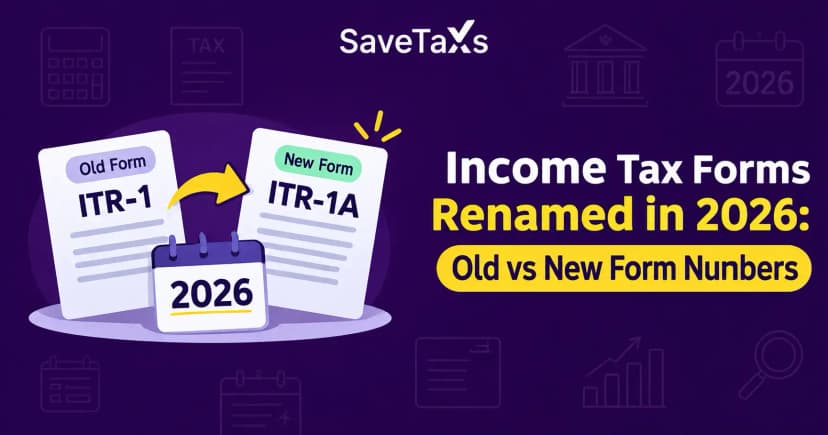
Income Tax Forms Renamed in 2026: Old vs New Form NumbersIncome Tax Forms Renamed in 2026: Old vs New Form Numbers
Written by Vipul Jain

_1780059664310.webp&w=3840&q=75)
TDS (Tax Deducted at Source) compliance requires deductors to deduct tax at the applicable rate, deposit it with the government and submit the required statements within the prescribed deadlines. Missing a deadline may result in late-filing fees, interest, penalties and, in serious cases, prosecution.
FY 2026–27 also requires attention to the transition from the Income-tax Act, 1961, to the Income-tax Act, 2025. The applicable law generally depends on when the earlier of the credit or payment event occurs.
This guide covers quarterly TDS return due dates, monthly payment deadlines, applicable forms and the consequences of non-compliance.
Quarterly TDS statements are generally due on 31 July, 31 October, 31 January and 31 May.
TDS deposits for most non-government deductors are generally due by the 7th of the following month.
TDS deducted in March is generally due by 30 April for non-government deductors.
Under Section 427 of the Income-tax Act, 2025, a qualifying late statement can attract a fee of ₹200 per day, capped at the tax deductible or collectible.
Interest is generally 1% per month or part of a month for failure to deduct TDS and 1.5% for failure to deposit deducted TDS.
Form 141 is used for specified challan-cum-statements, while Form 142 is a separate quarterly statement for eligible virtual digital asset exchanges.
The applicable forms and statutory provisions depend on the transaction and the law governing it.
Quarterly TDS statements must generally be filed within the prescribed deadline for the relevant quarter. The standard due dates for Tax Year 2026–27 are:
| Quarter | Period covered | Filing due date |
|---|---|---|
| Q1 | 1 April–30 June 2026 | 31 July 2026 |
| Q2 | 1 July–30 September 2026 | 31 October 2026 |
| Q3 | 1 October–31 December 2026 | 31 January 2027 |
| Q4 | 1 January–31 March 2027 | 31 May 2027 |
The Q1 deadline has passed. The next scheduled quarterly deadline is 31 October 2026, for the July–September quarter.
These dates apply to standard quarterly statements. Certain transactions require a challan-cum-statement and follow a separate filing timeline. Check the applicable form instructions and any government extension before filing.
Official reference: Income Tax Department — Tax Deductor compliance.
The applicable law generally depends on the earlier of the credit or payment event.
On or before 31 March 2026: The Income-tax Act, 1961, generally governs the TDS obligation.
On or after 1 April 2026: The corresponding provisions of the Income-tax Act, 2025, generally apply.
For example, if professional fees were credited in March 2026 but paid in April 2026, the old Act may still govern the TDS obligation because the credit occurred first.
A statement filed or corrected after 1 April 2026 may still relate to a period governed by the old Act. Use the applicable forms and statutory provisions for that transaction rather than selecting a form based only on the filing date.
For transactions governed by the new Act, deductors must also quote the relevant provision and table item under Section 393, where applicable, instead of automatically using old-Act section numbers.
Official reference: Income Tax Department — TDS compliance during the transition.
For most non-government deductors, TDS must be deposited by the 7th of the month following the month of deduction. March deductions generally have a separate deadline.
| Month of deduction | General deposit deadline |
|---|---|
| April 2026 | 7 May 2026 |
| May 2026 | 7 June 2026 |
| June 2026 | 7 July 2026 |
| July 2026 | 7 August 2026 |
| August 2026 | 7 September 2026 |
| September 2026 | 7 October 2026 |
| October 2026 | 7 November 2026 |
| November 2026 | 7 December 2026 |
| December 2026 | 7 January 2027 |
| January 2027 | 7 February 2027 |
| February 2027 | 7 March 2027 |
| March 2027 | 30 April 2027 |
Important exceptions:
Government deductors may have to remit TDS on the same day when payment is made without producing an income-tax challan.
Government deductors depositing TDS through a challan must follow the deadline applicable to that payment method.
Certain specified transactions use a challan-cum-statement mechanism. The tax is generally payable within 30 days from the end of the month in which it is deducted, along with the prescribed statement.
The monthly schedule above is a general guide. Confirm the applicable rules for the transaction and deductor category before making payment.
Official reference: Income Tax Department — Tax Payments FAQs.
The correct form depends on the payment type, recipient and applicable law.
| Purpose | Old Act form | New Act form |
|---|---|---|
| Quarterly salary TDS statement | Form 24Q | Form 138 |
| Quarterly statement for specified non-salary payments to residents | Form 26Q | Form 140 |
| Quarterly statement for specified non-salary payments to non-residents | Form 27Q | Form 144 |
| Quarterly TCS statement | Form 27EQ | Form 143 |
| Challan-cum-statement for specified transactions | Forms 26QB, 26QC, 26QD and 26QE | Form 141 |
| Quarterly statement for eligible VDA exchanges | Form 26QF | Form 142 |
This is a general mapping. Confirm the exact reporting requirement against the official form instructions before filing.
Employers and specified banks use Form 138 to report TDS on salary and other covered payments as prescribed under the new framework.
Official reference: Form 138 user manual.
Form 140 is used for quarterly reporting of specified non-salary payments to residents, including covered professional fees, commission, brokerage, rent and other applicable payments.
Official reference: Form 140 user manual.
Form 144 covers specified payments to non-residents on which TDS is required. Deductors should verify the recipient's classification and the applicable reporting provisions.
Official reference: Form 144 user manual.
Collectors use Form 143 to report tax collected at source on covered transactions. It is the new-framework counterpart to Form 27EQ.
Official reference: Form 143 user manual.
Form 141 consolidates specified transactions previously reported through Forms 26QB, 26QC, 26QD and 26QE. These include covered property transfers, specified rent payments, certain contractor or professional payments, and specified virtual digital asset transfers.
From 1 October 2026, Schedule E is available in Form 141 for specified transfers of immovable property by a non-resident to a resident individual or Hindu undivided family, subject to the applicable conditions.
The challan-cum-statement must generally be furnished within one month from the end of the month in which tax is deducted. Check the official instructions for the applicable schedule and deductor category.
Official reference: Income Tax Department — Form 141 FAQs.
Form 142 is separate from the challan-cum-statement mechanism under Form 141. It is used for the prescribed quarterly reporting by eligible virtual digital asset exchanges under the applicable framework.
Its reporting requirements differ from the individual or HUF challan-cum-statement process. Check the form instructions to confirm eligibility, filing requirements and the due date.
Official reference: Form 142 user manual.
Late filing can result in a statutory fee in addition to any applicable interest or penalty.
Section 427 provides for a fee when a person fails to furnish a statement within the prescribed time. The fee is generally:
₹200 for every day the failure continues.
Capped at the amount of tax deductible or collectible for the relevant statement.
Payable before the statement is furnished.
Official reference: Income-tax Act, 2025 — Section 427.
Section 234E provides the corresponding ₹200-per-day fee, capped at the tax deductible or collectible, for statements governed by the old Act.
The applicable provision depends on the law governing the transaction and statement. Do not apply Section 234E automatically to every Tax Year 2026–27 transaction.
Suppose a quarterly statement due on 31 July 2026 is filed on 17 November 2026. If the delay is 109 days, the calculation is:
₹200 × 109 days = ₹21,800
If the tax deductible or collectible for the statement is ₹5,000, the fee is capped at ₹5,000.
The late-filing fee is separate from interest for delayed deduction or deposit of TDS. Applicable amounts should be calculated and paid before filing, as required by the governing provision.
A late-filing fee and a penalty are separate consequences. A fee may apply because a statement is late, while a penalty may arise from specified defaults under the applicable law.
Section 271H provides for a penalty ranging from ₹10,000 to ₹1 lakh for specified defaults, including failure to furnish a required TDS/TCS statement within the prescribed time or furnishing incorrect information.
For a qualifying late-filing default, the old Act provides an exception to the Section 271H penalty if the deductor:
Pays the tax deducted or collected to the government.
Pays the applicable late-filing fee and interest, where applicable.
Furnishes the statement within one month from the prescribed due date.
This exception applies to the qualifying late-filing default. It does not automatically eliminate other liabilities or protect a deductor who files an incorrect statement.
Official reference: Income Tax Department — Section 271H.
Do not automatically apply Section 271H or its exception to a statement governed by the new Act. The applicable penalty and consequences must be assessed under the provisions governing the particular default.
The Income Tax Department explains that non-deduction or non-deposit of TDS may lead to recovery, interest and, depending on the circumstances, penalty or prosecution. For a specific late or incorrect statement, verify the current statutory provision and applicable rules before stating a penalty amount.
Official reference: Income Tax Department — TDS compliance FAQs.
Interest depends on whether tax was not deducted when required or was deducted but deposited late.
| Nature of default | General interest rate | Interest period |
|---|---|---|
| Failure to deduct TDS | 1% per month or part of a month | From the date tax was deductible to the date it is actually deducted |
| Failure to deposit deducted TDS | 1.5% per month or part of a month | From the date of deduction to the date the tax is deposited |
Under the Income-tax Act, 1961, Section 201(1A) contains the relevant interest provisions. Under the Income-tax Act, 2025, Section 398(3)(a) provides the corresponding interest rules.
Keep these points in mind:
Interest is generally calculated for each month or part of a month, rather than strictly by the number of days.
Interest and applicable fees should be paid as required before the relevant statement is furnished.
Paying the late-filing fee does not automatically settle interest or penalty liabilities.
Special rules may affect interest where the payee has paid tax on the income and the statutory conditions are satisfied.
Official reference: Income Tax Department — Tax Payments FAQs.
Deducting tax from a payment but failing to remit it to the government can have serious consequences.
Under the Income-tax Act, 1961, Section 276B addresses prosecution for specified failures to pay deducted tax to the credit of the Central Government. The statutory punishment can include rigorous imprisonment of three months to seven years and a fine, subject to the applicable legal conditions and exceptions.
For transactions governed by the Income-tax Act, 2025, the corresponding provisions must be assessed under the new framework. The outcome depends on the facts, the applicable law and whether a statutory exception applies.
A delayed deposit does not automatically mean imprisonment. Prosecution is a distinct legal consequence that must be assessed under the applicable provision.
Official reference: Income Tax Department — Tax Deductor compliance.
A consistent compliance process can help prevent missed deadlines, incorrect reporting and avoidable costs.
Maintain a compliance calendar: Track monthly deposit dates, quarterly statement deadlines and transaction-specific filing dates.
Reconcile deductions and deposits: Match the books of account, challans and TDS/TCS statements.
Verify recipient details: Check PAN, residency status, payment category and applicable tax treatment.
Use the correct form: Confirm whether the transaction falls under the old or new Act and whether a quarterly statement or challan-cum-statement is required.
Review the statement before submission: Check challan details, tax amounts, deductee information and validation errors.
Resolve defaults promptly: Calculate applicable interest or fees and correct errors through the prescribed process.
Retain records: Keep deduction workings, payment confirmations, filed statements and acknowledgements.
TDS compliance involves more than meeting filing deadlines. Businesses must use the correct forms, reconcile deductions and deposits, and apply the provisions relevant to the transaction.
Savetaxs can help you review your TDS compliance requirements, identify filing or reconciliation issues and understand the steps needed to resolve applicable defaults.
Need help with TDS return filing or a compliance default? Contact Savetaxs to discuss your requirements with a tax professional.
This article is for general informational purposes only and does not constitute tax, legal, financial, or investment advice. Laws, regulations, rates, and procedures may change over time and may vary based on individual circumstances.
While SaveTaxs makes reasonable efforts to keep the information accurate and up to date, readers should verify applicable rules with official authorities or consult a qualified professional before making decisions based on this information.
Vipul Jain is the Co-Founder of SaveTaxs and a tax expert with experience in Indian and NRI taxation. He advises individuals, NRIs, and businesses on tax filing, tax planning, capital gains, DTAA, and compliance matters. He focuses on making complex tax concepts simple and helping taxpayers make informed, compliant decisions. See Full Bio

Want to read more? Explore Blogs