NRI Income Tax Compliance
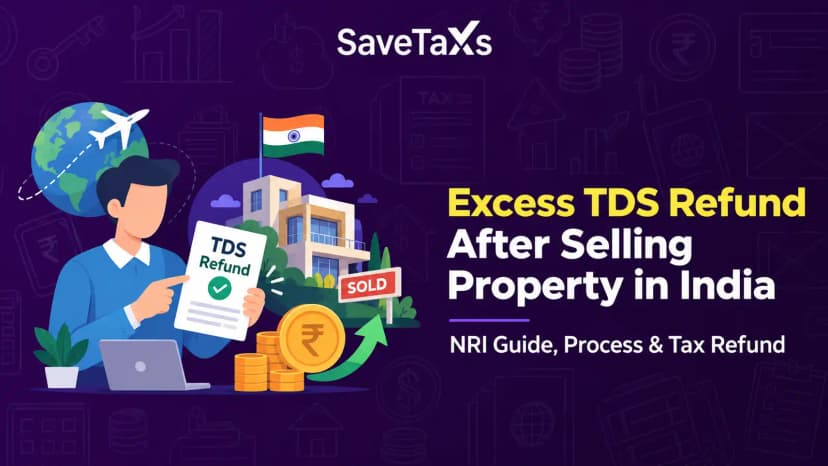
How to Claim Excess TDS Refund After Selling Property in India as an NRIHow to Claim Excess TDS Refund After Selling Property in India as an NRI
Written by Shubham Jain
_1785327671882.webp&w=3840&q=75)
You may receive an income tax notice without warning, which can make it difficult to determine whether the notice is genuine or a scam. Every taxpayer needs to verify the authenticity of the notice before taking any further action. This is because fake notices can have the same layout, tone, and terminology as the income-tax department. To address this, in this blog, we will learn how to check the authenticity of an income tax notice to prevent any scam.
Due to their legal importance, some I-T notices may require quick and careful verification. Some of the notices are as follows:
These are a few of them, but you must verify every notice's authenticity before taking any action, regardless of the type.
Taxpayers must stay cautious while receiving any communication and must not react immediately.
According to Gopal Bohra, partner-tax, NA Shah Associates, " Verifying the authenticity of the notice or email is important before taking any action. Ensure that the email is received from an official domain like @incometax.gov.in. Also, confirm that the notice reflects a valid PAN and other personal details correctly and cross-check if you received the communication on your registered email or mobile number".
Prabhakar KS, Founder & CEO, Shree Tax Chambers, says, "When you receive a notice, you must stay patient. He mentions that "Taxpayers must take a printout, verify the authenticity using the Income Tax 'Authenticate Notice' page, read it carefully, and take the next steps on priority. They may also request additional time if required by filing a request to respond correctly. In case the situation requires, seek advice from a professional without hesitating.
To validate a notice, log into the official e-filing portal where all the notices are available under the "e-proceedings" or "view notices" section. After that, enter the Document Identification Number (DIN) in the portal's DIN validation tool to identify whether the notice is genuine or not.
Document Identification Number (DIN) is a unique 20-digit computer-generated number. It is included in every communication issued by any I-T authority, including letters, notices, orders, and more.
You must ensure that the important details match the copy you have received via email or post, such as issue date, the relevant section of the law, and the purpose of the notice.
The urgency of a notice depends on the nature and the response timeframe. Intimations that show a tax demand must be verified quickly to avoid additional interest or penalties. Similarly, notices for scrutiny or reassessment also have strict deadlines and hence require prompt action.
Moreover, correct defective return notices within the specified time, and respond to any communication that reflects high-value transactions or mismatch in income data without any delays.
Savetaxs delivers expert solutions you can depend on and rely on
Since we are in an era where tax scams are rising rapidly, it becomes important to verify the authenticity of every income tax notice. A fake notice can look just like the genuine one, and hence using the DIN validation tool on the official IT portal is your safest choice. Once you verify the genuineness, read the notice carefully, gather the documents, and respond within the specified timeline.
Moreover, if this feels confusing, you don't need to handle it alone, as Savetaxs is here to help. We have an entire team of experts who can help you verify, understand, and respond to any income tax notice accurately and confidently. Reach out to our team now as we are actively working 24/7 across all time zones.
This article is for general informational purposes only and does not constitute tax, legal, financial, or investment advice. Laws, regulations, rates, and procedures may change over time and may vary based on individual circumstances.
While SaveTaxs makes reasonable efforts to keep the information accurate and up to date, readers should verify applicable rules with official authorities or consult a qualified professional before making decisions based on this information.
Shubham Jain is the Founder of SaveTaxs and has extensive experience in Indian and NRI taxation. He advises individuals, NRIs, and businesses on tax filing, tax planning, capital gains, DTAA benefits, fund repatriation, and compliance matters. He regularly writes about taxation and related financial topics. His focus is on making complex tax concepts easy to understand. Through his articles, he helps taxpayers stay informed, avoid common mistakes, and stay compliant with Indian tax laws. See Full Bio
Want to read more? Explore Blogs