
NRI Income Tax Compliance
How Much Gold Is Allowed From Dubai to India? Guide To 2026 LimitsHow Much Gold Is Allowed From Dubai to India? Guide To 2026 Limits
Written by Shubham Jain
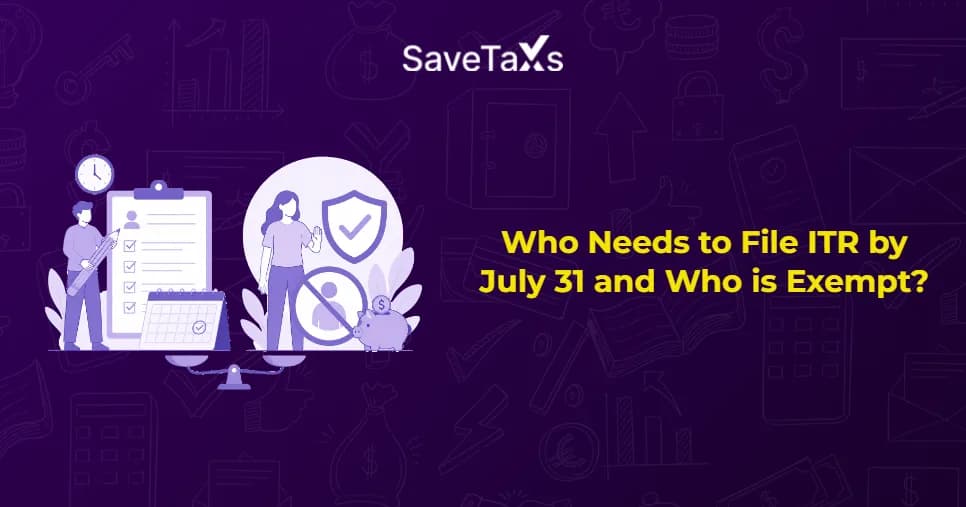
As the ITR Filing FY 2025-26 officially begins, taxpayers across the country have a lot of fresh questions. One of the most common questions is whether every individual who earns needs to file an Income Tax Return. Well, the answer to this question is not as direct as you think.
The requirement to file an ITR depends on various factors, like annual income, chosen tax regime, and even specific financial transactions made during the year. While some individuals may not need to file a return, others might be required to file even after having a relatively low income.
According to the experts, many people assume that they can skip ITR filing if they have no tax liability. However, this may not always be right. Keep reading further to know more about who needs to file an ITR and who doesn't.
To claim refunds above ₹50,000, there is a more detailed verification process. It is because, before approving the payment, the authorities verify supporting documents and claims. After that, the refund is generally issued within 2-3 weeks, provided fi there are no issues, and everything is found to be correct.
In case there are inconsistencies or the case requires additional verification, the process may take longer. Additionally, some deductions and exemption claims may also experience closer examination to ensure compliance with tax regulations.
The income threshold for mandatory filing differs based on whether the taxpayer has opted for the new or old tax regime.
So, under the new tax regime, an individual with an annual income below ₹4 lakh is generally not required to file an ITR, provided there are no other mandatory conditions applicable. Similarly, the basic threshold for those who opt for the old tax regime remains ₹2.5 lakh. Filing an ITR may not be mandatory if your income is below this threshold and there are no extra filing obligations.
However, the experts suggest that you must not decide whether to file an ITR or not based on these limits. It is because several other financial institutions may require mandatory filing even if your income remains under the basic exemption limit.
According to the experts, one of the most important steps before submitting an ITR is to verify the documents carefully. The main documents include Form 16, Form 26AS, the taxpayer information summary (TIS), and the annual information statement (AIS).
You must check the records thoroughly to ensure that the income details match across all statements. Also, verify income like bank interest, capital gains, dividends, and TDS (Tax Deducted at Source) before filing.
If there is any discrepancy in these documents, your return processing will be delayed, and the tax refund will be postponed.
Contact Savetaxs and file your ITR before the deadline accurately and in compliance
Taxpayers can see a significant improvement in refund processing with the start of the filing season. Tax refunds can now reach bank accounts within 24 to 28 hours for cases where the submitted information matches official records and there is no need for additional verification.
Strong digital systems and enhanced automated verification are helping to make processing quick. However, as of now, the quick refund process is available only for eligible cases. It includes the refund amount not exceeding ₹50,000, and all the submitted documents are accurate and complete.
According to tax professionals, certain financial activities may require you to file an ITR, irrespective of your taxable income. These activities can be large banking transactions, overseas travel, TDS, high-value purchases, or other specified financial transactions.
It means filing an ITR becomes mandatory in these situations even if you don't owe any tax. So, before you decide to skip filing the return, you must check all the applicable rules carefully.
Now, the tax system automatically compares the information received from various institutions with the details submitted in the ITR. Your return may be marked for additional verification if the declared income does not match the available records.
Hence, the experts advise taxpayers not to depend on Form-16 only while preparing the returns. To reduce the risk of delays or future notices, you must report every source of income accurately.
Your NRI ITR, simplified and completely managed at Savetaxs.
Since the tax filing season has now begun, you must spare a little extra time and take care of some things carefully. Verify the documents, report all income sources, and understand the applicable rules to complete the entire process easily. Proper preparation, planning, and compliance can help you increase the chances of receiving the refunds on time without facing any unnecessary delays.
Moreover, if you are still not sure about which ITR form to file or need assistance with the filing process, contact an expert at Savetaxs. We have an entire team of experts who can help clear any doubts and guide you throughout the ITR filing process to ensure accuracy. Our experts will ensure you prepare everything well in advance so you can enjoy a hassle-free process and recieve the refund without any delays. Connect with us right away, as we are actively working 24/7 across all time zones.
This article is for general informational purposes only and does not constitute tax, legal, financial, or investment advice. Laws, regulations, rates, and procedures may change over time and may vary based on individual circumstances.
While SaveTaxs makes reasonable efforts to keep the information accurate and up to date, readers should verify applicable rules with official authorities or consult a qualified professional before making decisions based on this information.
Shubham Jain is the Founder of SaveTaxs and has extensive experience in Indian and NRI taxation. He advises individuals, NRIs, and businesses on tax filing, tax planning, capital gains, DTAA benefits, fund repatriation, and compliance matters. He regularly writes about taxation and related financial topics. His focus is on making complex tax concepts easy to understand. Through his articles, he helps taxpayers stay informed, avoid common mistakes, and stay compliant with Indian tax laws. See Full Bio
Want to read more? Explore Blogs