NRI Income Tax Compliance
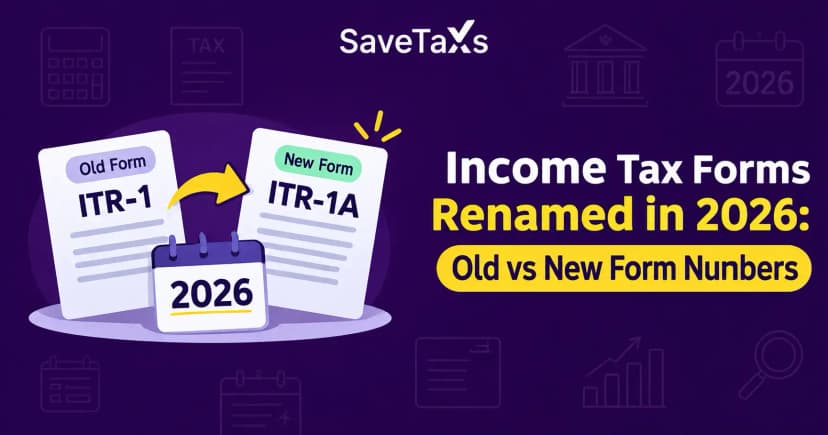
Income Tax Forms Renamed in 2026: Old vs New Form NumbersIncome Tax Forms Renamed in 2026: Old vs New Form Numbers
Written by Vipul Jain
_1777726762120.webp&w=3840&q=75)
Form 10F renewal must be done every year, as it is not a permanent declaration. The validity of Form 10F for NRIs is tied to your tax residency certificate and the financial year for which you claim the DTAA benefits. However, keep in mind that many employers/banks may expect a fresh Form 10F, even if the TRC is multi-year. The renewal must be done annually, even if there is no change in the business relationship, contract, or residency status. Since there is no system-based auto-renewal, you must file a fresh form online.
The process to file Form 10F for NRIs is the same as for residents. However, it may feel more complex due to OTP and access issues. NRIs can access Form 10F through the Income Tax portal easily by selecting the relevant AY and DTAA article. Failing to file a fresh Form 10F can lead to excess TDS, refund delays, or audit issues. Keep reading further to know more about Form 10F renewal and the process to renew it.
Form 10F is not a permanent declaration and has a time-bound validity. Its validity is linked to your tax residency certificate (TRC) and the financial year for which you claim the DTAA (Double Taxation Avoidance Agreement) benefits. Here's the Form 10F validity for NRIs in detail:
So, if your TRC has expired or been reissued, you must not rely on the old Form 10F filed two or three years ago. Form 10F validity is not linked to the type of income alone. Instead, it is also tied to the duration of TRC, PAN, and the tax residence country.
NRIs (Non-Resident Indians) must file a fresh Form 10F whenever there is a change in the underlying details that support their claim for DTAA benefits in India. The table below lists the common situations that trigger Form 10F renewal as follows:
| Situation | Fresh Form 10F Requirement |
|---|---|
| Each new Financial Year in Which You Claim DTAA Benefits | Many employers and banks may expect a fresh Form 10F for the current year, even if your TRC is multi-year. |
| New or Renewed Tax Residency Certificate (TRC) | If your home-country tax authority issues a fresh TRC (new number, dates, or issuing authority), filing a new Form 10F using the updated TRC details is required. |
| Change in Tax Residence Country | If your tax residency changes because of moving to a different country, file a fresh Form 10F for the new country's DTAA with India. |
| Change in PAN or Personal Details | A fresh Form 10F is required if there is any mismatch or update in PAN, name, or birth date. This is to avoid TDS at the higher domestic rate. |
| New Type of DTAA-eligible Income | In addition to your salary, if you start earning DTAA-beneficial capital gains or dividends, you may need to re-file Form 10F. This is to cover the new income stream. |
Form 10F filing in India must be considered as an annual practice by NRIs who wish to enjoy smooth DTAA-based TDS treatment. It must be done even if there is no change in the underlying facts.
All Form 10F filings must be done online through the income tax e-filing portal as required by the Income Tax Department. The process to file Form 10F for NRIs is the same as for residents. However, the process may often feel more complex and technical due to OTP and access issues. Here are the key steps for NRIs to follow to file Form 10F online:
Step 1: Log in to the e-filing Portal
Step 2: Access to Form 10F
Step 3: Enter TRC and Residence Details
Step 4: Specify the Type of Income and DTAA Clause
Step 5: Upload or Confirm TRC and Submit
Step 6: Share it with the Deductor
NRIs can make this process easier by setting up email alerts or by allowing OTP on an India-linked number.
Despite understanding all the basic laws, many NRIs may report the same preventable errors while renewing Form 10F. It includes leading to excess TDS, delays in refund, or issues with audits. Here are some common mistakes that NRIs make while filing Form 10F renewal:
Many NRIs assume that once they have filed Form 10F, it will remain valid forever. However, the truth is that it must be renewed whenever the TRC changes or the financial year switches.
Filing Form 10F with an old, expired TRC is considered invalid. Hence, the payer may fall back on the higher domestic tax rate if they use an expired TRC to file Form 10F.
Choosing the wrong DTAA article can lead to confusion among the deductor and the tax department. This can lead to disputes or non-acceptance of the form, such as using 'Business Income' from 'Capital Gains'.
Some NRIs often send TRC and Form 10F details to the employer or bank by email and skip the e-filing step. Only the officially e-filed Form 10F is recognized as valid by the Income Tax Department.
If you file Form 10F after salary or dividend payment, the employer or bank may have already deducted TDS at a higher rate. You will be required to claim a refund for the excess deduction by filing a return.
Avoiding these common mistakes can help NRIs to turn the Form 10 renewal process into a low-stress compliance task.
Form 10F renewal is a time-bound requirement that NRIs must fulfill each year. Alternatively, also whenever their tax-residence or TRC situation changes. The validity of Form 10F is linked to the TRC dates, PAN, and tax-residence country. So, if you are an NRI, stop assuming that filing once will cover multiple years. When combined with professional help, the timely Form 10F filing becomes easier to understand. Talking about professional experts, there's no better option than Savetaxs.
At Savetaxs, we have a team of experts who can help you understand how to e-file Form 10F correctly on the Income Tax Portal. Our team will help you avoid the common pitfalls and ensure NRIs keep availing their DTAA-based tax treaty benefits without any interruption. Contact us right away to renew Form 10F easily, and reduce your tax burden on salary, capital gains, and other DTAA-eligible income.
This article is for general informational purposes only and does not constitute tax, legal, financial, or investment advice. Laws, regulations, rates, and procedures may change over time and may vary based on individual circumstances.
While SaveTaxs makes reasonable efforts to keep the information accurate and up to date, readers should verify applicable rules with official authorities or consult a qualified professional before making decisions based on this information.
Vipul Jain is the Co-Founder of SaveTaxs and a tax expert with experience in Indian and NRI taxation. He advises individuals, NRIs, and businesses on tax filing, tax planning, capital gains, DTAA, and compliance matters. He focuses on making complex tax concepts simple and helping taxpayers make informed, compliant decisions. See Full Bio
Want to read more? Explore Blogs