US Tax Filing and Compliance
S Corporation Salary vs Distributions: How Owners Should Pay ThemselvesS Corporation Salary vs Distributions: How Owners Should Pay Themselves
Written by Shubham Jain

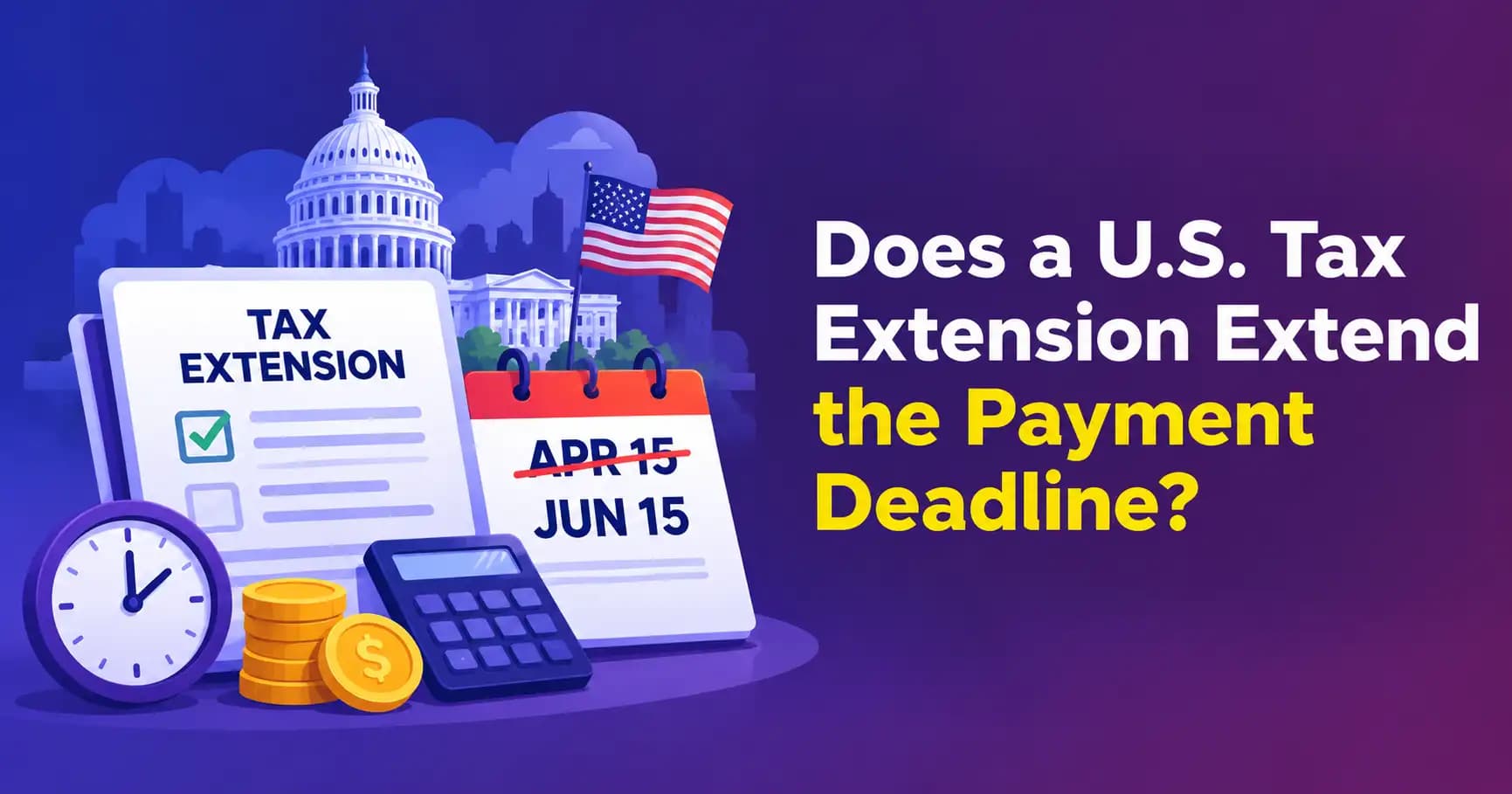
Does a U.S. tax extension extend the payment deadline? This is the most common question asked by U.S. taxpayers living overseas. The short answer is no: a tax filing extension generally does not give you extra time to pay unpaid taxes. However, qualifying U.S. citizens and resident aliens living abroad receive an automatic two-month extension to file and pay federal income tax. Interest on unpaid taxes generally accrues from the original due date, even if you qualify for this extension.
If you pay your taxes after the original due date, you may owe interest on the unpaid amount. The automatic two-month extension may also affect when a late-payment penalty applies.
Want to know more about it and how it works? Scroll down and get your answers.
No, a filing extension generally doesn't give you more time to pay your taxes. When you file an IRS tax filing extension, you get more time to file your tax return, not to pay. However, qualifying U.S. citizens and resident aliens living abroad generally receive an automatic two-month extension to file and pay federal income tax, usually until June 15.
If you do not pay the taxes by the applicable payment deadline, the IRS may impose interest and tax penalties on unpaid taxes. However, if you can't pay at once, pay as much as you can by the applicable deadline and consider an IRS payment plan, such as an Installment Agreement. You can make the tax payment online using IRS Direct Pay or by mail using Form 1040-V with a check or money order. Also, keep records of all payments and communicate promptly with the IRS to learn about available options and avoid further penalties.
For instance, if you are a U.S. taxpayer living in India, you may receive an automatic two-month extension if you meet the eligibility conditions. This generally extends your filing and payment deadline until June 15. Assume you owe $4,000 in unpaid taxes for that year. Even with the automatic extension, if you don't pay your unpaid taxes by April 15, you'll generally owe interest until you pay.
The same thing applies when you submit IRS Form 4868 for an additional filing extension. This also only extends your filing deadline, not your payment deadline beyond the applicable payment due date.
So, a regular filing extension does not give you more time to pay unpaid taxes. Moving ahead, let us know the filing and payment deadlines for non-resident aliens living abroad.
Connect with Savetaxs for personalized assistance based on your tax status and obligations in the U.S.
Filing and payment deadlines depend on the taxpayer's U.S. tax status and circumstances. For calendar-year nonresident aliens filing Form 1040-NR, the filing deadline is generally April 15 if they receive wages subject to U.S. income tax withholding, or June 15 if they do not receive such wages. U.S. citizens and resident aliens generally have an April 15 original deadline, subject to applicable extensions. Additionally, U.S. state income tax deadlines for NRIs are separate, so review those as well.
For most calendar-year U.S. citizens and resident aliens living abroad, the following is a relevant timeline:
| Deadline | What it Means |
|---|---|
| April 15 | Original federal tax return and tax payment deadline |
| June 15 | Automatic two-month extension for qualifying U.S. citizens and resident aliens living overseas |
| October 15 | Extended six-month tax filing deadline for qualifying U.S. citizens and resident aliens who request additional time using Form 4868 |
These are the usual dates for calendar-year taxpayers. However, if any of these dates fall on a weekend or legal holiday, they generally shift to the next business day. Special IRS relief may also change a deadline. Let's know about these dates in detail.
The automatic two-month extension is generally for U.S. citizens or resident aliens living overseas who meet the following conditions:
You do not need to fill out Form 4868 to get this automatic two-month extension for taxpayers abroad. However, when filing your tax return, you must attach a statement explaining your qualifying situation.
With this extension, you can file your federal tax return and pay federal income tax until June 15, subject to applicable deadline adjustments. However, you are still liable for interest on your unpaid taxes after April 15. To avoid interest, pay your taxes by April 15.
If you need more time to gather your foreign bank and tax statements, you can file IRS Form 4868 to request an additional four-month extension to file your federal tax return, generally until October 15 for calendar-year taxpayers who qualify for the automatic two-month extension. This extension is available to taxpayers living in the country and abroad. However, if you qualify for the two-month extension, you can generally get four more months by filing Form 4868 by June 15.
In simple terms, this additional filing extension does not extend the payment deadline. Generally, October 15 is the usual extended tax filing deadline for each tax year. Interest still applies to your unpaid taxes from the original due date. You may also face late-payment penalties on unpaid tax, subject to the applicable rules and exceptions. For qualifying taxpayers who receive the automatic two-month overseas extension, the failure-to-pay penalty generally starts from the extended payment due date, usually June 15, rather than April 15.
Further, the U.S. state tax filing deadlines and federal tax deadlines generally vary. So, before filing, it is advisable to check state tax filing deadlines as well. Moving further, let's know how much you should pay if your return is not ready.
Even if your tax return isn't ready, pay as much tax as you can by the applicable payment deadline. As mentioned earlier, a regular tax filing extension does not extend your payment deadline. So, if you don't pay your unpaid taxes by the applicable due date, you'll face interest and, in some cases, penalties. However, using the information available to you, you should prepare a reasonable estimate. For this, you can use this simple calculation:
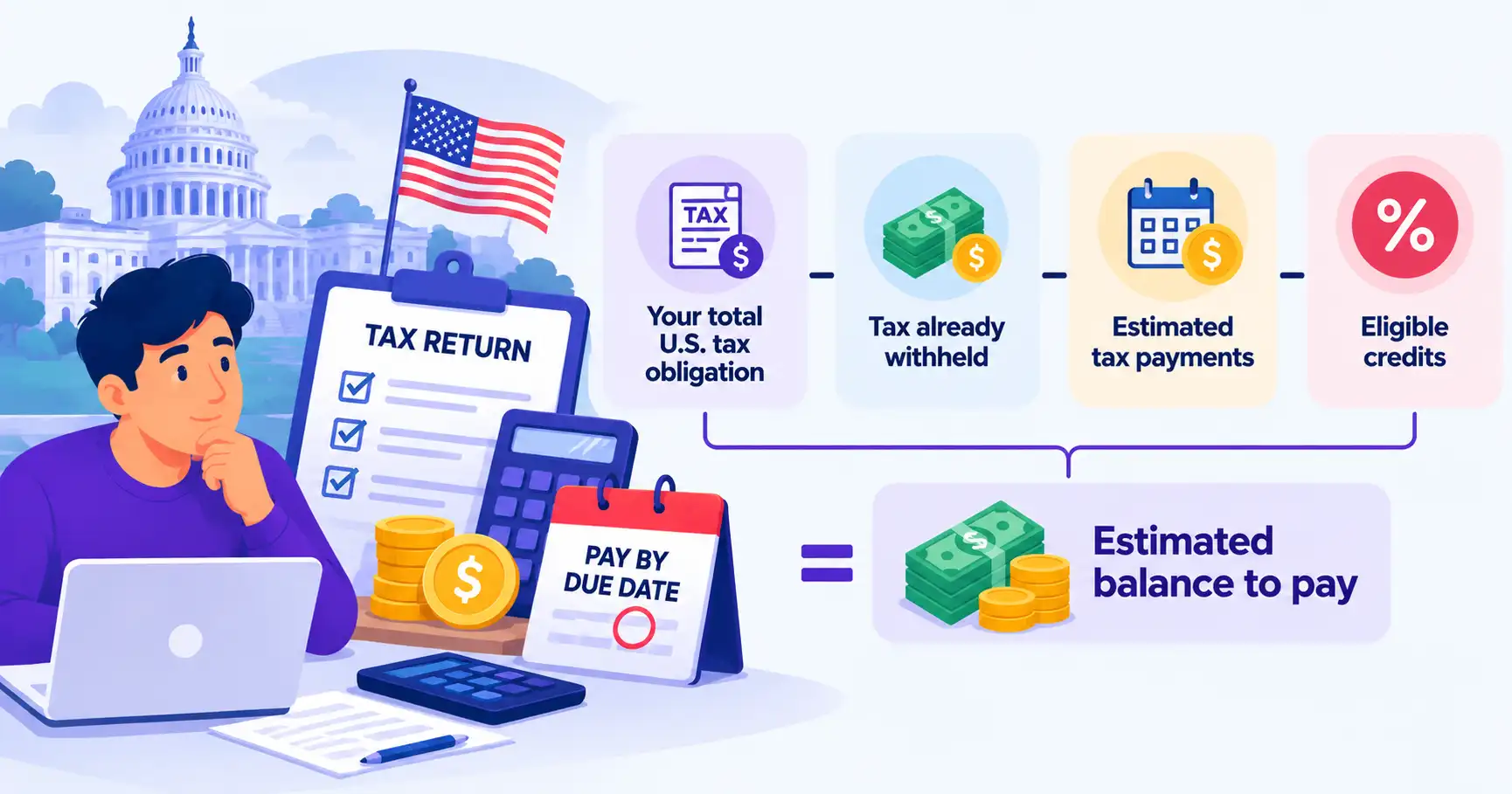
The estimated balance to pay = Your total U.S. tax obligation − U.S. federal tax already withheld − estimated tax payments − eligible credits
In this calculation, include the following things as well:
Let's better understand this with an example.
Mr. A is a U.S. taxpayer who is currently living in India. He did not file his return by April 15 because his foreign tax credit was still in process. However, based on his income, expected credits, and withholding credits, he estimated his taxes owed at $3,500. On April 15, he paid $3,500 and filed his federal tax return later. Here, he avoided unnecessary interest on that amount by calculating and paying the tax by the original due date instead of waiting to file, assuming the payment covered his actual tax liability.
If you pay too much in taxes, you don't need to worry, as the IRS treats it as an overpayment. Subject to IRS rules, when you file your tax return, you can request a refund or apply it to the following tax year.
If you pay less than your tax obligation, interest generally starts accruing on your unpaid taxes from the original payment due date. Additionally, depending on your circumstances, you may also face a failure-to-pay penalty. For qualifying taxpayers who receive the automatic two-month overseas extension, the failure-to-pay penalty generally starts from the extended payment due date, usually June 15.
So, pay as much tax as possible by the applicable payment deadline to avoid unnecessary interest or penalties. Now, moving ahead, let's look at what happens if you pay after the deadline.
If you pay your unpaid taxes after the applicable payment deadline, interest generally starts accruing from the original payment due date and continues until you pay. In most cases, the interest rate changes quarterly, so don't assume it stays the same throughout the period.
Additionally, you may also face a failure-to-pay penalty. It is usually 0.5% of unpaid taxes for each month, or part of a month, that the tax balance remains unpaid. The maximum penalty is generally 25% of the unpaid tax. In other cases, depending on the situation, different rates or relief provisions may apply.
So, if you pay taxes after the applicable payment deadline, you will owe interest and may also be subject to late-payment penalties. Moving forward, let's consider what happens if you cannot pay the full tax amount.
At Savetaxs, we connect you with expert CPAs and Enrolled Agents who resolve all your tax-related queries on time.
Even if you cannot pay the full tax amount, pay as much tax as possible by the applicable payment deadline. This reduces your tax obligation and means you pay interest on the remaining amount instead of the full amount. In this situation, you can implement the following steps:
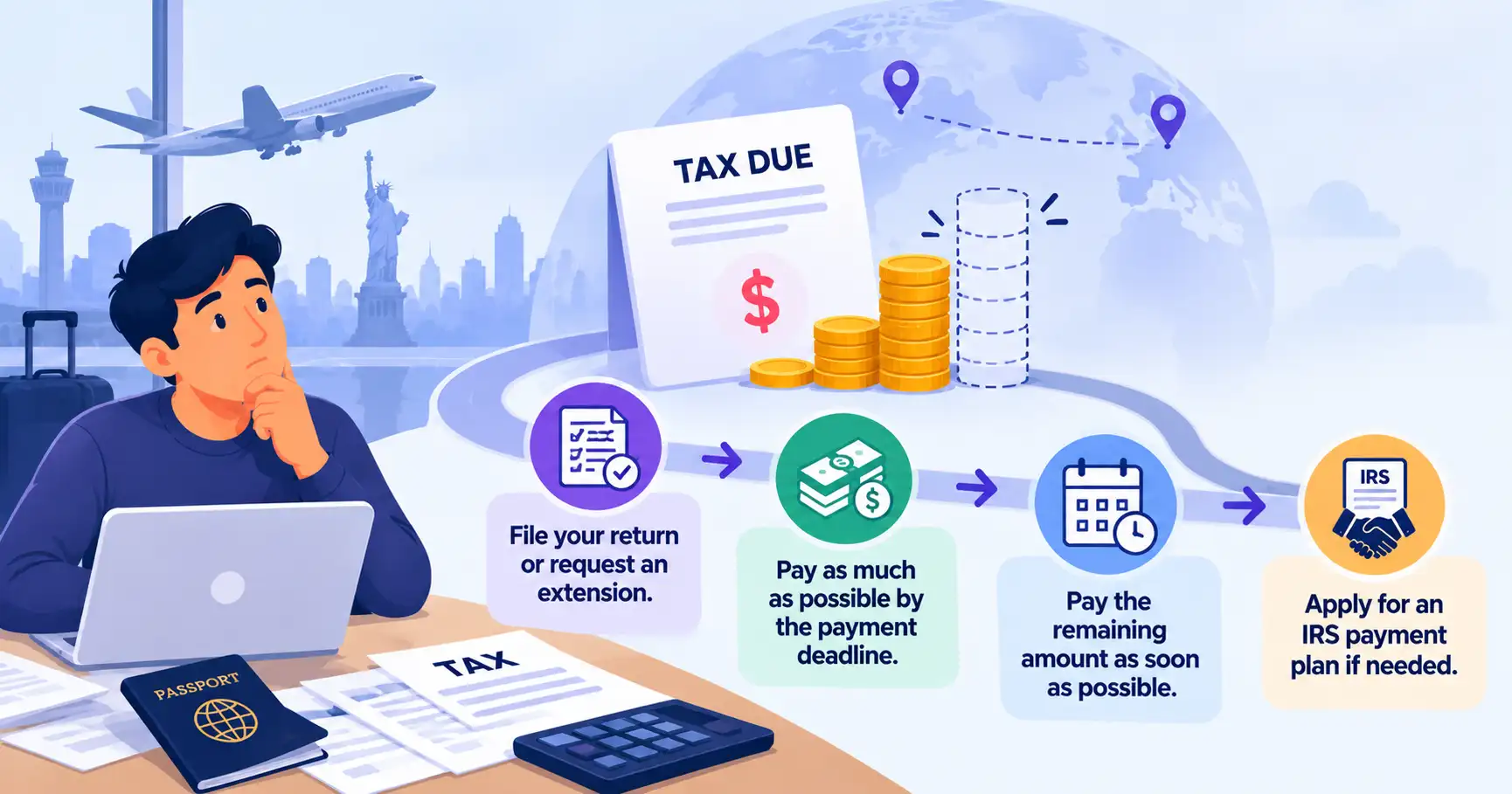
Confused? Let's better understand this with an example.
Mr. A is a U.S. tax resident living overseas. He owes $10,000 in taxes but can pay only $6,000 by the applicable payment deadline. He pays $6,000 by that deadline and qualifies for an automatic two-month extension to file because he was living overseas. Interest will generally apply to his remaining $4,000 from the original due date, assuming the payment is credited and no other adjustments apply.
So here's how: by making even a partial payment, Mr. A reduced his unpaid tax balance and limited the amount on which further interest and penalties may accrue.
Lastly, based on the information above, it is clear that a U.S. tax filing extension does not always extend the payment deadline. Qualifying U.S. citizens and resident aliens living abroad generally receive an automatic two-month extension to file and pay federal income tax, but interest on unpaid taxes still accrues from the original due date. Form 4868 provides additional time to file, not additional time to pay beyond the applicable payment deadline. So pay as much of your U.S. taxes as possible by the applicable due date and avoid unnecessary interest and tax penalties.
If you need any assistance in determining your U.S. tax balance or paying your U.S. taxes on time, connect with Savetaxs. Our cross-border tax experts will help you determine your tax obligations and help you reduce avoidable interest and penalties on unpaid taxes by paying them on time.
This article is for general informational purposes only and does not constitute tax, legal, financial, or investment advice. Laws, regulations, rates, and procedures may change over time and may vary based on individual circumstances.
While SaveTaxs makes reasonable efforts to keep the information accurate and up to date, readers should verify applicable rules with official authorities or consult a qualified professional before making decisions based on this information.
Shubham Jain is the Founder of SaveTaxs and has extensive experience in Indian and NRI taxation. He advises individuals, NRIs, and businesses on tax filing, tax planning, capital gains, DTAA benefits, fund repatriation, and compliance matters. He regularly writes about taxation and related financial topics. His focus is on making complex tax concepts easy to understand. Through his articles, he helps taxpayers stay informed, avoid common mistakes, and stay compliant with Indian tax laws. See Full Bio

Want to read more? Explore Blogs