_1785238921480.webp&w=828&q=75)
Income Tax Latest Updates
ITR filing 2026: Income tax refund in 24 hours? Taxpayer gets money in just a dayITR filing 2026: Income tax refund in 24 hours? Taxpayer gets money in just a day
Written by Shubham Jain

As you prepare to file your Income Tax Return (ITR), you might find yourself sifting through various documents like bank statements, dividend records, Form 16, investment summaries, and other tax materials. Keeping track of all these details can be difficult, and missing even minor details could result in errors on your tax return.
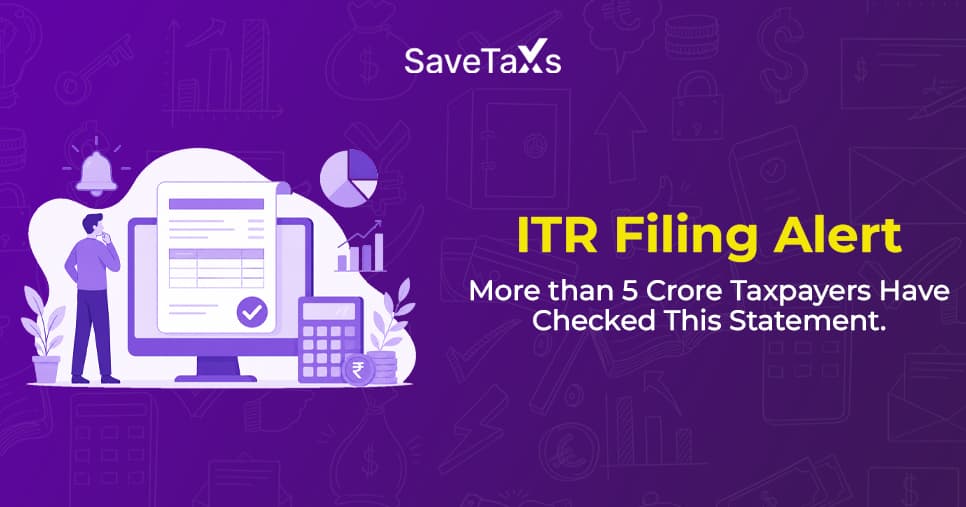
To help taxpayers avoid such challenges, the Income Tax Department has once again encouraged taxpayers to review their Annual Information Statement (AIS) before filing their ITR. In a recent post on X, the department said that over 5 crore taxpayers have already checked their AIS and urged others to review their information before hitting the 'File ITR' button.
The Income Tax Department pointed out that many taxpayers face difficulties in collecting details from multiple sources while filing their ITR. Interest from savings accounts or fixed deposits is reflected in bank statements, dividend income is reported separately, and details of certain high-value financial transactions may be sourced from different records.
The department said that reviewing the Annual Information Statement is the easiest way to bring all this information together.
The department had also shared a brief video along with the post that explains the importance of starting the filing process by reviewing the AIS. The Annual Information Statement, or AIS, serves as a detailed record of a taxpayer's financial transactions that is available on the Income Tax portal.
Contrary to Form 26AS, which primarily reflects tax deducted at source (TDS), tax collected at source (TCS), and certain tax payments, AIS presents a broader overview of your financial activities.
This includes details like interest income, dividend income, and various high-value financial transactions reported to the tax authorities. Hence, AIS serves as an important reconciliation tool before filing an ITR and helps taxpayers in identifying any omitted income.
According to the Income Tax Department, over 5 crore taxpayers have already accessed their Annual Information Statement.
The department has also reminded taxpayers not to ignore any inaccuracies in their AIS. You can submit online feedback through the Income Tax Portal if any entry appears incorrect, duplicated, or seems unrelated to you. This feature allows taxpayers to highlight discrepancies before submitting their return.
Trust Savetaxs for accurate and hassle-free return filing
Accessing your AIS is straightforward. Taxpayers simply need to log into the Income Tax e-filing portal and select the View AIS option. They should compare the information displayed in the statement with their financial records and use the online feedback feature to report any inaccuracies.
As the July 31, 2026, Income tax deadline for filing ITR-1 and ITR-2 approaches, the Income Tax Department recommends incorporating AIS verification into your filing process. Before submitting your return, reviewing and reconciling this statement ensures that the information in your ITR matches the records held by the tax department. It will help make the filing process easier and minimize the potential for future discrepancies or notices.
This article is for general informational purposes only and does not constitute tax, legal, financial, or investment advice. Laws, regulations, rates, and procedures may change over time and may vary based on individual circumstances.
While SaveTaxs makes reasonable efforts to keep the information accurate and up to date, readers should verify applicable rules with official authorities or consult a qualified professional before making decisions based on this information.
Shubham Jain is the Founder of SaveTaxs and has extensive experience in Indian and NRI taxation. He advises individuals, NRIs, and businesses on tax filing, tax planning, capital gains, DTAA benefits, fund repatriation, and compliance matters. He regularly writes about taxation and related financial topics. His focus is on making complex tax concepts easy to understand. Through his articles, he helps taxpayers stay informed, avoid common mistakes, and stay compliant with Indian tax laws. See Full Bio
Want to read more? Explore Blogs