NRI Income Tax Compliance
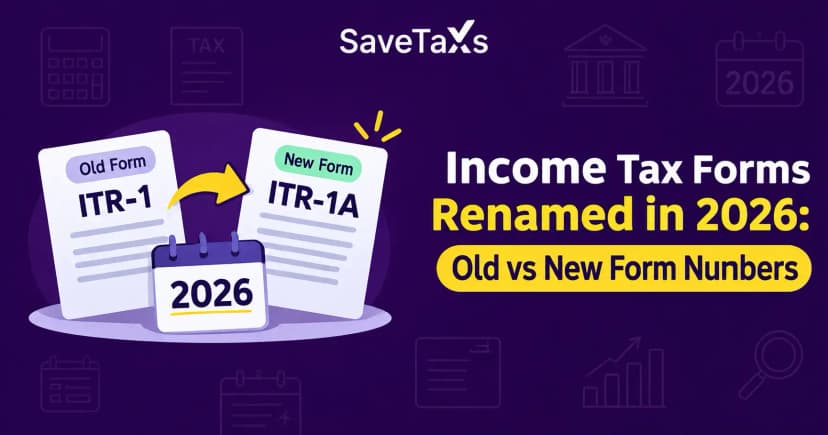
Income Tax Forms Renamed in 2026: Old vs New Form NumbersIncome Tax Forms Renamed in 2026: Old vs New Form Numbers
Written by Vipul Jain
_1778135460477.webp&w=3840&q=75)
Filing an Income Tax Return (ITR) in India as a Non-Resident Indian (NRI) involves determining your residential status, identifying income taxable in India, checking whether filing is mandatory, and selecting the correct ITR form. You can generally complete the filing process online through the Income Tax Department's e-Filing portal without travelling to India.
For most eligible NRIs without income chargeable under the head “Profits and Gains of Business or Profession,” ITR-2 is the relevant form. ITR-3 generally applies when business or professional income is involved, subject to the applicable form's eligibility rules.
The main steps are:
Determine your Indian income-tax residential status.
Identify income taxable in India.
Check whether you are required to file an ITR.
Select the appropriate ITR form.
Gather and reconcile your tax documents.
Calculate tax and review eligible relief.
Submit the return online.
E-verify the return within the prescribed timeline.
Official reference: Income Tax Department — Return applicability for non-resident individuals.
An NRI may be required to file an Indian income tax return depending on taxable income, applicable statutory filing conditions, specific transactions and other provisions of the Income-tax Act.
Living outside India does not automatically eliminate Indian tax obligations. Depending on the circumstances, an NRI may need to examine:
Rental income from property located in India.
Interest from NRO bank accounts.
Salary or pension taxable in India.
Capital gains from Indian property, shares or mutual funds.
Business or professional income taxable in India.
Other income that falls within India's tax jurisdiction.
Do not decide whether to file solely by checking whether your total income exceeds a particular threshold. The applicable filing requirement depends on the relevant tax period, the taxpayer's circumstances and the statutory conditions.
Before deciding, check:
Whether your total income exceeds the applicable basic exemption limit.
Whether any other mandatory-filing provision applies to you.
Whether you have relevant capital gains, foreign income or other transactions requiring examination.
Whether tax has been deducted at source and whether the resulting tax position is correctly reflected.
Whether you need to file a return to claim a refund or complete another tax-related requirement.
Important: TDS deducted by a bank, tenant or buyer does not necessarily settle your final tax liability or remove the requirement to file a return. Likewise, an income threshold is not the only test that can determine whether filing is necessary.
For example, an NRI earning rent from an apartment in Mumbai should assess the taxable house-property income, eligible deductions, TDS and applicable filing rules. An NRI selling Indian property should examine the capital gains and relevant tax provisions even if the buyer has deducted TDS.
For professional assistance, visit Savetaxs NRI Income Tax Services.
The correct ITR form depends on your income sources and the eligibility requirements for the relevant assessment year.
| Income profile | Generally relevant form |
|---|---|
| Salary, pension, interest or rental income without business or professional income | ITR-2, subject to eligibility |
| Capital gains without business or professional income | ITR-2, subject to eligibility |
| Income chargeable under the head “Profits and Gains of Business or Profession” | ITR-3, subject to eligibility |
ITR-2: This form generally applies to eligible individuals and Hindu Undivided Families (HUFs) who do not have income chargeable under the head “Profits and Gains of Business or Profession.” It can cover salary, pension, house-property income, capital gains and income from other sources.
ITR-3: This form generally applies to individuals and HUFs with applicable business or professional income who are not eligible to file another prescribed form.
For example, an NRI living in Canada who receives Indian rental income, bank interest and capital gains, but has no business or professional income, would generally examine ITR-2 eligibility.
An NRI who operates a business or earns professional income taxable under the relevant head would generally need to examine ITR-3.
NRIs generally cannot use ITR-1, which is restricted to eligible resident individuals. Do not select a form solely because you used it in a previous year. Review all income sources, relevant disclosures and the applicable assessment year's instructions.
Official references:
An NRI generally needs to report income taxable in India under the applicable provisions. The treatment depends on the income source, residential status, the relevant tax period and any applicable treaty provisions.
Rental income from property situated in India is generally taxable in India, subject to the applicable provisions.
Review:
Total rent received or receivable.
Eligible deductions, including those applicable to house-property income.
Municipal taxes, where relevant.
TDS deducted by the tenant.
Rental agreements and supporting bank statements.
Report the income using the applicable computation rules rather than simply treating the gross rent received as taxable income.
Interest from NRO accounts is generally taxable in India and may be subject to TDS.
NRE and FCNR interest may receive different treatment when the statutory conditions for exemption are satisfied. Do not automatically apply the same treatment to every non-resident bank account.
Reconcile gross interest with bank statements, interest certificates, the Annual Information Statement (AIS) and Form 26AS.
Related guide: NRE Account Taxation.
Salary taxation depends on the circumstances, including where services are performed and the applicable tax provisions. Pension income also requires a fact-specific review.
An overseas address or foreign employer does not, by itself, determine the complete Indian tax treatment.
Review the nature of the payment, the circumstances in which it arose, your residential status and any relevant treaty provisions before reporting it.
Selling Indian property, shares, mutual funds or other capital assets may result in taxable capital gains.
The computation can depend on the asset type, acquisition and transfer dates, cost of acquisition, eligible expenses and the applicable tax provisions.
Keep purchase and sale documents, transaction statements, cost records and TDS details. The taxable gain is not necessarily the same as the sale proceeds or the amount credited to your bank account.
Related guide: NRI Capital Gains Tax.
Residential status is one of the first matters to establish because it affects the scope of income taxable in India.
Citizenship and income-tax residential status are not the same. An Indian citizen living abroad must determine their status under the statutory tests applicable to the relevant period. These tests can include the number of days spent in India, preceding-year presence and additional conditions applicable to particular individuals.
For example, an Indian citizen who moves to the UAE during a financial year should not automatically assume that they qualify as a non-resident. The applicable rules and their individual circumstances must be examined.
Before preparing your return:
Record your dates of arrival in and departure from India.
Calculate your days of presence in India for the relevant period.
Review the applicable statutory tests and any relevant exceptions.
Determine your residential status.
Assess how that status affects your taxable income and reporting obligations.
A person may also need to examine special rules applicable to Indian citizens or persons of Indian origin visiting India, Indian citizens leaving for employment abroad, and individuals whose income or tax liability falls within specific statutory provisions.
Read the Savetaxs guide to residential status.
The documents you need depend on your income sources and transactions. Use the following checklist to prepare for filing.
PAN.
Foreign residential address and contact information.
Indian bank account details.
Relevant tax-residency information, where applicable.
Annual Information Statement (AIS).
Taxpayer Information Summary (TIS).
Form 26AS.
Form 16 or Form 16A, where applicable.
TDS certificates and tax-payment records.
Bank statements and interest certificates.
Salary or pension records.
Rental agreements and rent receipts.
Share, mutual fund and capital-gains statements.
Property purchase and sale documents.
Foreign-tax payment records, if claiming eligible foreign tax credit.
These records help you review information reported by banks, employers, buyers, tenants and other reporting entities.
Compare the available information with your own documents before finalising the return. Investigate discrepancies rather than copying a figure without checking its source.
For example, if Form 26AS shows a TDS amount that differs from your bank interest certificate, identify the reason and determine how the discrepancy should be addressed before filing.
Supporting documents are generally used to prepare and substantiate your return; you do not necessarily need to upload every document with the ITR. Follow the applicable form instructions and retain supporting evidence.
Related guides:
Once you have determined your residential status, filing requirement, applicable form and taxable income, you can prepare and submit your return through the Income Tax Department's e-Filing portal.
Visit the official Income Tax Department e-Filing portal and log in using your account credentials. Register if necessary and follow the portal's current authentication requirements.
Choose the assessment year corresponding to the income you are reporting.
For example, income earned from 1 April 2025 to 31 March 2026 is generally associated with FY 2025–26 and AY 2026–27.
Do not confuse the year in which you earned income with the year in which you submit the return.
Select the relevant ITR form after reviewing your income sources, residential status and eligibility.
ITR-2 generally applies when you have no income chargeable under the business or profession head. ITR-3 generally applies when you have relevant business or professional income.
Check the official instructions for the relevant assessment year before proceeding.
Check the information populated in the return against your bank statements, tax records and other documents.
Pre-filled information can be useful, but it should not be assumed to be complete or correct. Reconcile discrepancies and add or correct information where required.
Enter or verify the applicable income, which may include:
Salary or pension.
Rental income.
Interest income.
Capital gains.
Business or professional income, where applicable.
Complete the relevant schedules and disclosures. Reconcile TDS, advance tax and self-assessment tax with your records.
Review the deductions, tax-regime provisions, capital-gains treatment and other relief that may apply to your circumstances.
If you have foreign income or taxes paid abroad, examine whether a Double Taxation Avoidance Agreement (DTAA) or foreign tax credit is available. Eligibility depends on the relevant law, treaty, tax period and documentation.
Review your tax computation, bank details, income disclosures, tax credits and validation errors.
Submit the return only after checking the information entered. Save the acknowledgment for your records.
Complete verification using an eligible method within the prescribed period.
The Income Tax Department specifies a 30-day period from the date of filing for e-verification or submission of ITR-V. If verification is delayed, the date treated as the date of furnishing the return may change, and late-filing consequences may apply.
Save the verification acknowledgment and confirm that the return shows the appropriate verified status.
Official reference: Income Tax Department — ITR-V and 30-day verification timeline.
Submitting the return and verifying it are separate steps. Do not leave verification pending.
If you have multiple Indian income sources, capital gains, rental properties or cross-border tax questions, a review can help identify reporting issues before submission.
Get your NRI tax situation reviewed by Savetaxs.
An NRI may qualify for relief under a Double Taxation Avoidance Agreement (DTAA) or foreign tax credit when the applicable treaty and domestic-law requirements are satisfied.
A DTAA may allocate taxing rights or provide relief when the same income is taxed in two jurisdictions. The outcome depends on the treaty, the type of income, tax residence and the relevant provisions.
Depending on the claim, supporting documentation may include:
Tax Residency Certificate (TRC).
Form 10F, where applicable.
Evidence of foreign tax paid.
Form 67, where required for a foreign tax credit claim.
Other supporting documents prescribed for the relevant relief.
For example, an NRI residing in the United States who receives income from India may need to examine the India–US treaty and the rules governing relief in each jurisdiction.
A DTAA does not automatically eliminate Indian tax. It is important to confirm eligibility, the relevant treaty provisions and documentation requirements before claiming relief.
Related guides:
The due date depends on the assessment year, taxpayer category, audit requirements and any applicable official extension. NRIs should not assume that living abroad automatically changes the deadline.
AY 2026–27 relates to income earned during FY 2025–26, from 1 April 2025 to 31 March 2026.
For many individuals who are not subject to audit and are required to file ITR-2, the ordinary due date was 31 July 2026. As of October 2026, that date has passed.
The CBDT announced an extension for specified taxpayers covered by the audit-related category under the Income-tax Act, 1961:
ITR filing deadline: Extended from 31 October 2026 to 21 November 2026.
Related audit-report deadline: Extended from 30 September 2026 to 21 October 2026.
These extensions apply to the specified categories covered by the official announcement. They do not automatically extend the deadline for every NRI or every individual return.
Official announcement: CBDT extends specified AY 2026–27 return deadline to 21 November 2026 — Press Information Bureau.
If your applicable deadline has passed, check whether a belated return or another permitted filing route is available, together with any applicable late-filing fee, interest or other consequences. The applicable options depend on your circumstances and the relevant provisions.
Always confirm the current position through the Income Tax Department before relying on a deadline.
The distinction matters because the applicable law, forms, tax rates and filing instructions may differ between tax periods.
FY 2025–26 / AY 2026–27: Income earned from 1 April 2025 to 31 March 2026 is generally reported under the framework of the Income-tax Act, 1961.
Tax Year 2026–27: Income earned from 1 April 2026 to 31 March 2027 falls under the Income-tax Act, 2025 framework, which introduces the term “Tax Year.”
For example, if you are filing a return during 2026 for income earned in the financial year ending 31 March 2026, you generally need to use the applicable AY 2026–27 forms and instructions rather than assume that the rules for Tax Year 2026–27 apply.
Do not use tax rates, forms or filing deadlines for one period without confirming that they apply to the period being reported.
After submitting your return, complete e-verification within the prescribed timeline.
The Income Tax Department specifies a 30-day period from the date of filing for e-verification or submission of ITR-V.
Depending on your eligibility and the current portal procedures, verification methods may include:
Aadhaar OTP.
Electronic verification code (EVC) through an eligible pre-validated bank account or demat account.
Net banking.
Digital signature certificate (DSC).
Submission of a signed ITR-V through the permitted process.
The methods available to you depend on the applicable eligibility and authentication requirements.
If you submit the return but fail to verify it within the prescribed period, the date treated as the date of furnishing the return may change. An unverified return can be treated as invalid, although a condonation request may be available for genuine delays.
After verification, retain the acknowledgment and check the status of your return through the e-Filing portal.
Official reference: Income Tax Department — ITR-V and verification FAQs.
Before submitting your return, check for these common mistakes:
Incorrect residential status: Determine your status under the applicable statutory tests rather than relying solely on citizenship or overseas residence.
Wrong ITR form: Confirm the form's eligibility requirements for the relevant assessment year.
Missing Indian income: Review rental income, bank interest, salary, pension, capital gains and other potentially taxable income.
Unreconciled tax records: Compare AIS, TIS, Form 26AS and TDS certificates.
Incorrect bank details: Check your account and refund information carefully.
Wrong tax-period selection: Distinguish AY 2026–27 from Tax Year 2026–27.
Unsupported DTAA or foreign tax credit claims: Confirm eligibility and documentation requirements.
Missed verification: Complete e-verification within the prescribed timeline.
Assuming TDS settles the final liability: Check the final tax computation and whether filing is required.
Relying on an inapplicable deadline extension: Confirm that your taxpayer category is covered by the relevant notification.
A return can contain errors even if the portal accepts it. Review your computation, disclosures and tax credits before submission.
Filing an ITR as an NRI involves more than entering income into an online form. You need to determine your residential status, identify income taxable in India, confirm whether filing is mandatory, select the correct ITR form and reconcile your tax records.
Review rental income, capital gains, bank interest, TDS and any applicable DTAA or foreign tax credit claims before submitting the return. Confirm the correct filing deadline and complete verification within the prescribed timeline.
If your situation includes business income, significant capital gains, multiple properties or cross-border tax questions, a professional review can help identify potential reporting issues before filing.
Need help with NRI tax filing? Get your NRI tax situation reviewed by Savetaxs.
This article is for general informational purposes only and does not constitute tax, legal, financial, or investment advice. Laws, regulations, rates, and procedures may change over time and may vary based on individual circumstances.
While SaveTaxs makes reasonable efforts to keep the information accurate and up to date, readers should verify applicable rules with official authorities or consult a qualified professional before making decisions based on this information.
Vipul Jain is the Co-Founder of SaveTaxs and a tax expert with experience in Indian and NRI taxation. He advises individuals, NRIs, and businesses on tax filing, tax planning, capital gains, DTAA, and compliance matters. He focuses on making complex tax concepts simple and helping taxpayers make informed, compliant decisions. See Full Bio
Want to read more? Explore Blogs