US Tax Filing and Compliance
S Corporation Health Insurance for 2% Shareholders: Tax Rules and DeductionsS Corporation Health Insurance for 2% Shareholders: Tax Rules and Deductions
Written by Shubham Jain
S corporations can deduct many ordinary business expenses, including employee wages, rent, insurance, advertising, office supplies and certain travel costs. However, not every payment made by an S corporation is tax-deductible. Personal expenses, certain entertainment costs and expenses subject to special tax rules may be nondeductible or deductible only under specific conditions.
Understanding S corporation tax deductions helps business owners maintain accurate records, reduce taxable business income where permitted and avoid common filing mistakes.
This guide explains which expenses an S corporation may deduct, how special rules apply to owners, and how deductions are reported on the federal tax return.
An S corporation generally passes its income, losses, deductions and credits through to its shareholders for federal income tax purposes. The corporation files Form 1120-S and provides shareholders with Schedule K-1. Some items must be reported separately, and shareholders may need to apply basis, at-risk, passive-activity or other limitations before claiming certain deductions or losses. An S corporation may also owe certain federal taxes at the entity level.
A deductible business expense generally must be connected to the corporation’s business and satisfy the applicable tax rules. An expense may need to be capitalized and deducted over time rather than written off immediately. Some items must also be reported separately because shareholders may need to apply additional limitations.
For example, if an S corporation earns $250,000 and has $70,000 in allowable operating expenses, those expenses generally reduce the income remaining from its operations. This simplified example assumes all expenses are properly deductible and excludes other tax adjustments, separately stated items and shareholder-level rules.
Important: A business expense does not automatically create a dollar-for-dollar tax saving. The actual benefit depends on the deduction allowed, the shareholder’s tax situation and any applicable limitations.
Get help with S Corp tax returns, deductible expenses and compliance requirements.
The following are common categories of potentially deductible S corporation expenses. Eligibility depends on the facts, business purpose, documentation and applicable federal tax rules.
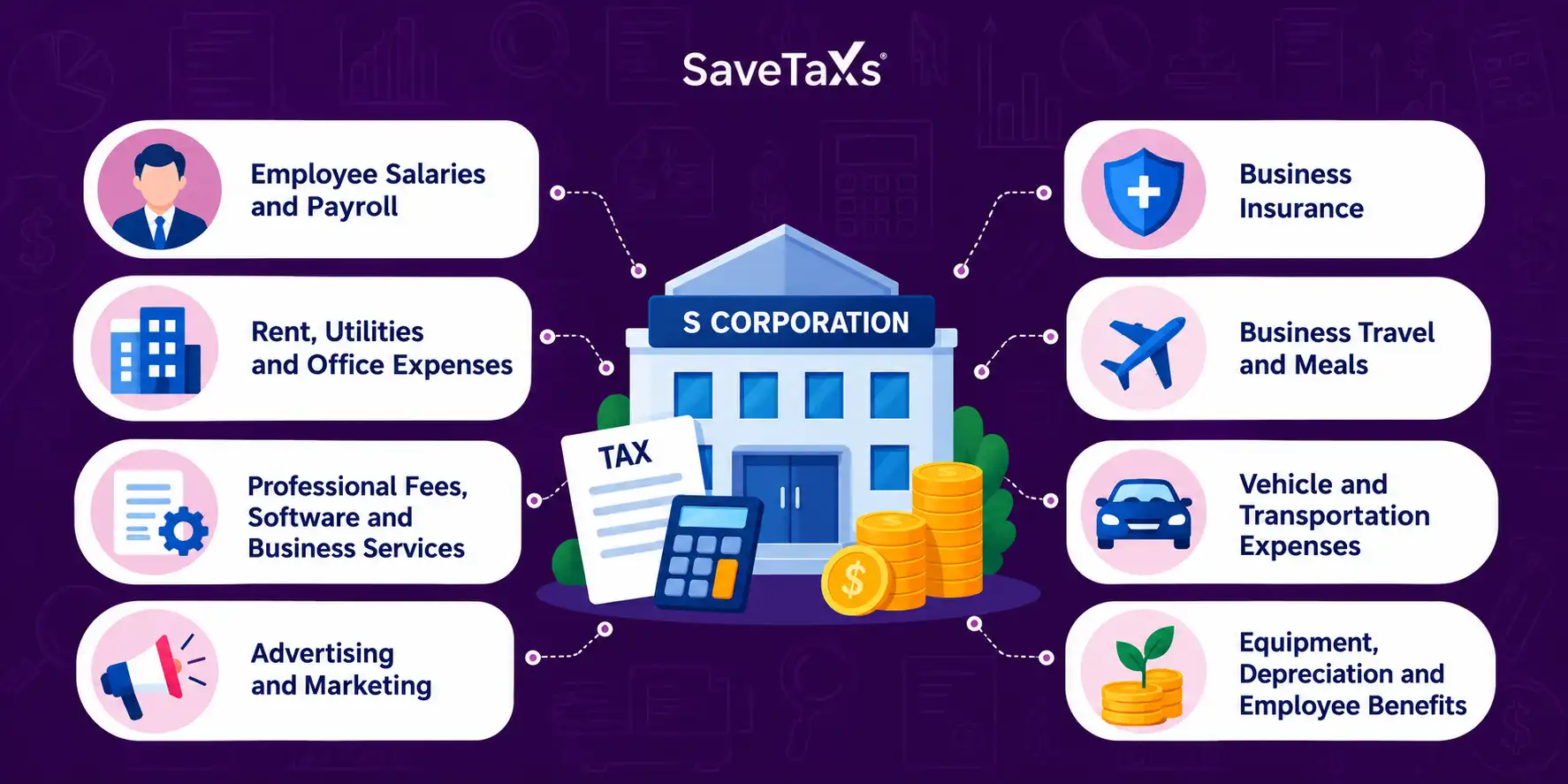
An S corporation may generally deduct reasonable compensation paid to employees for services performed for the business. Employer payroll taxes and qualifying employee benefits may also be deductible.
Owners who work in the business and receive compensation as shareholder-employees must follow the applicable wage and employment tax rules. An S corporation generally must pay reasonable compensation for services before making non-wage distributions to a shareholder-employee.
The corporation should maintain payroll records, employment documentation, Forms W-2 and records of employer payroll tax payments.
For a detailed explanation, see S Corporation Reasonable Compensation.
An S corporation may generally deduct qualifying costs for business premises, such as:
If a property or service is used partly for personal purposes, the corporation generally cannot deduct the personal-use portion as a business expense. Shared expenses must be allocated using a reasonable method supported by records.
Payments to a shareholder for the use of personally owned property should be properly documented and evaluated under the applicable tax rules.
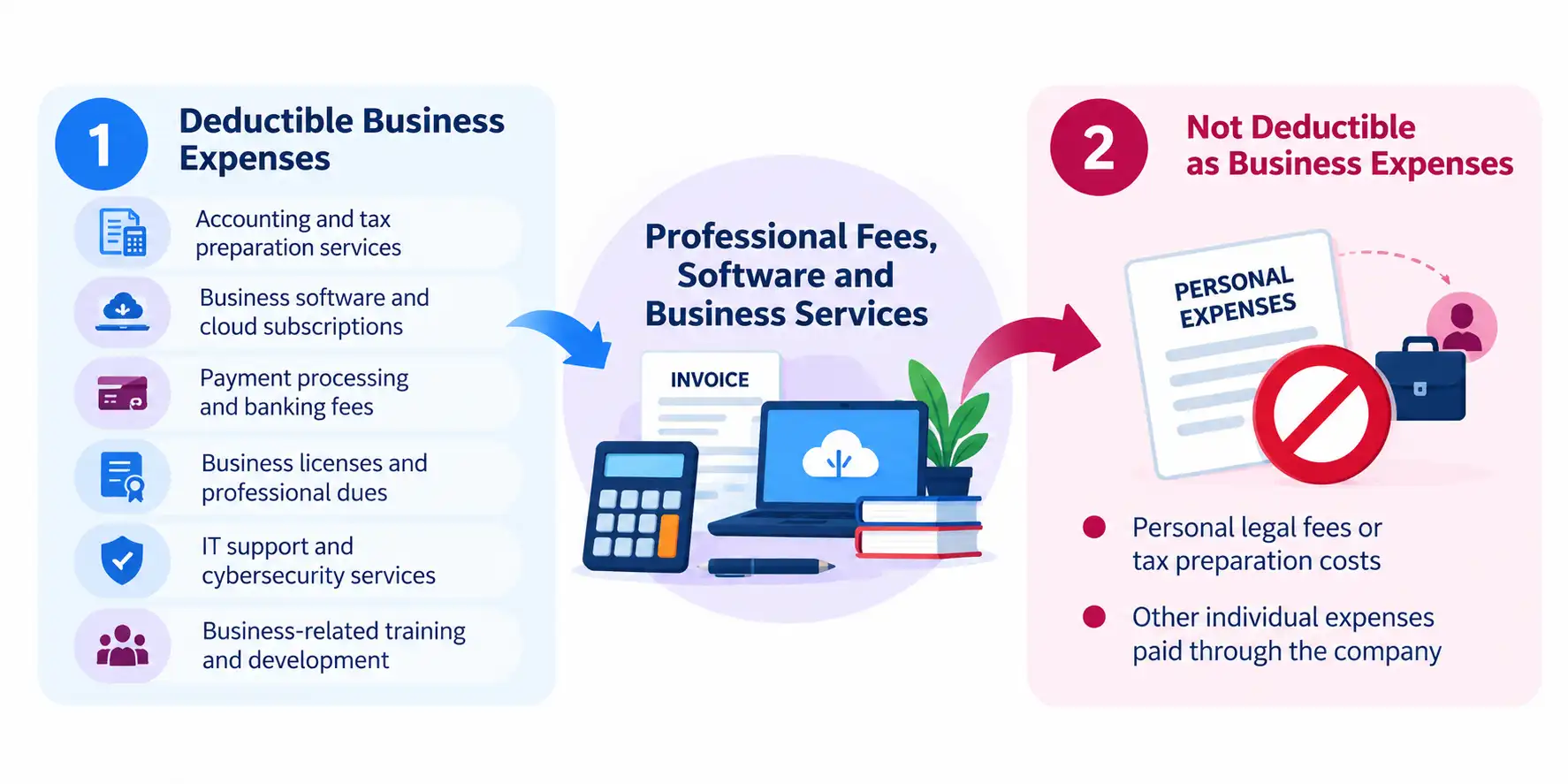
Ordinary and necessary costs of running the business may include fees paid to accountants, attorneys, bookkeepers, consultants and other professional service providers.
Depending on the circumstances, deductible costs may also include:
The expense must have a legitimate business purpose. Personal legal fees, personal tax preparation costs and other individual expenses do not become corporate deductions simply because the owner pays for them through the company.
S corporations can generally deduct qualifying advertising and promotional expenses incurred to attract customers or promote their products and services.
Examples may include online advertising, website hosting, business listing services, promotional materials, eligible agency fees and campaign management.
Keep invoices, contracts, payment records and evidence showing the business purpose of each campaign. Payments to related parties should also be commercially supportable and properly documented.
Premiums for qualifying business insurance may generally be deductible. Common examples include general liability insurance, professional liability coverage, qualifying commercial property insurance and workers’ compensation insurance.
Health insurance for shareholder-employees who own more than 2% of the corporation follows special rules and should not be treated like ordinary employee health benefits. Those rules are discussed separately below.
An S corporation may deduct qualifying travel expenses incurred for business purposes, subject to applicable limitations. Depending on the circumstances, these may include transportation, lodging and other eligible travel costs.
Business meals are generally subject to a 50% deduction limitation, although exceptions may apply under federal law. Entertainment expenses are generally nondeductible, even if business is discussed during the activity.
For example, qualifying lodging for an employee attending an out-of-town business conference may be deductible. Tickets to an entertainment event generally are not deductible merely because the employee discusses business with a client.
The corporation should retain receipts, travel dates, destinations, business purposes and records identifying the people involved. Expenses for a spouse or other companion are generally not deductible unless the applicable employee and business-purpose requirements are met.
See the IRS Instructions for Form 1120-S for the applicable rules.
An S corporation may deduct qualifying business vehicle expenses under the applicable tax method and substantiation requirements. Depending on the circumstances, eligible costs may include business-use mileage, fuel, maintenance, repairs, insurance, registration and depreciation.
The deductible amount depends on business use and the method used. Under the standard mileage method, the corporation generally cannot deduct actual vehicle operating costs separately for the same use, although eligible business parking fees and tolls may be deductible separately. Under the actual-expense method, qualifying vehicle costs are generally allocated between business and personal use. Personal driving, including commuting between home and a regular workplace, generally does not qualify as business transportation.
For a vehicle used for both business and personal purposes, maintain a mileage log or equivalent records showing business miles, total miles, dates and business destinations. Do not claim 100% business use unless the facts support it.
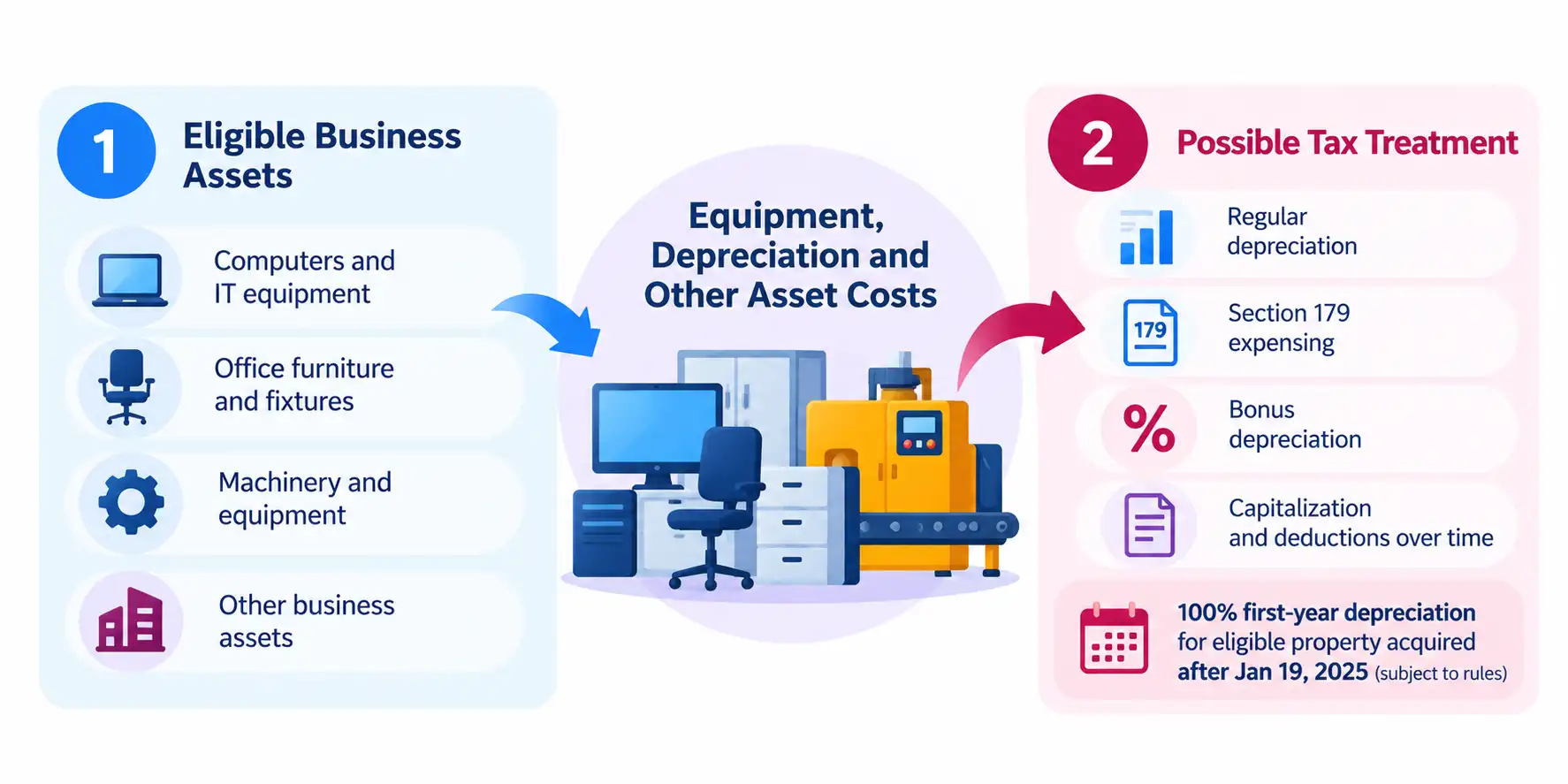
Computers, office furniture, machinery and other business assets may qualify for depreciation or other deductions under applicable rules.
However, the full cost is not always deductible in the year of purchase. Depending on the asset and the corporation’s circumstances, the tax treatment may involve regular depreciation, Section 179 expensing, bonus depreciation or capitalization followed by deductions over time.
Under current federal law, 100% additional first-year depreciation generally applies to eligible qualified property acquired and placed in service after January 19, 2025, unless the taxpayer elects otherwise. Certain property acquired before that date may be subject to different rules. Section 179 expensing has separate eligibility requirements and limits.
Before claiming a large first-year deduction, confirm the asset’s eligibility, acquisition and placed-in-service dates, business-use percentage and any applicable elections.
Qualifying employee benefit expenses and employer contributions to eligible retirement plans may be deductible, subject to plan rules and statutory limits.
Examples may include eligible employer retirement contributions and certain employee benefit costs. Special treatment can apply to shareholder-employees, particularly owners holding more than 2% of the corporation.
The corporation should maintain plan documents, contribution records, payroll records and supporting invoices. Do not assume every benefit available to a regular employee receives identical tax treatment for a shareholder-employee.
Certain costs incurred before a business begins operating may qualify as startup or organizational costs. These costs are subject to special rules and may not be fully deductible immediately.
Under the general federal rules, a corporation may elect to deduct up to $5,000 of qualifying startup costs and up to $5,000 of qualifying organizational costs. Each deduction is reduced dollar for dollar by the amount by which its respective costs exceed $50,000. Remaining eligible costs are generally amortized over 180 months, beginning when the active trade or business begins.
Costs that must be capitalized, such as certain asset acquisition or production costs, follow their own rules. Simply labeling an expense as a startup cost does not make it immediately deductible.
Keep a separate record of pre-opening expenditures and ask a tax professional to classify them before preparing the return.
Not every expense paid from a business bank account qualifies as a tax deduction. Common problem areas include:
An expense should not be claimed solely because the corporation paid it. Its tax treatment depends on the underlying transaction and the relevant law.
Some deductions require additional attention when the shareholder also works for the corporation or uses business assets personally.
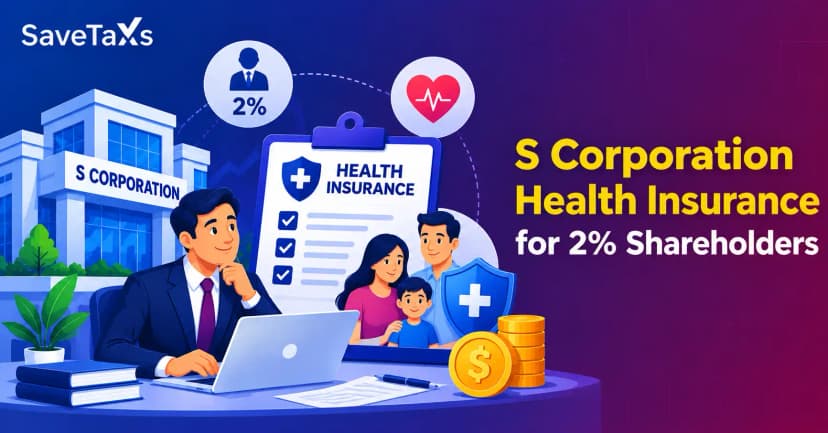
Health insurance premiums for a shareholder-employee who owns more than 2% of an S corporation are subject to special federal tax rules.
Generally, the corporation must pay or reimburse qualifying premiums and report them as wages in Box 1 of the shareholder-employee’s Form W-2. When the applicable requirements are met, the premiums generally are not included in Boxes 3 and 5. The shareholder may be eligible to claim the self-employed health insurance deduction on their individual return, subject to the applicable requirements and limitations.
Eligibility depends on the applicable rules, including restrictions relating to eligibility for subsidized employer health coverage. The deduction is not automatic simply because the corporation paid the premium.
See the IRS guidance on S corporation compensation and medical insurance.
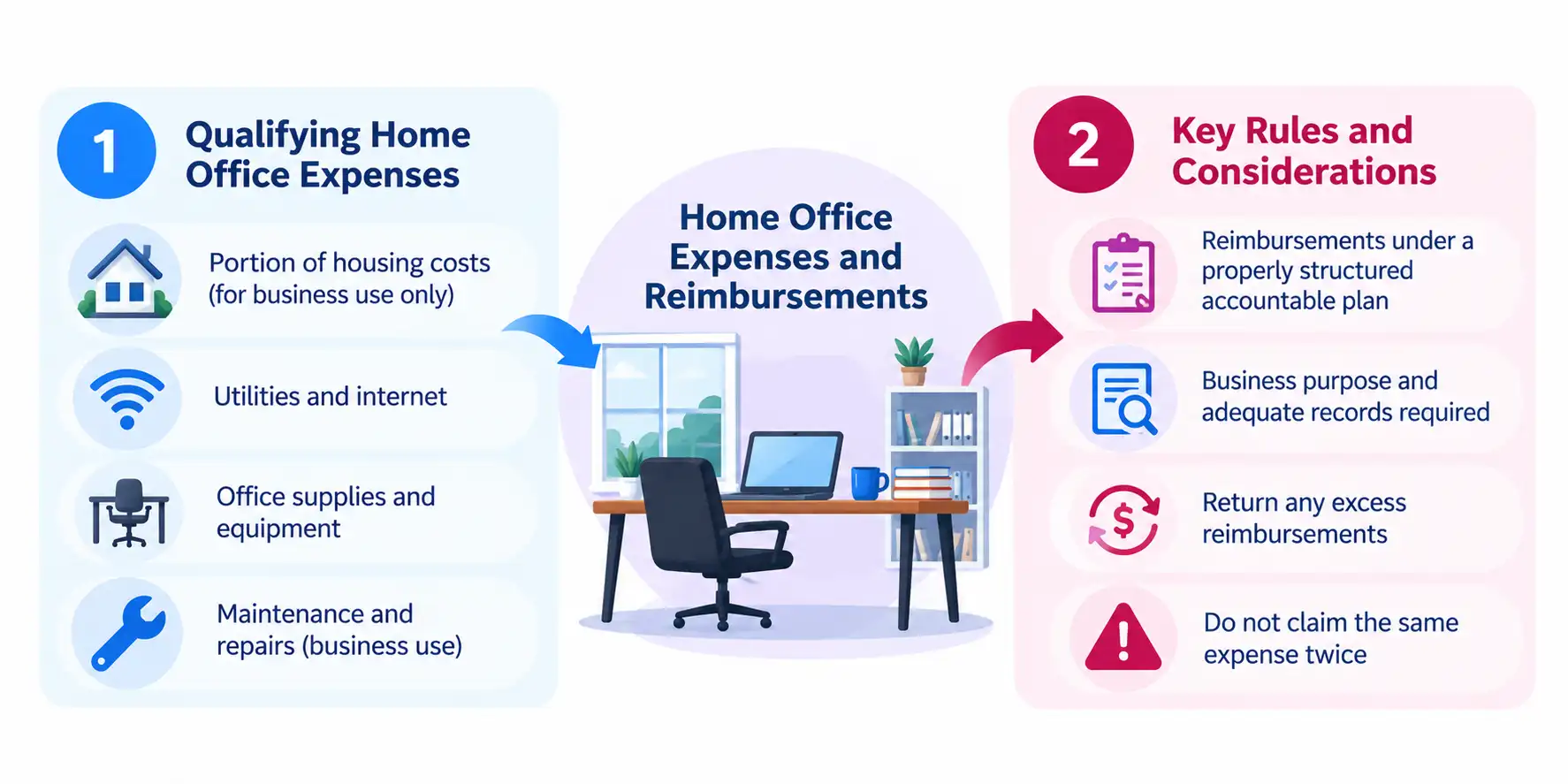
A shareholder who works from home should not automatically deduct a portion of personal housing costs through the S corporation.
The correct treatment depends on the arrangement, business use, records and applicable tax rules. A corporation may reimburse qualifying employee business expenses under a properly structured accountable plan, where the requirements are met.
An accountable plan generally requires a business connection, adequate substantiation and the return of excess reimbursements. Payments that do not satisfy the applicable requirements may be treated differently for tax purposes.
Keep records of the business expense, reimbursement, business purpose and supporting receipts. Do not claim the same expense twice.
Employer contributions to qualifying retirement plans may be deductible, subject to plan terms, contribution limits, compensation requirements and other applicable rules.
For shareholder-employees, compensation reported as wages is important in determining eligible plan compensation. S corporation distributions generally are not treated as earned income for calculating retirement plan contributions.
Owners should confirm that plan contributions are correctly calculated and reported rather than assuming that all company payments to a shareholder qualify.
An S corporation generally reports its income and deductions on Form 1120-S, U.S. Income Tax Return for an S Corporation.
Ordinary business deductions are reported in the appropriate categories on the return. Some items, however, must be reported separately because shareholders may need to apply individual tax rules or limitations.
The corporation generally provides shareholders with Schedule K-1 (Form 1120-S), showing their allocated share of relevant income, deductions, credits and other tax items.
For example, a shareholder may receive a K-1 showing ordinary business income and separately stated deductions. The shareholder's ability to use a particular item may depend on additional rules, so the amount shown on the K-1 does not always mean the full amount is immediately deductible on the individual return.
The corporation should reconcile its books, payroll records, receipts and tax return before issuing shareholder K-1s.
Official references:
An S corporation's loss does not automatically become a currently deductible loss on a shareholder's individual return.
Shareholders may need to consider stock and debt basis limitations, at-risk rules, passive activity limitations and other applicable restrictions. The order and application of these rules matter.
This article focuses on the corporation's expenses and deductions. For a detailed explanation of when shareholders can use losses, see the planned S Corporation Shareholder Basis and Loss Limitations guide.
Get professional guidance on S Corp expenses, tax deductions and filing requirements.
Good documentation helps establish that an expense was incurred for business purposes and supports the amount claimed.
S corporation owners should follow these practices:
Tax rules can change, especially for depreciation, expensing elections and other deductions with annual limits. Confirm the rules that apply to the relevant tax year before filing.
Understanding S corporation tax deductions helps business owners identify eligible expenses, maintain reliable records and prepare accurate tax returns. The key is to distinguish ordinary business costs from personal expenses, capital expenditures and items subject to special limitations.
For help with S corporation tax filing and compliance, Savetaxs can help business owners understand their filing responsibilities and organize their tax requirements.
This article is for general informational purposes only and does not constitute tax, legal, financial, or investment advice. Laws, regulations, rates, and procedures may change over time and may vary based on individual circumstances.
While SaveTaxs makes reasonable efforts to keep the information accurate and up to date, readers should verify applicable rules with official authorities or consult a qualified professional before making decisions based on this information.
Vipul Jain is the Co-Founder of SaveTaxs and a tax expert with experience in Indian and NRI taxation. He advises individuals, NRIs, and businesses on tax filing, tax planning, capital gains, DTAA, and compliance matters. He focuses on making complex tax concepts simple and helping taxpayers make informed, compliant decisions. See Full Bio

Want to read more? Explore Blogs