US Tax Filing and Compliance
How to Report Multiple 1099 Forms on a U.S. Tax Return: A Guide for NRIsHow to Report Multiple 1099 Forms on a U.S. Tax Return: A Guide for NRIs
Written by Hatim Dudhiyawala

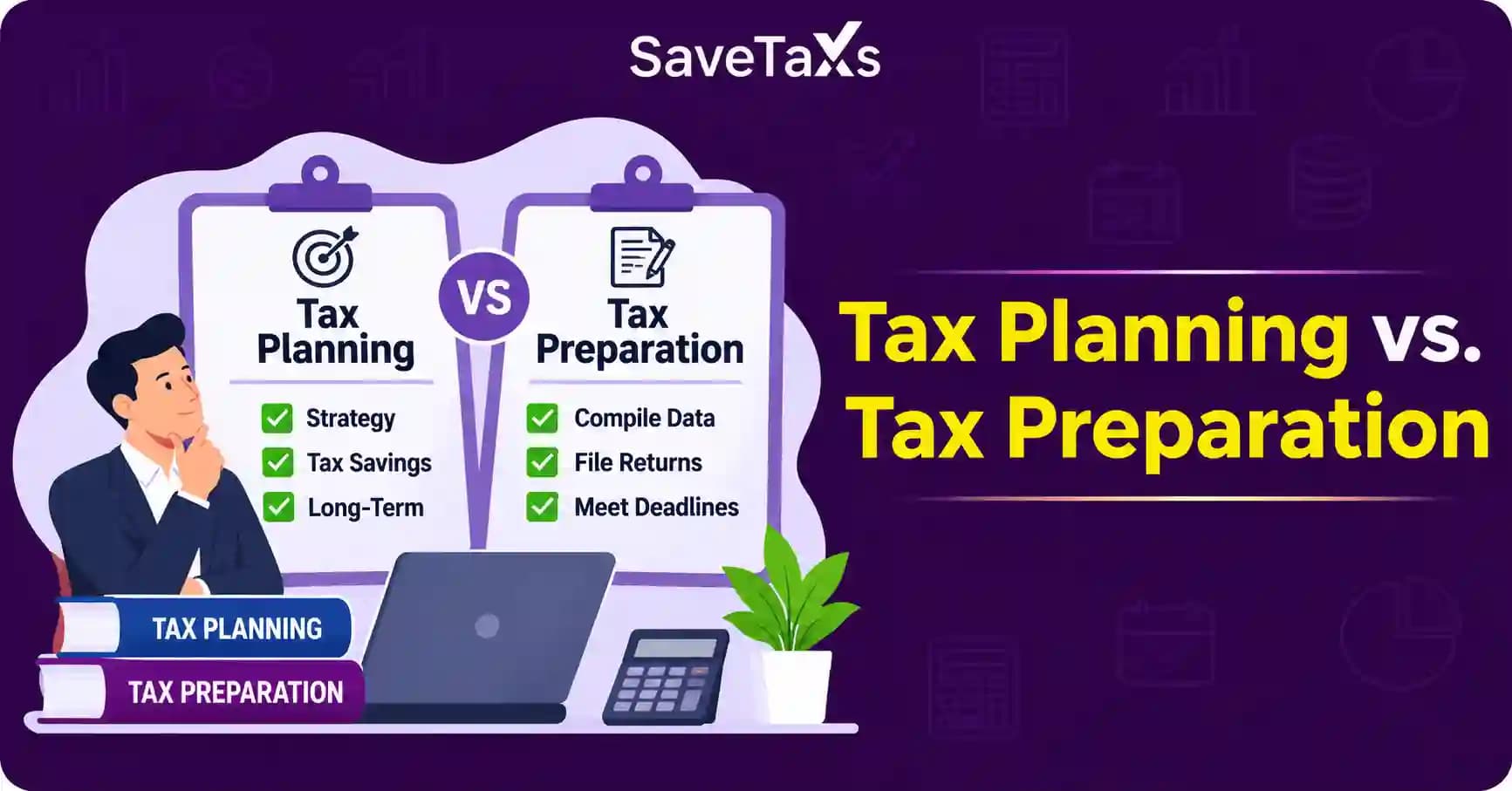
Tax planning and tax preparation are two important parts of managing your taxes, but they serve different purposes. Tax planning helps you understand the tax impact of financial decisions before they happen, while tax preparation involves calculating, reporting and filing your taxes after the tax year ends.
Many taxpayers use these terms interchangeably. However, preparing a tax return does not necessarily mean that someone has reviewed your future tax position or helped you make tax-efficient financial decisions.
Understanding the difference can help you decide when you need professional tax advice, when you need help filing a return, and when both services may be useful. This is particularly important for NRIs and individuals with income or financial interests in more than one country.
Tax planning is the process of reviewing your financial situation and evaluating how your decisions may affect your tax liability. It takes place before or during a tax year so that you can understand the tax consequences of financial activities before taking action.
The purpose is not simply to reduce taxes. It is to make informed financial decisions while complying with applicable tax laws.
A tax professional may review your expected income, investments, employment arrangements, residency position and other financial circumstances to identify potential tax implications.
Depending on your financial situation, tax planning may involve:
The work involved depends on the taxpayer's income, financial decisions and tax obligations. Not every taxpayer needs every type of planning.
Example: An NRI living in the US is considering selling investments held in a US brokerage account. Before completing the sale, the individual consults a tax professional to understand the possible tax consequences and evaluate the available options. This is tax planning because the review takes place before the financial transaction.
Understand the tax impact of your financial decisions before they happen.
Tax preparation is the process of preparing the tax returns required by the relevant tax authorities using the taxpayer's completed financial information for a particular tax year.
Unlike tax planning, which looks ahead, tax preparation primarily deals with transactions and income that have already occurred.
A tax preparer reviews the information provided by the taxpayer, determines how it should be reported, calculates the applicable tax liability and prepares the required returns.
Tax preparation generally involves:
For example, a US individual may need a federal income tax return and one or more state returns, depending on their circumstances.
For NRIs, the preparation process may also involve reviewing relevant cross-border income and reporting obligations. The applicable forms and disclosures depend on the individual's tax status and financial activities.
Example: An NRI working in the US provides their salary statements, investment records and other relevant financial information after the tax year ends. A tax professional reviews the records, calculates the reportable income and prepares the applicable return. This is tax preparation.
The main difference is the purpose and timing of each service. Tax planning helps evaluate financial decisions before they happen, while tax preparation focuses on accurately reporting completed financial activities.
| Comparison | Tax Planning | Tax Preparation |
|---|---|---|
| Main purpose | Evaluate the tax impact of future financial decisions | Prepare and report completed-year financial information |
| Timing | Before and during the tax year | Usually after the tax year ends |
| Primary focus | Future tax exposure and available options | Income reporting and tax return accuracy |
| Activities | Tax projections, financial reviews and evaluating tax implications | Reviewing records, calculating tax and preparing returns |
| Information used | Expected income, proposed transactions and financial circumstances | Actual income, completed transactions and supporting records |
| Output | Tax projections and planning recommendations | Completed tax returns and supporting schedules |
| Main benefit | Helps taxpayers make informed decisions | Helps taxpayers meet applicable filing obligations |
Tax planning is most useful when there is still time to evaluate a financial decision. For example, a taxpayer considering a major investment transaction may want to understand its possible tax consequences before proceeding.
Tax preparation generally happens after the tax year closes, when the taxpayer's actual income and financial transactions are available for reporting.
Tax planning focuses on what a taxpayer may do and how those decisions could affect their taxes.
Tax preparation focuses on what the taxpayer actually earned, paid, received or sold during the tax year and how those activities should be reported.
Tax planning provides an understanding of potential tax consequences and possible actions to consider. Tax preparation produces the required tax returns based on the taxpayer's completed financial activities.
Neither service guarantees a particular tax outcome. Both depend on the taxpayer's circumstances and the tax laws that apply.
You may need tax planning when a financial decision could materially affect your tax position and you still have an opportunity to evaluate its consequences.
Some common situations include:
A new job, salary increase, business income or additional income source may change your expected tax liability. Reviewing the potential impact in advance can help you make informed decisions.
Selling an investment, purchasing property or receiving substantial compensation may have tax consequences. Reviewing those consequences before completing the transaction can be useful.
Moving between countries can affect tax residency, income reporting and filing obligations. Tax planning can help identify issues that need attention before and after the move.
If you earn income in one country while maintaining investments or other financial interests in another, you may need to consider the tax rules of both jurisdictions.
The appropriate planning depends on your actual tax residency, income sources and applicable laws.
You may need tax preparation when you have a tax return filing obligation and need to report your income, deductions, credits and other relevant financial information accurately.
Common situations include:
The exact filing requirements depend on the applicable tax laws, income thresholds, residency status and individual circumstances.
Tax preparation may also help identify missing information, reporting inconsistencies or possible issues that require further review. However, it does not automatically provide a complete strategy for future tax years.
NRIs may need both services when their income, investments or financial activities create tax obligations in more than one country.
Tax planning helps them understand potential tax consequences before making financial decisions. Tax preparation helps report completed transactions and income in the required returns.
Consider the following situations.
An NRI working in the US may receive a salary in the US while earning rental income from property in India.
Tax planning can help evaluate the implications of these income sources and identify relevant cross-border considerations. Tax preparation then involves reporting income as required under the applicable tax rules.
A US citizen or green card holder living in India may have US tax filing obligations even while residing outside the US.
Tax planning can help evaluate the potential tax consequences of foreign income and financial decisions. Tax preparation involves reporting the relevant income and information under applicable US filing requirements.
An NRI planning to return to India may need to review the tax implications of the move, including the timing of income and changes in tax residency.
Planning can help identify issues before relocation. After the relevant tax year ends, tax preparation helps report the income and transactions in the required returns.
These examples do not mean that every NRI automatically needs to file returns in both countries. Filing obligations must be evaluated separately based on the individual's circumstances.
Yes. Tax planning and tax preparation can be part of a connected tax management process.
Although they have different purposes, information from one service can support the other.
A typical process may look like this:
Tax projections are estimates based on the information and assumptions available at the time. They are not substitutes for completed tax returns.
Combining planning and preparation can help taxpayers maintain continuity between their financial decisions and tax reporting. However, taxpayers should confirm whether their tax preparer also provides advisory services, as tax preparation alone does not necessarily include year-round planning.
Before hiring a tax professional, understand what services you actually need. A professional who prepares returns may not necessarily provide ongoing tax planning or cross-border tax advice.
Consider the following points:
For US federal tax returns, paid preparers generally need a valid Preparer Tax Identification Number (PTIN). The IRS also advises taxpayers to review their returns before signing and remain responsible for the accuracy of the information reported.
If you have India–US financial connections, it is also important to check whether the professional understands the relevant cross-border tax considerations.
Get support with accurate US tax return preparation and filing.
Tax planning and tax preparation serve different but connected purposes. Tax planning helps you evaluate the tax consequences of financial decisions before or during the year, while tax preparation helps you report completed financial activities and meet applicable filing requirements.
Choosing the right service depends on your financial circumstances. If you are making significant financial decisions, earning income across countries or changing your tax residency, planning may be useful before the tax year ends. If you have a filing obligation, you need accurate tax return preparation based on your completed financial records.
For NRIs and individuals with India–US financial connections, understanding both services can help avoid treating annual tax filing as a substitute for year-round tax advice.
Savetaxs helps individuals and NRIs with US tax planning and tax filing requirements. Whether you need to evaluate the tax impact of a financial decision or prepare your tax return, the right support depends on your income, residency and reporting obligations.
This article is for general informational purposes only and does not constitute tax, legal, financial, or investment advice. Laws, regulations, rates, and procedures may change over time and may vary based on individual circumstances.
While SaveTaxs makes reasonable efforts to keep the information accurate and up to date, readers should verify applicable rules with official authorities or consult a qualified professional before making decisions based on this information.
Shubham Jain is the Founder of SaveTaxs and has extensive experience in Indian and NRI taxation. He advises individuals, NRIs, and businesses on tax filing, tax planning, capital gains, DTAA benefits, fund repatriation, and compliance matters. He regularly writes about taxation and related financial topics. His focus is on making complex tax concepts easy to understand. Through his articles, he helps taxpayers stay informed, avoid common mistakes, and stay compliant with Indian tax laws. See Full Bio

Want to read more? Explore Blogs