NRI Income Tax Compliance
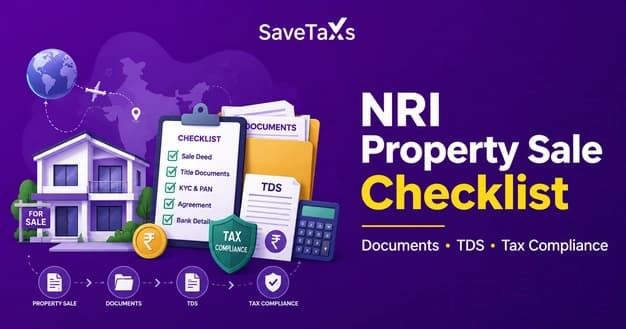
NRI Property Sale Checklist: Documents, TDS & Tax ComplianceNRI Property Sale Checklist: Documents, TDS & Tax Compliance
Written by Shubham Jain
_1778676852877.webp&w=3840&q=75)
Wrong ITR filing occurs when the taxpayer makes an error, skips information, or misreports details in the ITR. Some common reasons behind a wrong ITR include selecting the wrong ITR form, misreporting or underreporting income, providing wrong bank account details, etc. The most common ITR filing error is choosing the wrong ITR form. There are various types of ITR forms designed for various categories of taxpayers. ITR-2 is for individuals/HUFs not receiving income from a business/profession, while ITR-3 is for individuals/HUFs receiving income from a business or profession.
Choosing the incorrect ITR form can lead to wrong ITR filing, refund delays, an increase in scrutiny, defective notice under Section 139(9), and other consequences. Apart from the consequences, there are several penalties for wrong ITR filing. It includes a penalty of 50% of the underreported income in case of underreporting income. However, don't panic, the Income Tax Act offers various mechanisms to rectify the errors. If you file a wrong ITR, you can file a revised return, file an updated return (ITR-U), and even respond to a defective notice. Keep reading further to know everything about what happens if you file the wrong ITR.
Wrong ITR filing refers to a situation when the taxpayer makes errors or skips important information, or misreports details while submitting the income tax returns. Some of the common errors that cause wrong ITR filing include:
Choosing the Wrong ITR Form: Choosing the wrong ITR form can lead to the return being considered invalid or receiving a defective notice from the IT department. You must select the relevant ITR form, as there are different forms for various income types, filing statuses, and taxpayer categories.
Misreporting Income or Deductions: Another common mistake is misreporting income or deductions in the ITR. It includes providing inaccurate, wrong, or hiding information about the income sources, deductions, or expenses. Ensure to report all your income or eligible deductions accurately.
Not Reporting Certain Sources of Income: Underreporting your income is another reason for wrong ITR filing. This could happen if you fail to report all your income from various sources. Make sure to report all your income, including salary, capital gains from stocks, or freelance or side income. Include all income regardless of whether tax is already deducted.
Submitting Incorrect Bank Account Details: Submitting wrong bank account details in an ITR is a validation error. It can cause delays or failed tax refunds as the department cannot credit funds to a wrong or closed bank account. This could include providing the incorrect IFSC code, account number, or inactive account. Provide the correct bank account details and re-check them before submitting.
Mistakes in Calculating Tax or TDS Details: Errors in calculating the total income, applying the wrong tax slab, miscalculating tax, or discrepancies in TDS with the ITR are also wrong ITR filing errors. Always make sure to cross-check the ITR against Form 26AS to avoid providing mismatched information.
These common mistakes can attract several issues, including penalties or delays in processing refunds. Now, there are different ITR forms applicable to various categories of taxpayers. Let's see the types of ITR form and their applicability based on the taxpayer's category.
File NRI taxes without any issue and ensure compliance with ease.
There are different types of ITR forms designed for various categories of taxpayers. As per the Income Tax Department, you must choose the correct form to ensure compliance and avoid any issues. The table below lists the most commonly used ITR forms based on the category of taxpayers:
| ITR Form | Applicable To |
|---|---|
| ITR-1 | ITR-1 applies to resident individuals having income up to ₹50 lakh from salary/pension, one house property, and other sources (excluding specified incomes). |
| ITR-2 | Individuals (Indian residents and NRIs) and HUFs not receiving income from a business or profession. |
| ITR-3 | Individuals (Indian residents and NRIs) and HUFs receiving income from a business or profession |
| ITR-4 | ITR-4 applies to resident individuals, HUFs, and eligible firms opting for presumptive taxation under Sections 44AD, 44ADA, or 44AE. |
You must select the correct and relevant form, as choosing the wrong form can lead to incorrect ITR filing. In case you chose the wrong form, rectify it promptly to avoid any complications or penalties.
Since choosing the incorrect ITR form is one of the most common ITR mistakes, it can attract several consequences. Let's now know the consequences you might face if you choose the wrong ITR form.
Filing the wrong ITR can attract several consequences, which are as follows:
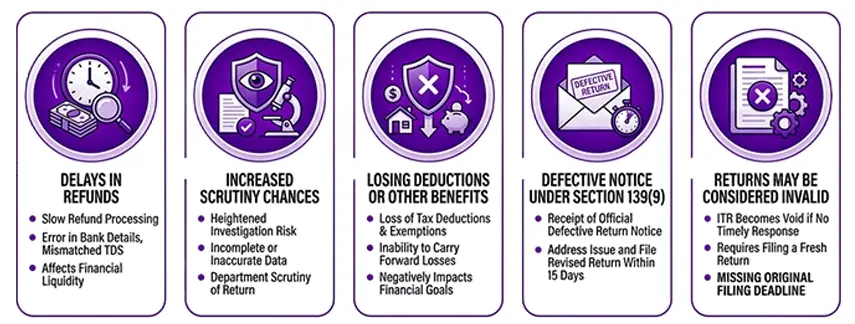
Delays in Refunds: You may face delays with the refund processing due to errors in the ITR filing. It occurs mainly when there is an error in the bank details or when mismatched TDS information is provided. This can affect your financial liquidity.
Increased Scrutiny Chances: The Income Tax Department may scrutinize your return if they find the information is incomplete or inaccurate. Filing the wrong ITR may increase the chances of your return being scrutinized.
Losing Deductions or Other Benefits: Wrong ITR filing can lead to losing the eligibility to claim tax deductions, exemptions, or the ability to carry forward losses. This can affect your financial goals and tax savings negatively.
Defective Notice Under Section 139(9): The Income Tax Department may issue a defective return notice under Section 139(9) for filing the wrong ITR form. You must file a revised return by addressing the issue within 15 days of receiving the notice.
Returns May be Considered Invalid: In case you received a defective return notice, you must respond within the specified time frame, or else your ITR will be considered invalid. You may need to file a fresh return, which may lead to missing the original filing deadline.
These were some of the consequences you may face due to wrong ITR filing. However, there are some penalties also for filing the wrong ITR. Let's know the penalties you may have to pay
Filing the wrong ITR can attract significant penalties, varying based on the nature and severity of the error. The table below lists the main penalties that Indian residents and NRIs must stay aware of:
| Reason | Penalty |
|---|---|
| Underreporting Income | 50% of the underreported income |
| Misreporting Income | 200% of the misreported income |
| Late Filing Fees | Under Section 234F, up to ₹5,000 for returns filed by December 31, and up to ₹10,000 for returns filed after December 31. |
For example, a taxpayer fails to report Rs. 10 lakh of income. He will attract a penalty ranging from Rs. 5 lakh to Rs. 20 lakh based on the severity of the error. In case you have filed a wrong ITR, do not panic. Let's know how to rectify a wrongly filed ITR.
You might end up making errors even after paying 100% attention, but don't worry. The Income Tax Act offers several mechanisms through which you can correct the errors. Follow the steps below to rectify a wrongly filed ITR:
Instead of panicking after filing a revised return, follow the aforementioned steps to minimise penalties and ensure compliance.
Contact Savetaxs and get the best tax solutions from the tax experts
Filing a wrong ITR can lead to several complications. It may increase scrutiny, attract significant penalties, or cause delays in refunds. However, taking corrective actions on time can help resolve these issues. It includes filing a revised or updated return and double-checking the information before submitting it. You must stay informed of the correct ITR form, tax regulations, and other legal requirements.
Moreover, to ensure you don't face any penalties or consequences, it's essential to seek guidance from an expert. Talking about experts, there is no better option than Savetaxs. At Savetaxs, we are a team of experts who can help you file an accurate NRI ITR without any errors and ensure compliance with the tax laws. Contact us right away and file your ITR with confidence and peace of mind.
This article is for general informational purposes only and does not constitute tax, legal, financial, or investment advice. Laws, regulations, rates, and procedures may change over time and may vary based on individual circumstances.
While SaveTaxs makes reasonable efforts to keep the information accurate and up to date, readers should verify applicable rules with official authorities or consult a qualified professional before making decisions based on this information.
Vipul Jain is the Co-Founder of SaveTaxs and a tax expert with experience in Indian and NRI taxation. He advises individuals, NRIs, and businesses on tax filing, tax planning, capital gains, DTAA, and compliance matters. He focuses on making complex tax concepts simple and helping taxpayers make informed, compliant decisions. See Full Bio
Want to read more? Explore Blogs