NRI Income Tax Compliance
Income Tax Forms Renamed in 2026: Old vs New Form NumbersIncome Tax Forms Renamed in 2026: Old vs New Form Numbers
Written by Vipul Jain
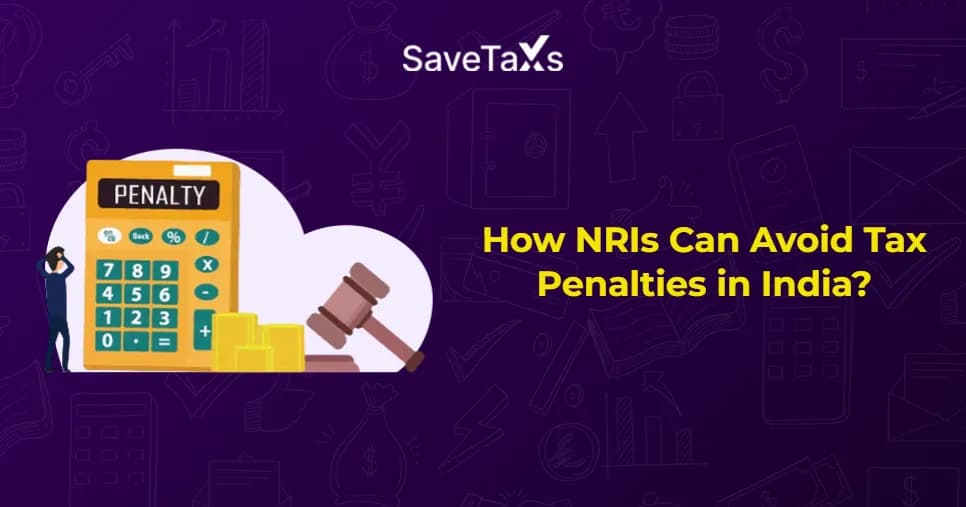
Every year, thousands of NRIs in India receive tax notices from the Income Tax Department, not because they deliberately evaded taxes, but because they did not properly understand the tax regulations imposed on them. This further results in a penalty under section 270A of the Income-tax Act, 1961, which can amount to 200% of the evaded tax.
There are so many other reasons why they face tax penalties in India. It includes not filing ITR despite having Indian income, mentioning the wrong residential status, non-disclosure of foreign assets, and so on. Well, NRIs can avoid tax penalties in India by determining their residential status every financial year, filing the correct ITR form, disclosing their foreign income, and more.
Being an NRI, are you also facing the same situation? Then you are on the right page. This blog provides you with complete information about the common reasons NRIs receive tax penalties and how they can avoid them. So read on and clear all your doubts.
The table below shows the NRI tax penalty in India and its triggers.
| Section | Trigger | Penalty | Waivable |
|---|---|---|---|
| Section 234F | Late Income Tax Return Filing | up to INR 5,000 | No |
| Section 234B | Not paying advance tax | 1% per month on unpaid tax | No |
| Section 234C | Advance tax installment shortfall | 1% per month on shortfall | No |
| Section 270A | Underreporting of income | 50% of tax on underreported income | Limited |
| Section 270A | Concealment or Misreporting | 200% of tax on misreported income | No |
| FEMA Violation | Repatriation breach, wrong account | Up to 3x the involved amount | No |
| Black Money Act 2015 | Non-disclosure of foreign assets | Significant penalties may apply under applicable provisions | No |
This is a quick overview of some of the key tax penalties NRIs face in India, along with the reasons that trigger them. Moving ahead, let's look at the common reasons NRIs receive these tax penalties in detail.
Connect with Savetaxs to fulfill your NRI tax obligations on time, hassle-free.
Here are some of the common reasons why NRIs receive tax penalties in India:
Not filing an ITR despite Indian income is the most frequent thing that triggers a penalty. Considering this, many NRIs assume that the foreign income exemption means they are not liable to pay tax in India. However, it is where they are wrong. If you have an income source in India, such as capital gains on mutual funds or stocks, rental income from Indian property, or professional fees for India services, and the income from it is more than INR 2,50,000 in a financial year, then you must file an ITR in India.
Even if your income is below that threshold and you have a TDS deduction, not filing the ITR means not getting the refunds and DTAA benefits. Additionally, whether or not you filed ITR, the Annual Information Statement (AIS) captures every mutual fund redemption, TDS deduction, and even NRO interest credit. So, with AIS matching, the tax officials identify non-filers and, under sections 142(1) and 142, send notices.
Under section 6 of the Income Tax Act, 1961, residency status in India is determined according to your physical presence in the country in a financial year and residency status over the past 10 years. This changes every year. Considering this, after returning to India, if your residential status from NRI changes to a resident not ordinary resident (RNOR) and then to a resident, and you do not update it in your ITR, it can lead to excluding your global income from Indian taxes. This mistake in the eyes of the tax department is viewed as misreporting, which further leads to a hefty 200% penalty on the tax amount not reported.
Once you qualify as a resident or even an RNOR in India, you need to disclose all your foreign financial accounts, foreign property, investments, and pension funds in Schedule FA (Foreign Assets) of your ITR. However, foreign asset disclosure requirements under Schedule FA depend on the taxpayer’s residential status and applicable reporting obligations. In case you fail to do so, under the Black Money Act 2015, you face an INR 10,00,000 penalty per undisclosed foreign asset per year. This obligation is different from your tax liability. During your RNOR status, it does not eliminate the disclosure requirement of your foreign assets and income in Schedule FA.
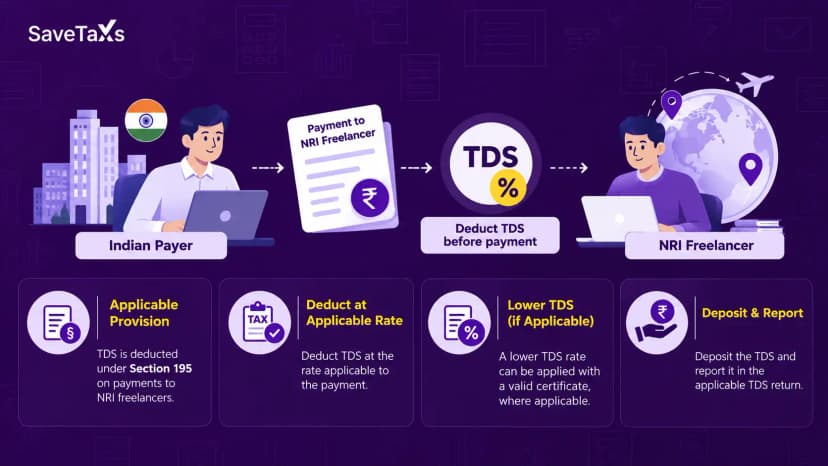
In India, NRIs often face Tax Deducted at Source (TDS) from various sources. It includes 30% on NRO account interest, 12.5% to 30% on mutual fund sales, 20% on dividends, and TDS on rental income generally deducted under Section 195 at applicable rates along with surcharge and cess. Considering this, if there is a mismatch in the income you report in your ITR and TDS information from your AIS and Form 26AS, then under section 143(1)(a), you receive ITR notices. Under sections 234B and 234C, ignoring these notices leads to demand orders and paying additional interest charges.
In India, if your total tax liability after accounting for TDS is more than INR 10,000, you are liable to pay advance tax in four parts. These are:
If you miss any of these payments, under sections 234B and 234C, you will face a non-waivable interest of 1% per month. Common income sources that require advance tax payments from NRIs include rental income, capital gains, and professional fees.
These are some of the common reasons why NRIs face tax penalties in India. Moving further, let's know how the NRIs can avoid tax penalties in India.
NRIs can avoid tax penalties in India by considering the following things:
Determine your residency status for each financial year without depending on the classification of last year. If you are transitioning from NRI to RNOR to ROR, clearly identify the year for each change and ensure your ITR is accordingly updated. If you are not sure about your residential status, it is advisable to take the help of a Chartered Accountant (CA) specializing in NRI taxation.
For NRIs without an audit requirement, the ITR due date is July 31 of the assessment year. File your ITR before this date without a tax exception. Additionally, according to your residential status and income source, fill out the correct form.
Further, filing ITR-1 as an NRI results in a defective return that the income tax department flags for correction. On the other hand, for reporting business income, instead of the ITR-3 form, you file the ITR-2 form, under section 270A, which could lead to penalties.
Before preparing your ITR, from the income tax e-filing portal, download your annual information statement and Form 26AS. Check each entry, including interest credits, TDS deductions, property transactions, dividend receipts, and mutual fund redemptions, against your investment records and bank statements. It is because any difference between your AIS data and your filed ITR can lead to an audit. It is best to address these mismatches before rather than waiting for a notice.
If you are classified as an RNOR or ROR in the Schedule FA, you need to mention all your foreign assets. However, Schedule FA disclosure requirements generally apply to Resident and Ordinarily Resident (ROR) taxpayers, though returning NRIs should carefully review their reporting obligations. This includes your foreign brokerage account, bank account, foreign insurance policy, pension, and foreign property. Additionally, you also need to provide information such as the name of the institution, account number, country, peak balance for the year, and your income earned. There is no minimum value to report your foreign assets and income in Schedule FA. Considering this, regardless of how much it is worth, you need to disclose every foreign income and asset.
By considering factors such as rental income, capital gains from planned redemptions, and NRO interest, you can determine your tax obligation for the year. From the calculated amount, subtract any expected TDS credits. In this scenario, if your net tax liability is more than INR 10,000, you need to pay advance tax in the stated four installments. Additionally, keep all your payment receipts by your side as you need them when filing your ITR.
If your country of residence has a Double Taxation Avoidance Agreement (DTAA) with India, to avoid paying double taxes, you can claim DTAA benefits. For this, you need to submit a tax residency certificate (TRC) issued by the tax authority of the country and Form 10F to your AMC, bank, and tenant at the start of each financial year. Additionally, fill Form 67 in the ITR before the due date to claim the corresponding foreign tax credit in your residence country.
Implementing these strategies can help NRIs in avoiding tax penalties in India. Moving forward, let's know the NRI tax compliance calendar.
The table below shows the NRI tax compliance calendar for the Financial Year (FY) 2025-26:
| Deadline | Tax Obligation |
|---|---|
| June 15, 2025 | First advance tax installment - 15% of estimated liability |
| September 15, 2025 | Second advance tax installment - 45% cumulative |
| December 15, 2025 | Third advance tax installment - 75% cumulative |
| March 15, 2026 | Final advance tax installment - 100% |
| July 31, 2026 | ITR filing due date - non-audit cases; Form 67 deadline |
| October 31, 2026 | ITR filing due date- audit cases |
Moving ahead, now let's look at the documents NRIs should maintain for tax compliance in India.
Here is the list of documents NRIs should maintain for tax compliance in India:
Further, keep the above-mentioned documents for at least six years by your side.
With Savetaxs, get simple, expert-led consultancy for NRI investment in India.
Lastly, the NRI ITR filing penalty in India is avoidable as they are the predictable result of specific errors. It includes wrong residency classification, missed ITR filings, advance tax defaults, AIS mismatches, and a foreign asset non-disclosure account. NRIs can simply avoid these penalties under the Income Tax Act by determining their residency status correctly every year, disclosing their foreign assets in Schedule FA, before the due date, filing the right ITR form, and paying advance tax when required.
Furthermore, if you are looking for professional guidance to avoid NRI tax penalties in India, connect with Savetaxs. The tax consultants in our team have expertise in NRI taxation. They help you easily handle the complexities of tax filing and optimize your financial situation. We are 24/7 available to assist you, so you can contact us anytime.
This article is for general informational purposes only and does not constitute tax, legal, financial, or investment advice. Laws, regulations, rates, and procedures may change over time and may vary based on individual circumstances.
While SaveTaxs makes reasonable efforts to keep the information accurate and up to date, readers should verify applicable rules with official authorities or consult a qualified professional before making decisions based on this information.
Vipul Jain is the Co-Founder of SaveTaxs and a tax expert with experience in Indian and NRI taxation. He advises individuals, NRIs, and businesses on tax filing, tax planning, capital gains, DTAA, and compliance matters. He focuses on making complex tax concepts simple and helping taxpayers make informed, compliant decisions. See Full Bio
Want to read more? Explore Blogs