US Tax Filing and Compliance
How to Report Multiple 1099 Forms on a U.S. Tax Return: A Guide for NRIsHow to Report Multiple 1099 Forms on a U.S. Tax Return: A Guide for NRIs
Written by Hatim Dudhiyawala

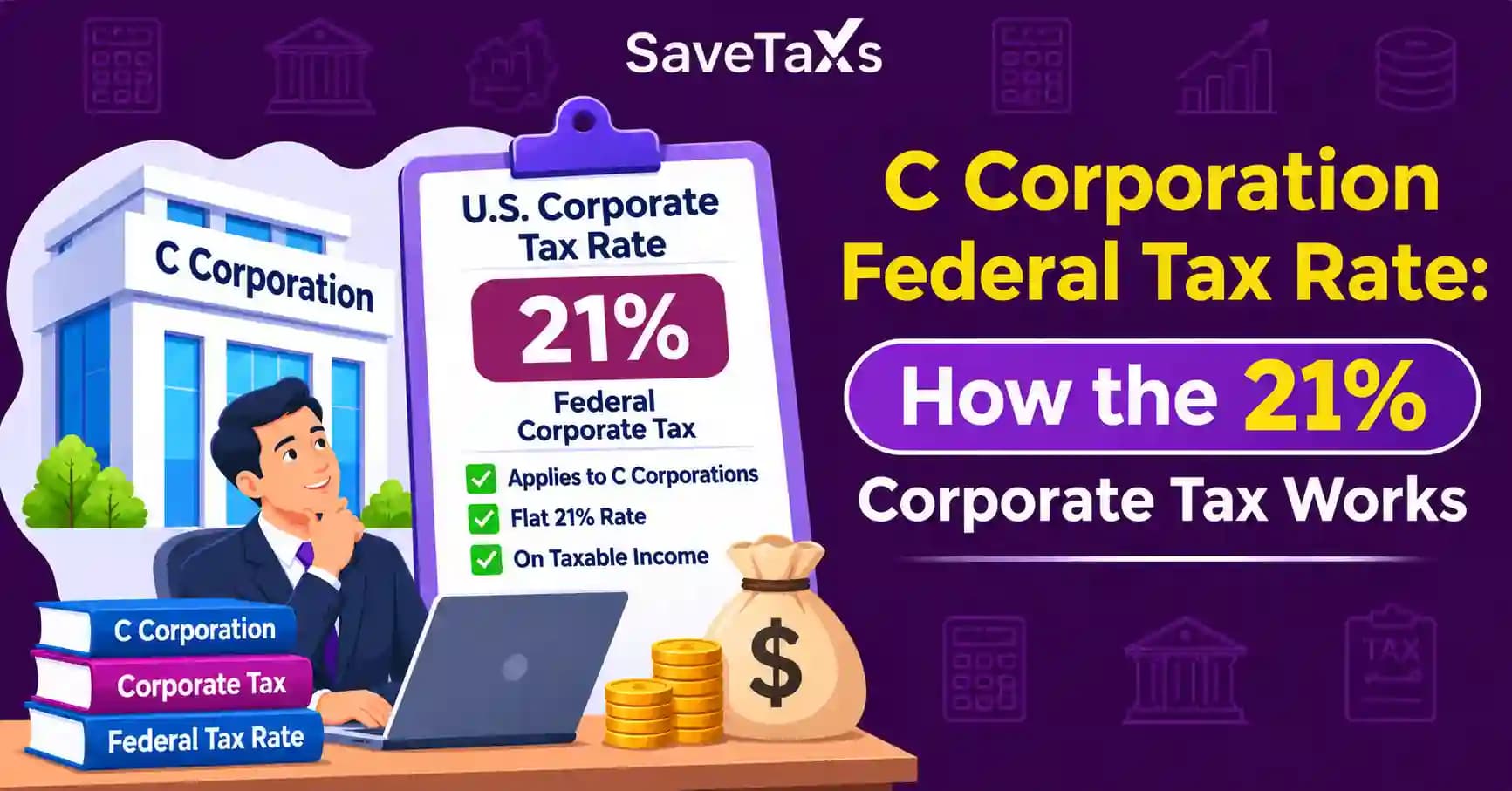
If you own or operate a C Corporation in the United States, understanding its federal income tax rate is essential for managing your business finances. A C Corporation is generally taxed separately from its shareholders, and its federal income tax is calculated using the corporation's taxable income.
The general federal corporate income tax rate is 21%. However, this does not mean a corporation automatically pays 21% of its total revenue or accounting profit. The company must first determine its taxable income under federal tax rules.
Understanding what the 21% rate applies to, how the basic tax calculation works and how state taxes may affect your overall liability can help you make better business tax decisions.
The general federal corporate income tax rate for a C Corporation is 21% of taxable income.
This flat rate was established by the Tax Cuts and Jobs Act and applies to taxable years beginning after December 31, 2017. It replaced the previous graduated federal corporate income tax rate structure.
Under Section 11 of the Internal Revenue Code, a corporation's regular federal income tax is generally calculated by applying the 21% rate to its taxable income.
For example, if a C Corporation has $300,000 in federal taxable income, its basic federal corporate income tax calculation would be:
| Particulars | Amount |
|---|---|
| Corporate taxable income | $300,000 |
| Federal corporate tax rate | 21% |
| Basic federal corporate income tax | $63,000 |
This is an illustrative calculation before considering applicable tax credits, additional taxes, payments and other adjustments.
The general federal corporate income tax rate is 21%, but the final tax liability may differ between corporations.
The amount a corporation ultimately owes can depend on factors such as:
Certain corporations may also be subject to special federal tax rules. Therefore, the 21% rate should be understood as the general federal corporate income tax rate, not a guarantee that every corporation's final tax liability will equal exactly 21% of its taxable income.
Get expert assistance with corporate taxable income, federal tax calculations and applicable tax adjustments.
A C Corporation's federal income tax is generally calculated on taxable income, not gross revenue.
Gross revenue represents the income a business receives from its operations before deducting applicable expenses. Taxable income is determined after applying the deductions, adjustments and other rules permitted under federal tax law.
This distinction matters because a corporation's revenue, accounting profit and taxable income may be different.
For example, consider a corporation with the following simplified financial information:
| Particulars | Amount |
|---|---|
| Gross business revenue | $800,000 |
| Illustrative allowable deductions and adjustments | $500,000 |
| Federal taxable income | $300,000 |
The corporation does not simply multiply its $800,000 revenue by 21%. Its federal corporate income tax calculation generally starts with its $300,000 taxable income.
The example is simplified. Actual taxable income depends on the corporation's business activities, accounting records and applicable federal tax rules.
Accounting profit and federal taxable income are not necessarily the same.
Accounting profit is calculated using the company's applicable accounting policies and financial reporting practices. Federal taxable income is calculated under the Internal Revenue Code and related tax regulations.
Some items may receive different treatment for accounting and tax purposes. These differences can affect the amount ultimately reported as taxable income.
For example, an expense recognized in financial statements may be subject to a different tax treatment, timing rule or deduction limitation under federal law.
Therefore, business owners should not assume that the net income shown on their profit and loss statement is automatically the amount subject to the 21% corporate tax rate.
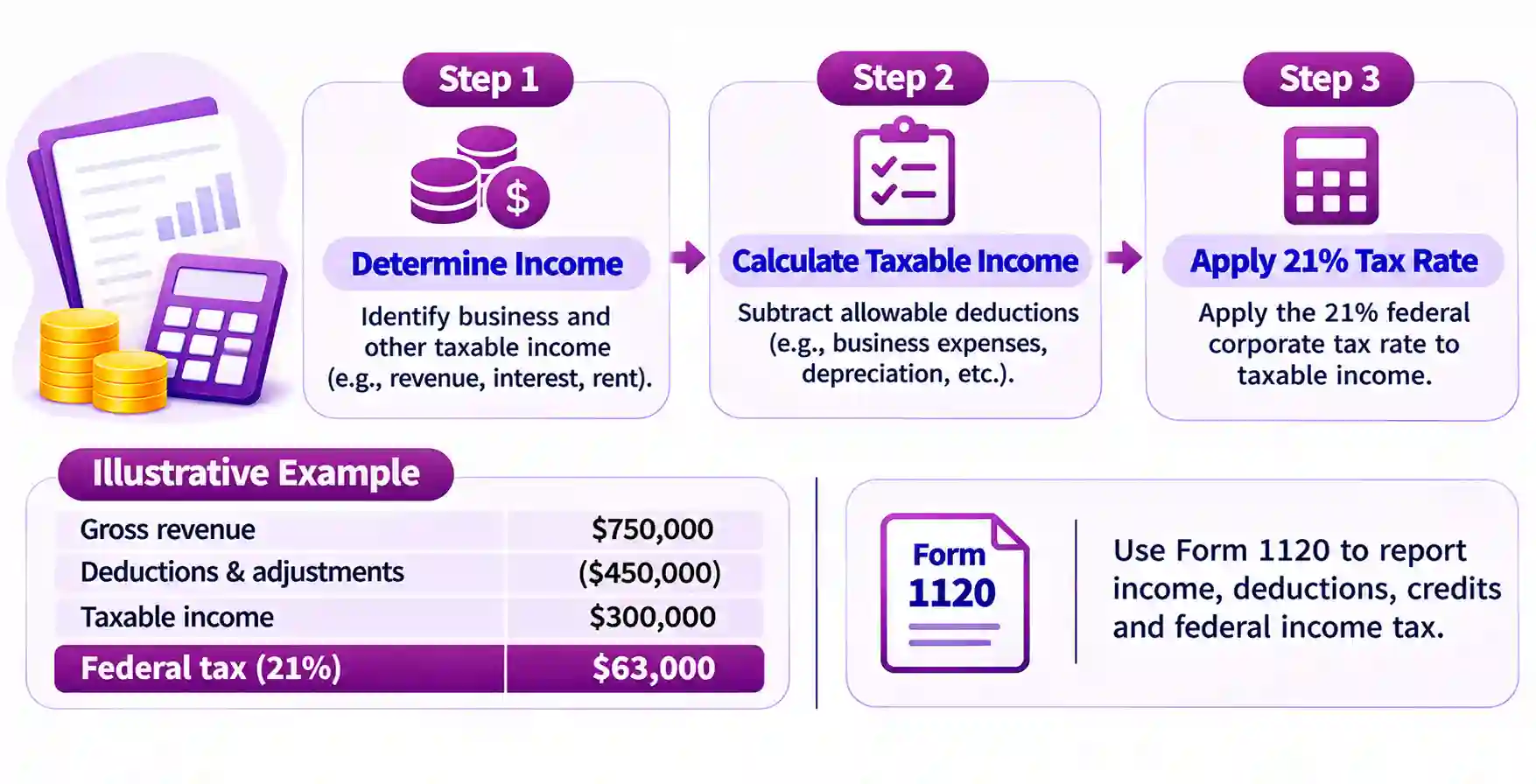
A C Corporation generally calculates its federal income tax by first determining its taxable income and then applying the applicable federal tax rules.
The basic calculation can be understood through three steps:
The corporation starts by identifying its business income and other taxable income items for the relevant tax year.
This may include:
The corporation should maintain accurate financial records to support the income reported for the tax year.
The corporation then accounts for allowable deductions, adjustments and other applicable tax provisions to determine its federal taxable income.
The calculation may be affected by:
The specific treatment depends on the corporation's circumstances. Not every accounting expense is automatically deductible for federal income tax purposes.
After determining taxable income, the corporation generally applies the 21% federal corporate income tax rate to calculate its regular federal corporate income tax before applicable credits and other tax adjustments.
Illustrative example:
Suppose a C Corporation has:
Its basic federal corporate income tax calculation is:
| Calculation | Amount |
|---|---|
| Federal taxable income | $300,000 |
| Federal tax rate | 21% |
| Basic federal corporate income tax | $63,000 |
The $63,000 figure is the basic tax calculation before applicable credits, additional taxes and payments. It is not necessarily the final amount payable with the corporation's return.
Domestic C Corporations generally use Form 1120, U.S. Corporation Income Tax Return, to report their income, deductions, credits and federal income tax liability, subject to applicable exceptions and special filing rules.
The form includes a tax computation section where the corporation calculates its federal income tax based on taxable income and applicable tax provisions.
For a detailed explanation of the return, its reporting sections and filing requirements, read the Savetaxs Form 1120 Tax Form Guide.
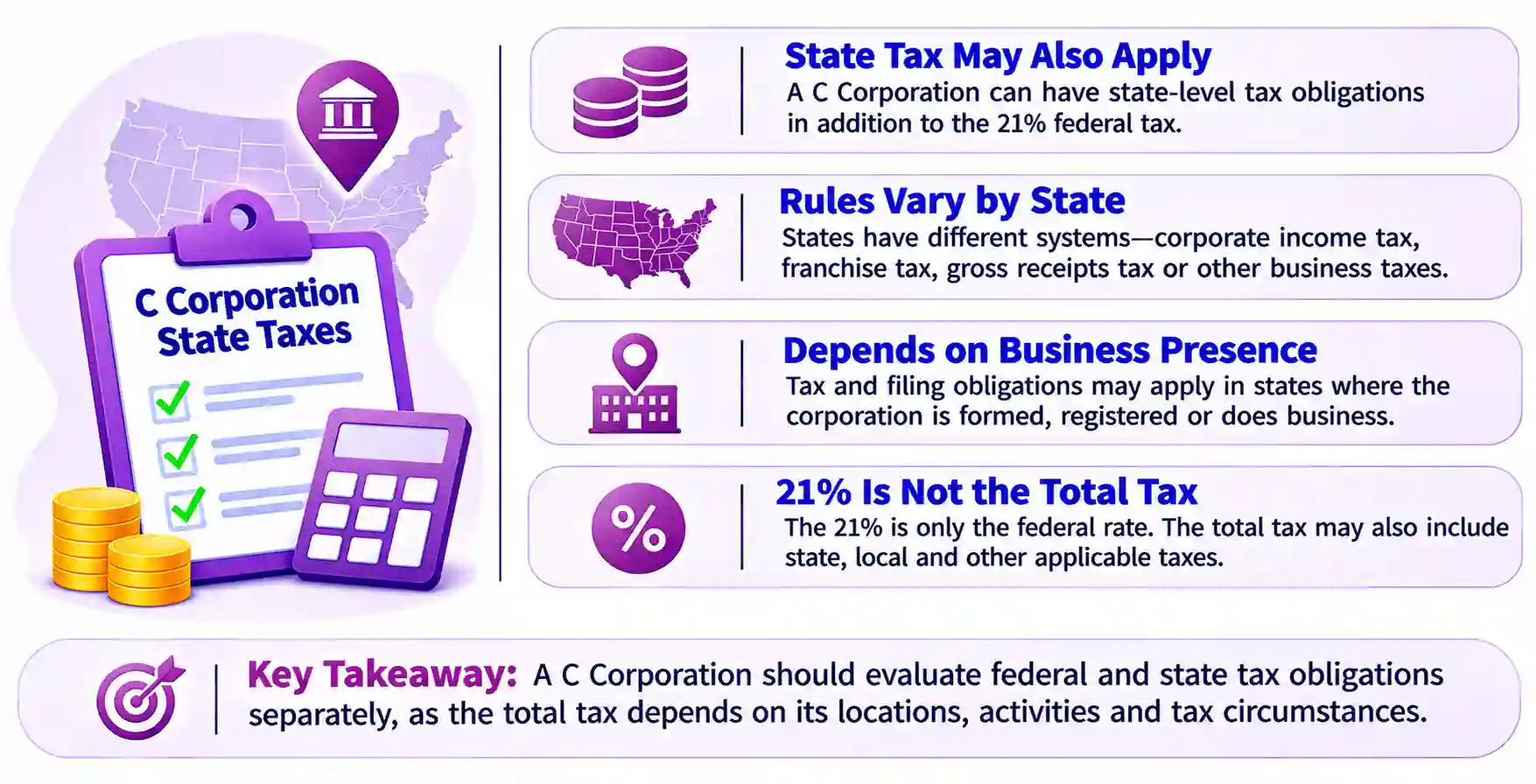
Yes, a C Corporation may also have state-level tax obligations. However, state corporate income tax rules vary depending on the state and the corporation's business activities.
The general 21% federal corporate income tax rate does not include state corporate income taxes, franchise taxes or other state-level business taxes.
Depending on where the corporation is formed, registered or conducts business, it may need to consider:
No. States have different tax systems.
Some states impose a corporate income tax, while others may use franchise taxes, gross receipts taxes or alternative business tax structures. Some states may impose more than one type of business tax.
A corporation's state tax obligations may also depend on its business presence, activities, income allocation and applicable nexus rules.
For example, a corporation formed in one state but conducting business in another may need to review its tax and filing obligations in both jurisdictions. Formation in a state does not automatically determine every state where the corporation may have tax responsibilities.
No. The 21% rate represents the general federal corporate income tax rate.
A corporation's total business tax burden may also include applicable state, local and other federal taxes. The actual amount depends on its taxable income, business locations, activities and tax circumstances.
Business owners should therefore evaluate their federal and state obligations separately rather than treating 21% as their complete corporate tax rate.
Simplify your corporate tax compliance with expert assistance for Form 1120 and state tax filing requirements.
The general federal corporate income tax rate for a C Corporation is 21%, but the rate applies to taxable income rather than total business revenue. A corporation must determine its taxable income under federal tax rules before calculating its federal income tax liability.
Business owners should also consider applicable tax credits, special federal provisions and state-level tax obligations when reviewing their overall corporate tax position. Understanding these factors can help businesses prepare for tax obligations and avoid relying on an incomplete calculation.
Savetaxs helps U.S. businesses with C Corporation tax preparation, Form 1120 support, applicable tax schedules and state corporate filing requirements. If you need help reviewing your corporation's tax position or preparing its corporate tax return, connect with the Savetaxs team for professional support.
This article is for general informational purposes only and does not constitute tax, legal, financial, or investment advice. Laws, regulations, rates, and procedures may change over time and may vary based on individual circumstances.
While SaveTaxs makes reasonable efforts to keep the information accurate and up to date, readers should verify applicable rules with official authorities or consult a qualified professional before making decisions based on this information.
Shubham Jain is the Founder of SaveTaxs and has extensive experience in Indian and NRI taxation. He advises individuals, NRIs, and businesses on tax filing, tax planning, capital gains, DTAA benefits, fund repatriation, and compliance matters. He regularly writes about taxation and related financial topics. His focus is on making complex tax concepts easy to understand. Through his articles, he helps taxpayers stay informed, avoid common mistakes, and stay compliant with Indian tax laws. See Full Bio

Want to read more? Explore Blogs