US Tax Forms
Form 2350 vs Form 4868 for Taxpayers AbroadForm 2350 vs Form 4868 for Taxpayers Abroad
Written by Shubham Jain

If you discover an error after filing your U.S. federal income tax return, you may need to correct the information submitted to the Internal Revenue Service (IRS). Form 1040-X, Amended U.S. Individual Income Tax Return, allows eligible taxpayers to correct a previously filed return, report changes to income or deductions, and claim an additional refund when applicable.
For example, you may discover that you omitted income from a Form 1099, missed an eligible deduction, reported the wrong filing status, or need to correct information on a previously filed Form 1040-NR.
However, not every error requires an amended return. The appropriate action depends on the type of mistake, whether the IRS has already adjusted your return, and the filing rules that apply to your situation.
Form 1040-X is the IRS form used to amend a previously filed individual federal income tax return. It records the amounts originally reported or previously adjusted, the changes being made, and the corrected figures.
The form may be used to:
A separate Form 1040-X is generally required for each tax year being amended.
Important: Form 1040-X does not replace the need to prepare a correct underlying return. You must calculate the corrected tax figures using the forms, schedules, and instructions applicable to the year being amended.
Get help understanding amended return requirements and filing steps
You may need to file an amended return when you discover a material error or omission in your original return.
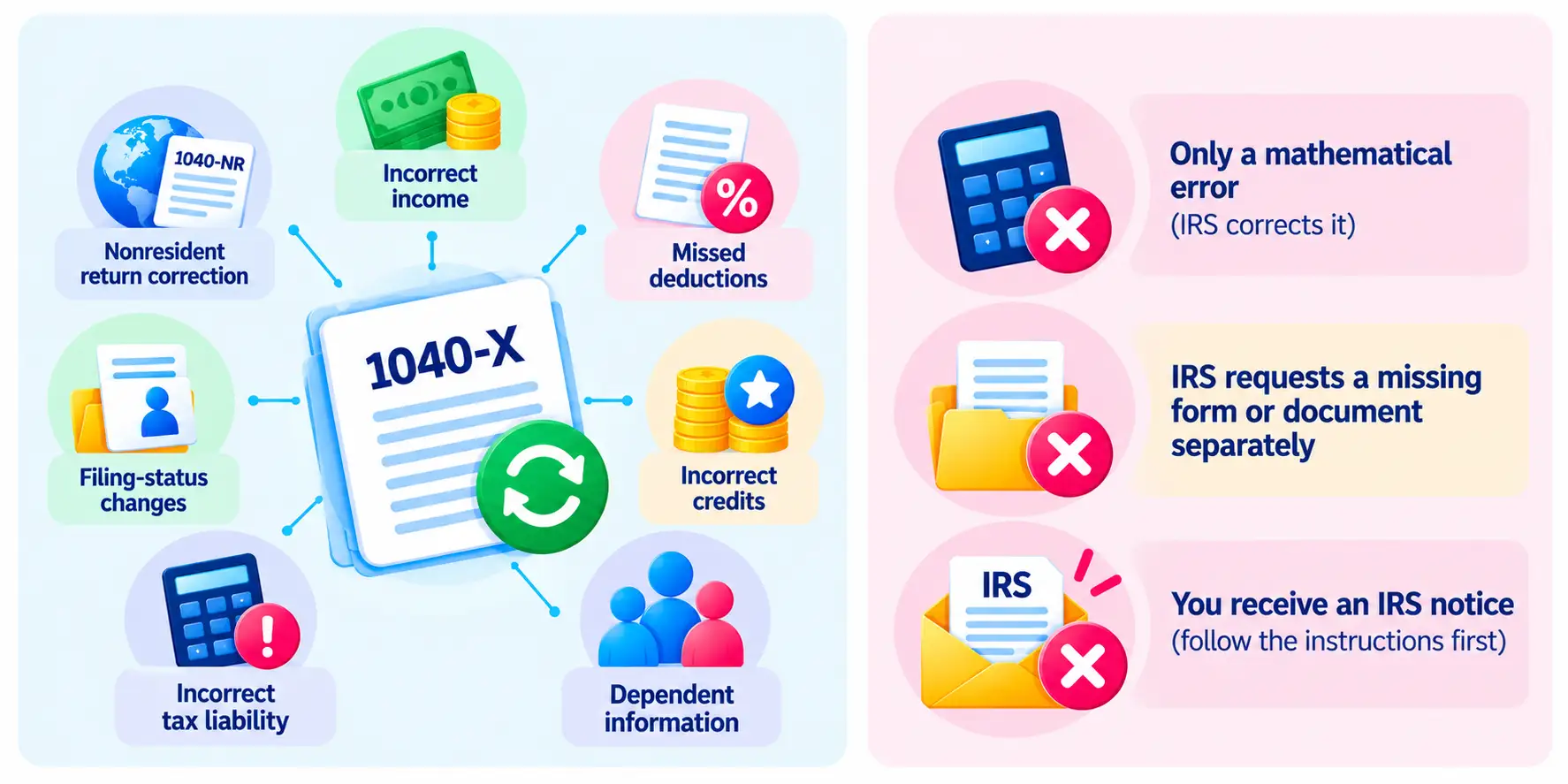
Common reasons include:
The IRS recommends checking whether an amended return is actually necessary before filing.
You generally do not need to amend a return solely because of an ordinary mathematical error the IRS corrects during processing. You may also not need to file Form 1040-X when the IRS requests a missing form or supporting document separately.
If you receive an IRS notice proposing an adjustment, follow the notice instructions first. Depending on the issue, responding to the notice may be more appropriate than filing an amended return.
Individuals who previously filed an eligible federal income tax return may use Form 1040-X to make permitted corrections.
Eligibility depends on the original return, the correction being made, the tax year, and any applicable special rules.
| Original return or situation | General guidance |
|---|---|
| Form 1040 | Form 1040-X can be used to correct eligible errors |
| Form 1040-SR | Form 1040-X can be used to correct eligible errors |
| Form 1040-NR | Nonresident aliens may use Form 1040-X, subject to specific instructions |
| Wrong return type filed | Form 1040-X may be required to correct the filing, following IRS instructions |
| More than one tax year needs correction | A separate Form 1040-X is generally required for each year |
The rules for amending a nonresident return can differ from those for a standard resident return. Review the current instructions for the tax year involved before preparing the amendment.
The deadline depends on the type of claim and the taxpayer's circumstances.
For a typical refund claim, the IRS generally requires Form 1040-X to be filed within:
whichever is later. Special rules and exceptions may apply, including for certain foreign tax credit claims, loss carrybacks, bad debts, and disaster-related relief.
Suppose a taxpayer filed a federal income tax return and later discovered an eligible deduction that could increase the refund. The taxpayer should calculate the applicable deadline using the original filing date and the date the relevant tax was paid.
Do not rely on a generic three-year date without checking the taxpayer's actual filing and payment history. The rules for determining when a return is treated as filed can also matter.
Practical tip: If you believe an amendment could result in a refund, check the deadline promptly. Missing the applicable claim period can prevent recovery of the refund.
Use the instructions for the specific tax year being amended. The following process outlines the main steps.
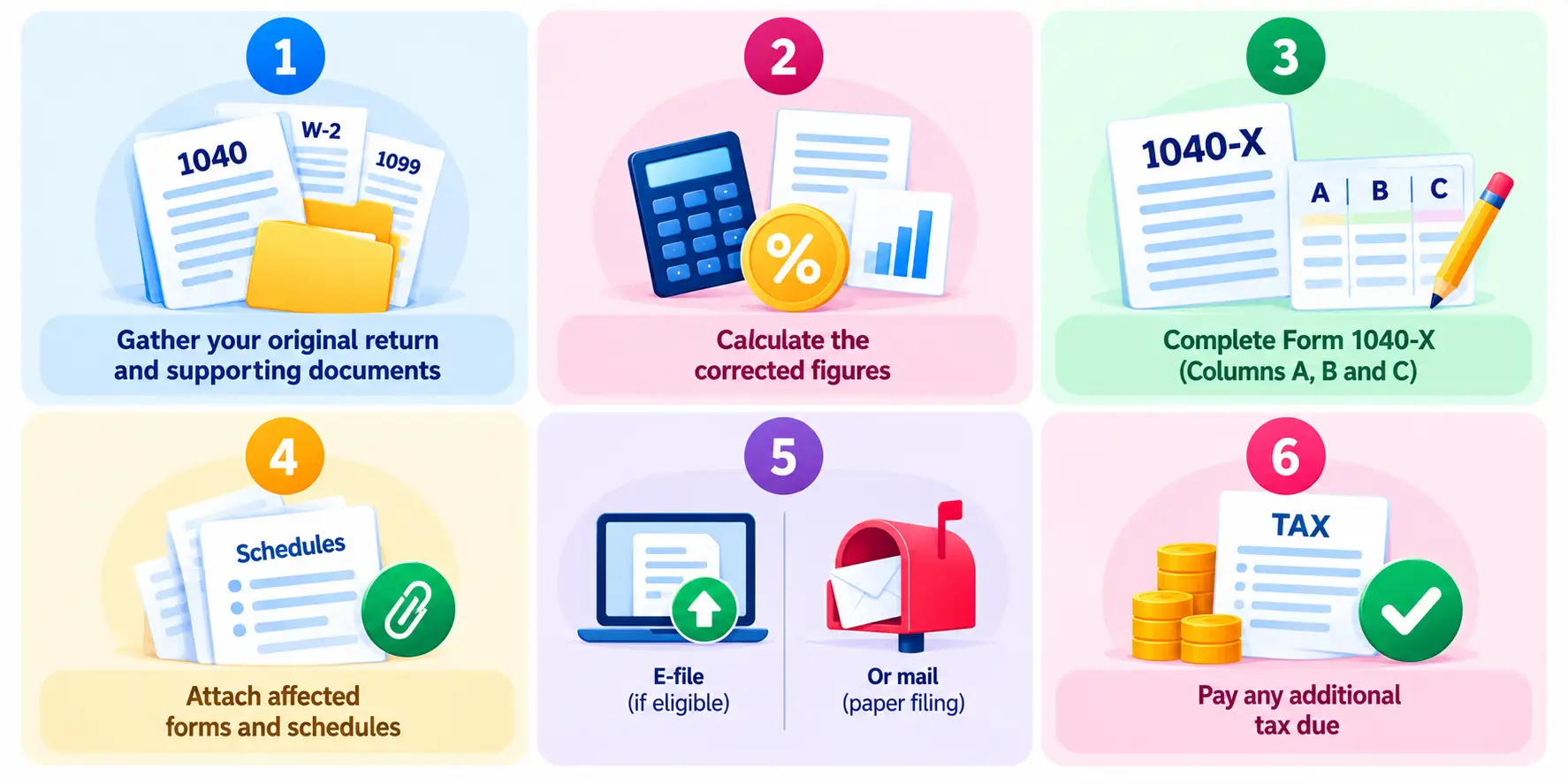
Collect:
These records help establish the amounts previously reported and support the changes being made.
Recalculate the affected income, deductions, credits, and tax liability using the rules for the tax year being amended.
Do not automatically use the latest year's thresholds or instructions for an older return. Tax rules, forms, and eligibility criteria can change between tax years.
Form 1040-X generally compares the previously reported or adjusted amounts, the net changes, and the corrected amounts.
The current form's line structure and requirements should be followed; do not rely on an old example if the form has changed. You must also explain the reason for the amendment in the appropriate section.
Include the supporting forms, schedules, and documents required for the changes being made.
For paper-filed returns, the December 2025 Form 1040-X instructions require a completed and updated Form 1040, 1040-SR, or 1040-NR showing the changes to be attached behind Form 1040-X, along with applicable updated schedules and forms. Follow the instructions for the specific version and tax year you are filing.
The IRS permits electronic filing of eligible Forms 1040-X through tax software. Paper filing remains available, and certain cases require it.
As a general rule, electronic filing is available for amendments to Forms 1040, 1040-SR, and 1040-NR for the current or two prior tax periods, subject to IRS conditions. If a prior-year original return was filed on paper, its amended return generally must also be filed on paper.
If mailing the return, use the address specified in the current instructions for your filing circumstances. Do not use an old mailing address without verifying it.
If the amendment increases your tax liability, pay the additional amount as soon as possible. Interest and penalties may apply depending on the circumstances and timing of payment. Filing an amended return does not automatically remove interest or penalties.
Yes. A nonresident alien who previously filed Form 1040-NR may use Form 1040-X to correct eligible errors. This is particularly relevant to NRIs who have U.S.-source income or other U.S. filing obligations.
The process requires care because the rules for nonresident aliens can differ from those for U.S. citizens and resident aliens.
An NRI may need to review whether an amended return is appropriate if they:
When amending Form 1040-NR, follow the special instructions for nonresident aliens in the current Form 1040-X instructions. For paper filings, these instructions include specific directions about which parts of Form 1040-X to complete and how to attach the corrected return. Electronic filings have different completion requirements.
If you live in India, also consider whether a change to your U.S. tax return affects your Indian tax reporting or foreign tax credit claim. The answer depends on your tax residency, income, and the rules applicable to each country.
Understand your cross-border filing obligations with expert guidance.
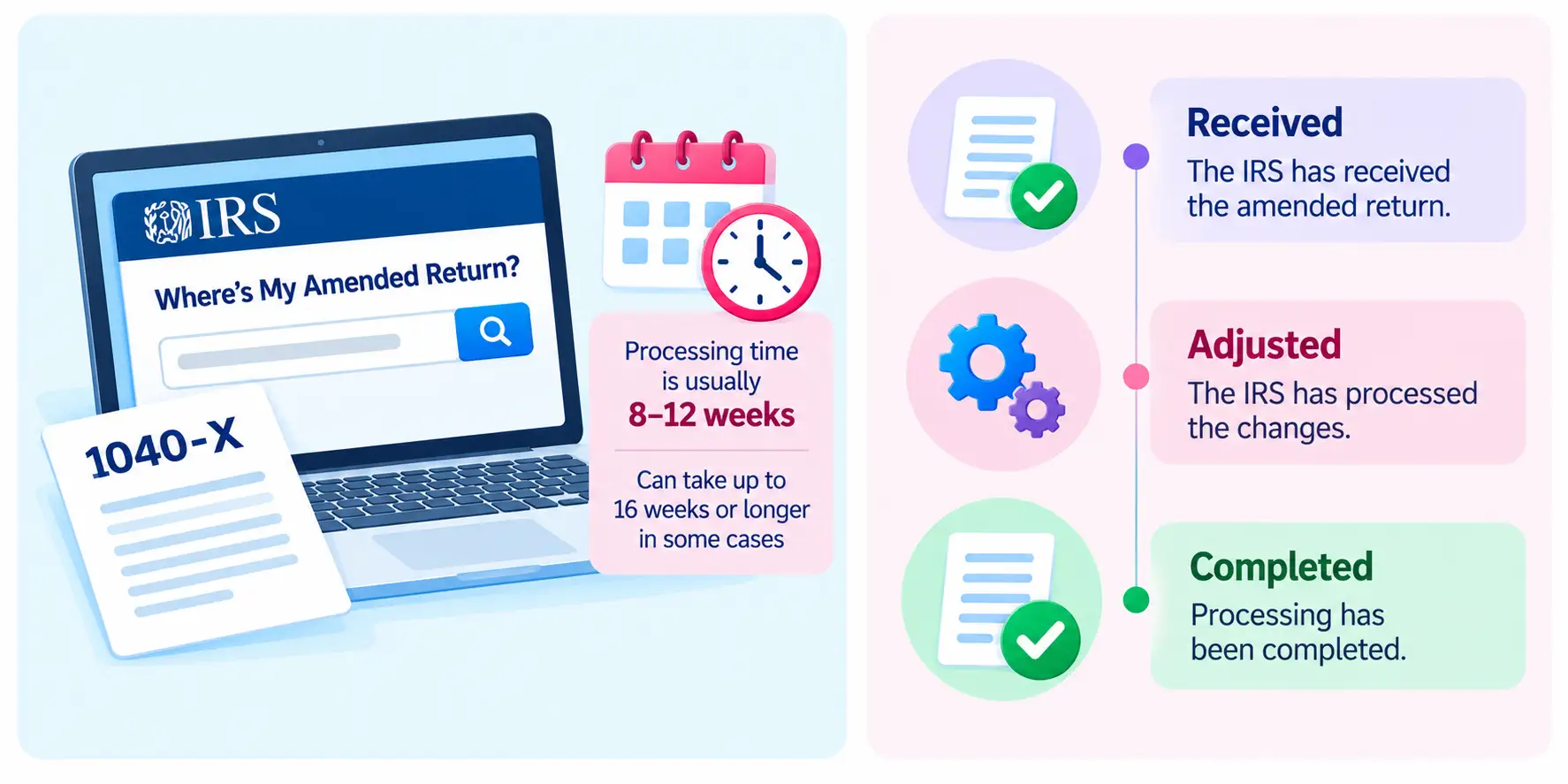
After filing Form 1040-X, you can use the IRS Where's My Amended Return? tool to check its status.
The IRS advises taxpayers to allow approximately three weeks after filing for the amended return to appear in the system. Processing generally takes around 8–12 weeks in many cases, but can take up to 16 weeks or longer in some circumstances. These are estimates, not guaranteed completion dates.
The status tool generally displays one of three stages:
You may also contact the IRS using the information provided on its official amended-return guidance if the tool indicates that further action is required.
Use the official IRS amended return status tool and avoid submitting another amended return merely because the status has not changed immediately.
Correcting a filed return requires accurate calculations, supporting documents, and compliance with the IRS's deadline and filing rules. NRIs and nonresident aliens may also need to consider the interaction between U.S. and Indian tax reporting.
SaveTaxs can help eligible taxpayers understand their U.S. tax filing requirements and evaluate the steps involved in correcting a previously filed return.
This article is for general informational purposes only and does not constitute tax, legal, financial, or investment advice. Laws, regulations, rates, and procedures may change over time and may vary based on individual circumstances.
While SaveTaxs makes reasonable efforts to keep the information accurate and up to date, readers should verify applicable rules with official authorities or consult a qualified professional before making decisions based on this information.
Shubham Jain is the Founder of SaveTaxs and has extensive experience in Indian and NRI taxation. He advises individuals, NRIs, and businesses on tax filing, tax planning, capital gains, DTAA benefits, fund repatriation, and compliance matters. He regularly writes about taxation and related financial topics. His focus is on making complex tax concepts easy to understand. Through his articles, he helps taxpayers stay informed, avoid common mistakes, and stay compliant with Indian tax laws. See Full Bio

Want to read more? Explore Blogs