NRI Income Tax Compliance
How Much Gold Is Allowed From Dubai to India? Guide To 2026 LimitsHow Much Gold Is Allowed From Dubai to India? Guide To 2026 Limits
Written by Shubham Jain

_1766059659.webp&w=3840&q=75)
As India's economy is set to become the third-largest in the world, NRIs are increasingly drawn to India. They are interested in the financial, legal, and real estate domains in India. However, managing the affairs from abroad is a task in itself because, as an NRI, you cannot fly down every month and then handle the related matters. That's when a Power of Attorney comes in.
The Power of Attorney (PoA) is a powerful legal tool that allows NRIs to appoint a trusted individual in India to make authorized decisions on their behalf. The PoA will manage everything from property transactions to banking, tax compliance, and investment management on your behalf in India.
In this guide, we will discuss the PoA and its associated aspects, including the types of PoAs, the required legal formalities, and other critical tax considerations for NRIs.
A power of attorney is an official document that grants an individual, known as an attorney-in-fact or the agent, the authority to make decisions and act on behalf of another person, known as "The principal".
PoA for NRIs acts as a solid bridge to India, ensuring their essential transactions or matters are handled with utmost precision in their absence. Typical tasks for which NRIs appoint PoAs include managing their investments in India, overseeing property management operations or transactions, handling banking tasks, and ensuring complete tax compliance.
Just ensure that the PoA you appoint is someone you trust and can rely on completely, because delegating your decision-making authority to someone legally is a big move. Ensure you delegate it to someone who will never misuse it. A reliable representative can effectively manage these tasks without you having to travel to India frequently.

NRIs have two types of primary PoAs to choose from, each with different rights, powers, and associated risks.
As the name suggests, a general power of attorney grants the agent broad, general powers. These powers include managing bank account-related tasks, handling investments, and addressing other legal matters.
However, it is essential to note that the Supreme Court of India has made the use of a general power of attorney to sell immovable property completely illegal, as it can be a risky move when making such transactions.
This type of power of attorney is drafted for a specific type of task only, such as selling a property. The authority given to the agent is also limited only to the execution of that particular task, and once the task is completed, the PoA automatically expires.
This makes SPoA legally valid for the sale or purchase of real estate by reducing the risk of abuse of power. Ensure that, while drafting the Special Power of Attorney, the timeline and purpose are clearly stated.
Savetaxs offers expert consultation with NRI Power Of Attorney!
NRIs, if you follow the steps below, you can draft an accurate PoA agreement that is free of non-compliance loopholes.
When an NRI drafts the PoA outside India, it is not prepared on Indian stamp paper. Instead, it is prepared on plain paper, then notarized, apostilled, and consulate attested abroad.
The key details you must include are:
The Savetaxs Tip: It is advisable to seek help from a professional lawyer or an NRI PoA expert to help you draft the agreement. Or, if you want to draft the POA from your end, you can check the state-specific formats on the sub-registrar websites.
In front of two independent witnesses, sign the documents, ensuring the signature matches exactly what appears in the passport.
Now the witness can be anyone, but not blood relatives. You must also provide the witness's name, address, and/ID number as well.
Notarize the PoA agreement, then have it apostilled via the Hague Convention or attested at the Indian Embassy/Consulate.
NRIs, the year-end is approaching. Be proactive and file your NRI ITR with expert assistance in a few minutes.
Once the agreement is notarized and attested, please send it to your attorney in India via courier. Upon receiving the agreement, your attorney's responsibilities within the next three months will be to get the
As the principal, you can be in touch with the attorney and track the entire PoA process, and, if needed, you also have the authority to revoke the agreement in case the attorney misuses the granted powers.
To revoke the agreement, all you need to do is draft a revocation deed, get it attested and registered, and then send the registered deed to the attorney or email it.
The Savetaxs Tip: To avoid getting your power misused, add a "revocable anytime by registered notice" clause in the original PoA agreement.
The Foreign Exchange Management Act 1999 (FEMA) mandates the POA compliance for NRIs managing Indian assets.
FEMA Regulations: As per FEMA rules, a PoA holder can make local ruppe payments and remit current income. However, they cannot repatriate funds without the direct approval of NRIs.
Registration: Having your PoA registered for immovable or property sales is mandatory; however, for management, if priority or rent is involved, registration is optional but recommended.
Stamp Duty: Adjudicate at the Sub-Registrar because non-payment of the stamp duty invalidates the POA.

Using a PoA, NRIs can easily manage their tax compliance in India without being physically present here.
ITR Filing: Attorneys can e-file ITR-2/ITR-3 on behalf of NRIs using the NRI's PAN card. Additionally, the PoA holder is eligible to claim refunds or benefits under a DTAA for the principal. However, while drafting the PoA, the NRI must mention the agent's right to exercise the powers.
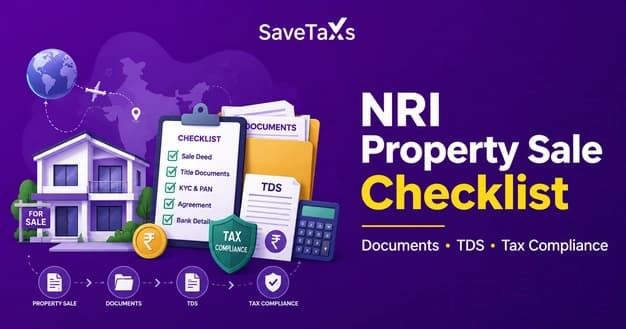
TDS on Property Sale: As per section 195 of the Income Tax Act, the buyer is obliged to deduct the 20% to 30% TDS on property sale by an NRI. The PoA holder can file Form 27Q and request the issuance of Form 16A to reduce the TDS deducted.
Along with this, while purchasing a property for the NRI principal, the POA holder will also ensure that the TDS is deposited with the Income Tax department.
Indeed, a powerful tool for NRIs to manage their affairs in India from a distance, especially when it's about legal, financial, or real estate matters.
However, from understanding the correct type of PoA to executing it correctly and complying with the tax obligation, every step in the process required meticulous attention of both the principal and the attorney.
Hence, it's always advisable to seek legal help from an NRI PoA expert when drafting the Power of Attorney agreement. Now, when we talk about a reliable NRI PoA Expert, Savetaxs is the name to trust.
We have been helping NRIs from 90+ countries manage, draft, and execute their PoA matters in India. Our experts provide end-to-end assistance, ensuring everything gets executed just the way you want.
Connect with us as we serve our clients 24/7 across all time zones.
This article is for general informational purposes only and does not constitute tax, legal, financial, or investment advice. Laws, regulations, rates, and procedures may change over time and may vary based on individual circumstances.
While SaveTaxs makes reasonable efforts to keep the information accurate and up to date, readers should verify applicable rules with official authorities or consult a qualified professional before making decisions based on this information.
Shubham Jain is the Founder of SaveTaxs and has extensive experience in Indian and NRI taxation. He advises individuals, NRIs, and businesses on tax filing, tax planning, capital gains, DTAA benefits, fund repatriation, and compliance matters. He regularly writes about taxation and related financial topics. His focus is on making complex tax concepts easy to understand. Through his articles, he helps taxpayers stay informed, avoid common mistakes, and stay compliant with Indian tax laws. See Full Bio

Want to read more? Explore Blogs