NRI Income Tax Compliance
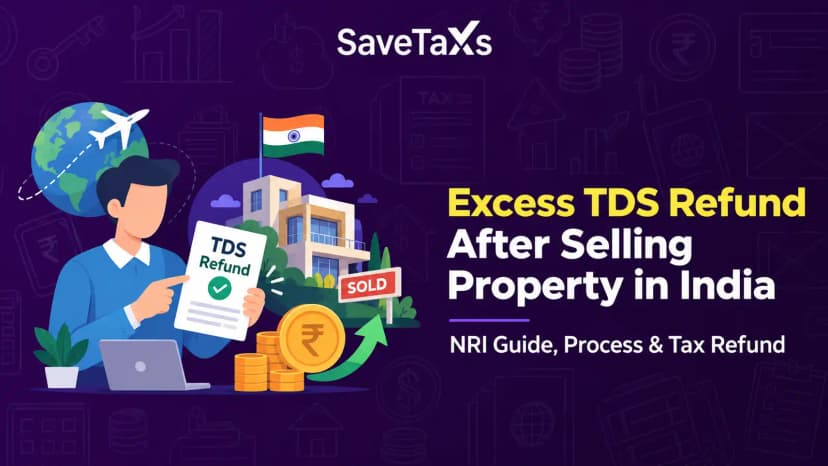
How to Claim Excess TDS Refund After Selling Property in India as an NRIHow to Claim Excess TDS Refund After Selling Property in India as an NRI
Written by Shubham Jain

_1768808777.webp&w=3840&q=75)
Form 16 is a statement issued by the employer to its employees. It contains the details of the deductions and deposited TDS of the employee. Whereas Form 26AS is a document issued by the Income Tax Department of India. It contains details of the deducted TDS of the taxpayer at several sources, TCS collected by different collectors, and advance tax payments. Additionally, all the information stated in Form 16 is also mentioned in this form.
However, due to omission or small errors, there can be a mismatch between the two. This further creates issues when filing the ITR. To help you out, this blog will provide you with information about the differences that may arise in both the forms and the consequences of mismatches. Additionally, solutions to resolve them. So, read on and gather all the information.
The full form of TDS is tax deducted at source. It can be defined as the amount deducted when an individual is making a payment or crediting to their account. This further deducted amount is then deposited to the Income Tax Department on their behalf.
Considering this, every person who makes payments on which TDS is applicable should file TDS returns. It is a statement containing information about the people who get payments after tax deductions. They are known as deductee. It also consists of the payment nature made to him/her and the deducted tax from his/her payments. It is known as TDS statements.
Further, based on such file statements, the deductor provides Form 16 (TDS on salary) annually and Form 16A (TDS on other income) quarterly.
This was all about a TDS statement. Moving ahead, let's know about Form 26AS.
Form 26AS is a statement that is issued by the Income Tax Department. It contains all the information about the deducted TDS and collected TCS. It also includes the details about income sources and the tax credit. Generally, every entity, whether an individual or a company that has deducted TDS, must deposit that amount to the government via a bank.
Additionally, banks should upload these TDS details on the Tax Information Network (TIN) central system. Considering this, the deductors would also file quarterly statements to TIN, mentioning quarterly TDS details. It helps in issuing the Form 26AS for the concerned PAN.
Further, the Form 26AS statement provides a detailed view of the:
This was all about Form 26AS. In simple words, this form is an annual statement under Income tax Rule 31AB. It showcases the tax credit in your account, as stated by the IT department, against your PAN card. Moving further, let's know why it is important to rectify mismatches in both forms.
Here are the reasons why it is important to rectify the mismatched information in the TDS statement and Form 26AS:
So, this is why it is important to rectify mismatched information in the TDS statement and Form 26AS. Moving ahead, let's know the reasons for mismatches between the TDS statement and Form 26AS.
File your ITR with expert guidance on time without any issue with savetaxs.
There are several events where the information stated in the TDS statement, Form 16, or Form 16A differs from the details available in Form 26AS. To provide you with an idea, the most common TDS reasons for such mismatched information are stated below:
These were the key reasons for mismatches between the TDS statement and Form 26AS. Moving further, let's know how you can rectify the TDS mismatches.
After comparing both forms, once you deduct the error, you should do the following to rectify the TDS mismatches:
So, this is how you can rectify the TDS mismatches and file your ITR return on time. Moving ahead, let's know the consequences of TDS mismatch.
The mismatch in Form 26AS is identified through Form 16 and Form 16A. Form 16 is given by the employer, and Form 16A is received from the bank. Considering this, if TDS is deducted and you did not get an equivalent tax credit, make sure that it is shown in the tax credit.
In case you claim the credited amount in your ITR, and it is not reflected in Form 26AS, for tax underpayment, you will receive a demand notice. Additionally, if you have a tax refund, it will be reduced by that amount. Hence, in Form 26AS, the tax credit serves as the basis for processing your ITR.
Further, it may also happen that, due to some errors on the side of your deductor or employer, excess credit has been reflected on your Form 26AS. In such circumstances, to prevent the consequences for the excess amount, you should avoid claiming a tax credit. It is because, after identifying the mistake, the form might be corrected at any time by submitting a revised TDS return by the deductor. After that, if you claimed the credit and there is an excess amount, you are accountable for a demand notice.
This was all about the consequences of TDS mismatch.
With expert NRI tax consultation from Savetaxs, save now and fulfill your tax obligations without any hassle.
Lastly, computerized ITR processing of income tax returns has made it easy to identify matches between TDS statements and Form 26AS. Considering this, the income tax portal provides links to Form 26AS. It allows you to cross-check and verify the details. So, to avoid any adverse consequences, make sure that the Form 26AS and TDS statement consist of the same TDS details.
Further, being an NRI, if you find Indian taxes complicated, simply get in touch with Savetaxs. Our experts will help you accurately file your ITR and maximize your tax refunds.
This article is for general informational purposes only and does not constitute tax, legal, financial, or investment advice. Laws, regulations, rates, and procedures may change over time and may vary based on individual circumstances.
While SaveTaxs makes reasonable efforts to keep the information accurate and up to date, readers should verify applicable rules with official authorities or consult a qualified professional before making decisions based on this information.
Vipul Jain is the Co-Founder of SaveTaxs and a tax expert with experience in Indian and NRI taxation. He advises individuals, NRIs, and businesses on tax filing, tax planning, capital gains, DTAA, and compliance matters. He focuses on making complex tax concepts simple and helping taxpayers make informed, compliant decisions. See Full Bio

Want to read more? Explore Blogs